
The UCLA Herb Alpert School of Music &
Department of Music
present
From Vienna to LA:
UCLA Philharmonia Celebrates Milken Archive Composers
Sunday, May 4, 2025
4:00pm
Royce Hall
Performers
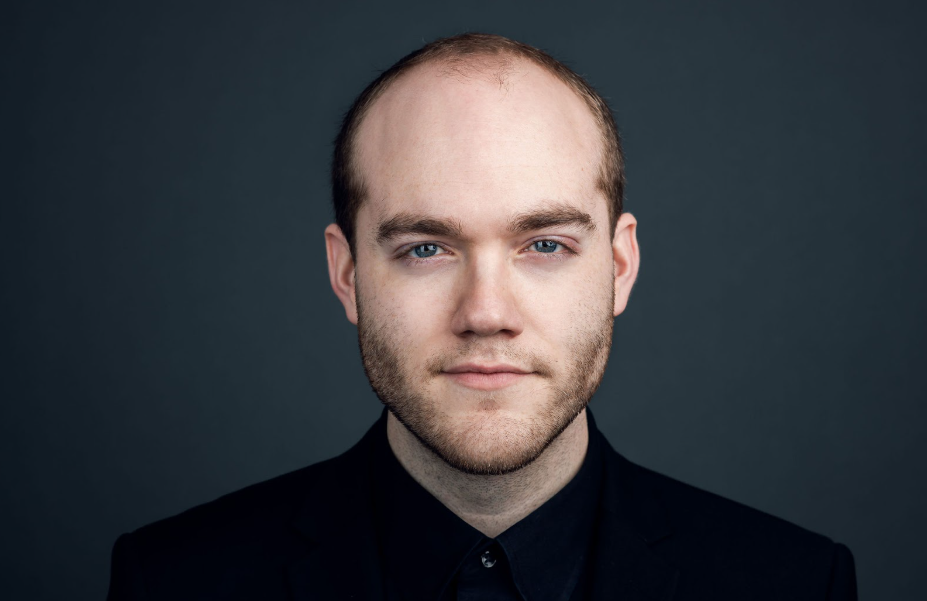
Jared Daniel Jones
See Bio
Jared Daniel Jones, originally from Ellijay, Georgia, is a Los Angeles based baritone with his most recent engagements being with Lyric Opera of Orange County, Pacific Opera Project, and Opera Italia. Jared performs regularly with the LA Opera chorus, recent performances include William Grant Still’s Highway 1, Turandot, Otello, Tosca, and Lucia di Lamermoor. A graduate of the Herb Alpert School of Music at UCLA with a Master of Music degree in voice performance, Jared performs throughout Southern California and nationwide as a concert and operatic soloist as well as performing with several professional vocal ensembles. These include the LA Master Chorale, Long Beach Camerata Singers, Pacific Chorale, and Seraphic Fire. Jared’s operatic repertoire includes Shaunard in La Bohème, the father in Hansel and Gretel, Ormondo in Rossini’s L’inganno Felice, Marco in Gianni Schicchi, and principle roles in UCLA’s world premiere productions of Lost Childhood and The Grand Hotel Tartarus.
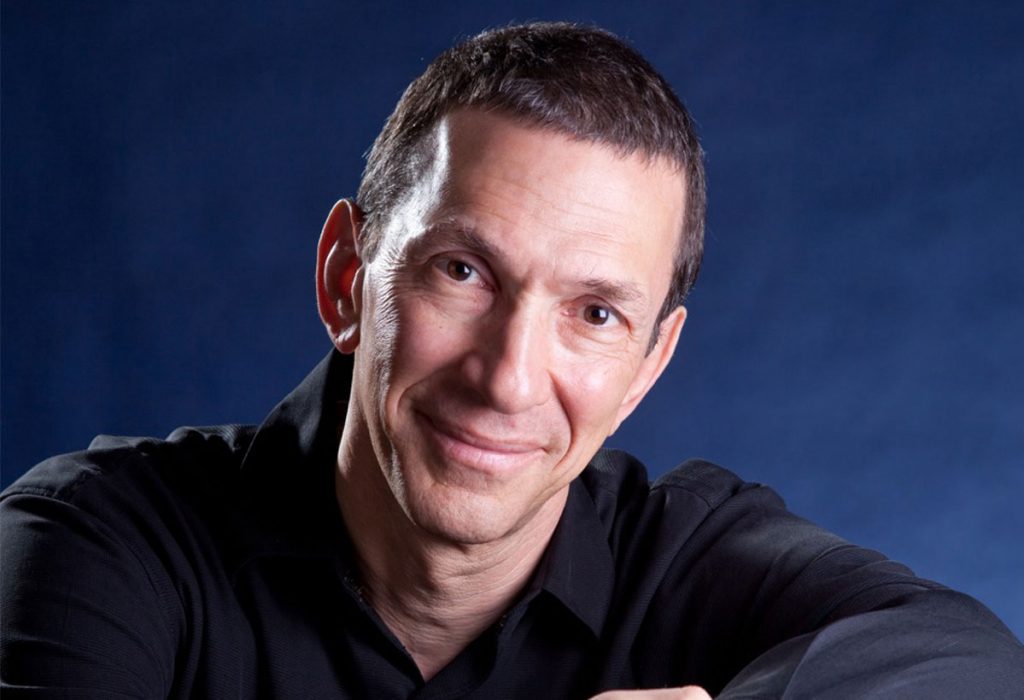
Neal Stulberg
See Bio
Heralded by the Los Angeles Times as “. . .a shining example of podium authority and musical enlightenment,” NEAL STULBERG has garnered consistent international acclaim for performances of clarity, insight and conviction. Since 2005, he has served as Director of Orchestral Studies at the UCLA Herb Alpert School of Music. From 2014 to 2018, he served as chair of the UCLA Department of Music, and currently serves as Distinguished Professor of Music Performance and Artistic Director of UCLA’s Lowell Milken Center for Music of American Jewish Experience.
In North America, Mr. Stulberg has led the Philadelphia Orchestra, Los Angeles Philharmonic, Atlanta, Fort Worth, Houston, Indianapolis, Milwaukee, Mexico City, National, New Jersey, New World, Oregon, Pacific, Phoenix, Saint Louis, San Antonio, San Francisco, Utah and Vancouver symphonies, St. Paul Chamber Orchestra and Los Angeles Chamber Orchestra, and New York City Ballet and San Francisco Ballet. A former assistant conductor of the Los Angeles Philharmonic under Carlo Maria Giulini and music director of the New Mexico Symphony Orchestra, he is a recipient of the Seaver/National Endowment for the Arts Conductors Award.
Mr. Stulberg’s European appearances have included performances in Germany with the WDR Rundfunkorchester Köln and the orchestras of Augsburg, Bochum, Dortmund, Freiburg, Herford, Jena, Münster, Nürnberg, Oldenburg and Rostock. In Holland, he has conducted the Netherlands Radio Symphony Orchestra at the Amsterdam Concertgebouw and led the Netherlands Ballet Orchestra, Netherlands Radio Chamber Orchestra, North Holland Philharmonic, Gelders Orchestra and Nieuw Sinfonietta Amsterdam. He has also appeared as guest conductor with the Stavanger Symphony Orchestra (Norway), Warsaw Chamber Orchestra, Klaipeda Chamber Orchestra (Lithuania), Athens State Orchestra, London Royal Ballet Sinfonia, Barcelona Liceu Orchestra and Norwegian National Opera Orchestra.
International engagements have also included the St. Petersburg Symphony Orchestra, Moscow Chamber Orchestra, Hong Kong Philharmonic, Taipei Symphony Orchestra, Seoul Philharmonic, Korea Philharmonic (KBS), Queensland, Adelaide and West Australian symphonies, Haifa Symphony Orchestra, Israel Sinfonietta and Ra’anana Symphonette.
An acclaimed pianist, Stulberg has appeared as recitalist, chamber musician and with major orchestras and at international festivals as pianist/conductor. His performances of Mozart concertos conducted from the keyboard are uniformly praised for their buoyant virtuosity and interpretive vigor. In 2011-12, he performed the complete Mozart sonatas for violin and piano with violinist Guillaume Sutre at UCLA’s Schoenberg Hall and at the Grandes Heures de Saint Emilion festival in France. In 2018, he performed throughout South Africa on a recital tour with saxophonist Douglas Masek and in 2022, appeared as solo pianist in the world premiere of Inclusion, a new work for pianist and chamber orchestra by Hugh Levick.
Mr. Stulberg has conducted premieres of works by Paul Chihara, Mohammed Fairouz, Jan Friedlin, William Kraft, Alexander Krein, Betty Olivero, Steve Reich, Peter Schat, Lalo Schifrin, Dmitri Smirnov, Earl Stewart, Morton Subotnick, Joan Tower and Peter van Onna, among others, and has also led works by UCLA composers Münir Beken, Bruce Broughton, Kenny Burrell, Mark Carlson, Richard Danielpour, Ian Krouse, David Lefkowitz and James Newton. He conducted the period-instrument orchestra Philharmonia Baroque in a festival of Mozart orchestral and operatic works, and has brought to life several silent movies from the early 1900s, including the Russian classic New Babylon, Shostakovich’s first film score. In August 2022, he conducted the North American premiere of Bas-Sheve, a recently rediscovered and orchestrated 1924 Yiddish-language opera by composer Henekh Kon and librettist Moishe Broderzon, at the Ashkenaz Festival in Toronto. In 2023, Stulberg led acclaimed performances of Dave Brubeck’s cantata, The Gates of Justice (1969) and the West Coast premiere of Lera Auerbach’s Symphony No. 6 (Vessels of Light) (2022) as part of the School of Music’s Music and Justice series, presented in collaboration with the Lowell Milken Center for Music of American Jewish Experience. And in May 2025, he conducted West Coast premiere performances of Tod Machover’s 2018 opera, Schoenberg in Hollywood, as part of the celebration of Arnold Schoenberg’ sesquicentennial.
Collaborators have included John Adams; Leonard Bernstein; Chris, Dan and Darius Brubeck; Dee Dee Bridgewater; John Clayton; Omar Ebrahim; Mercer Ellington; Michael Feinstein; Philip Glass; Morton Gould; David Krakauer; Lar Lubovitch; Tod Machover; Peter Martins; Mark Morris; Angel Romero; Cornel West; and Christopher Wheeldon. He has conducted Philip Glass’ opera Akhnaten at the Rotterdam Festival and Thomas Adès’ Powder Her Face with Long Beach Opera in Los Angeles, and has recorded for Naxos, West German Radio, Donemus, Yarlung Records, Sono Luminus and the Composers Voice label.
Mr. Stulberg has maintained a career-long passion for the training of young musicians. He has conducted and taught at the New World Symphony, Indiana University Summer Institute, Juilliard School, New England Conservatory, New Zealand School of Music, Henry Mancini Institute, Los Angeles Philharmonic Summer Institute, National Repertory Orchestra, Interlochen Arts Academy, American-Russian Youth Orchestra, Turkish Music State Conservatory (Istanbul), National Conservatory of Belarus (Minsk), Central Conservatory of Music (Beijing), Capitol Normal University (Beijing), Shanghai Conservatory of Music and National Taiwan Normal University. In December 2019, he taught and lectured in Israel at the Buchmann-Mehta School of Music, Jerusalem Academy of Music and Dance and Haifa University and returned to conduct its symphony orchestra in June 2024. In March 2026, he conducts the Carlos Chávez Youth Orchestra in Mexico City.
A native of Detroit, Mr. Stulberg is a graduate of Harvard College, the University of Michigan and the Juilliard School. He studied conducting with Franco Ferrara at the Accademia Nazionale di Santa Cecilia in Rome, piano with Leonard Shure, Theodore Lettvin, William Masselos and Mischa Kottler, and viola with Ara Zerounian.
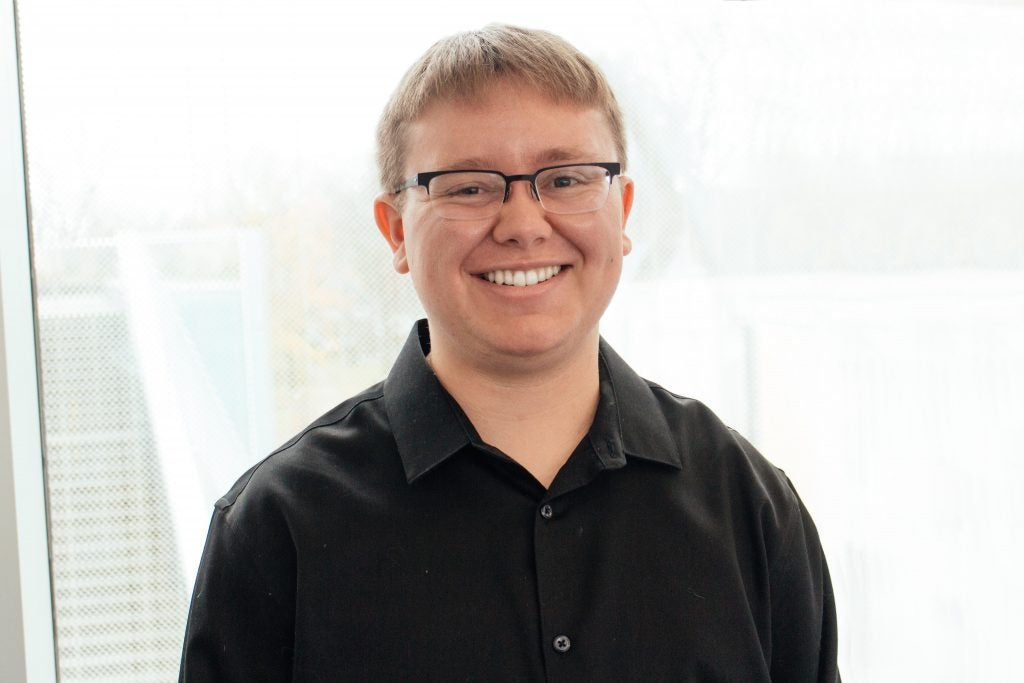
William Adams
See Bio
Immersed in both contemporary music and baroque performance practice, Will Adams is a freelance flutist and educator in the Los Angeles area. Recent engagements include performing in the HearNow music festival, Brightwork’s Tuesdays @ Monk Space concert series, and performing with the San Bernardino Symphony. Adams received a B.M. in Flute Performance from Oberlin Conservatory studying with Alexa Still, and a M.M. in Flute Performance at UCLA under the tutelage of Denis Bouriakov. Other past flute teachers include Diane Clymer and Esther Landau, and he has also studied baroque flute with Michael Lynn.
Adams’ playing can be heard on Emmanuel Music’s recording of Bach arias and duets, available through the Windsor Music recording label as well as the album Rands at Oberlin on the Oberlin Music label.
As an educator, Adams currently works with the Youth Orchestra Los Angeles as a substitute Teaching Artist. Adams also works for the Piedmont East Bay Children’s Choir summer program where he leads rehearsals, teaches musicianship classes, and serves as the Assistant Camp Director. Adams has been an assistant conductor and woodwind coach for the Northern Ohio Youth Orchestras, and he coached chamber music and taught secondary lessons while at Oberlin. Adams currently maintains a private flute studio in Los Angeles.
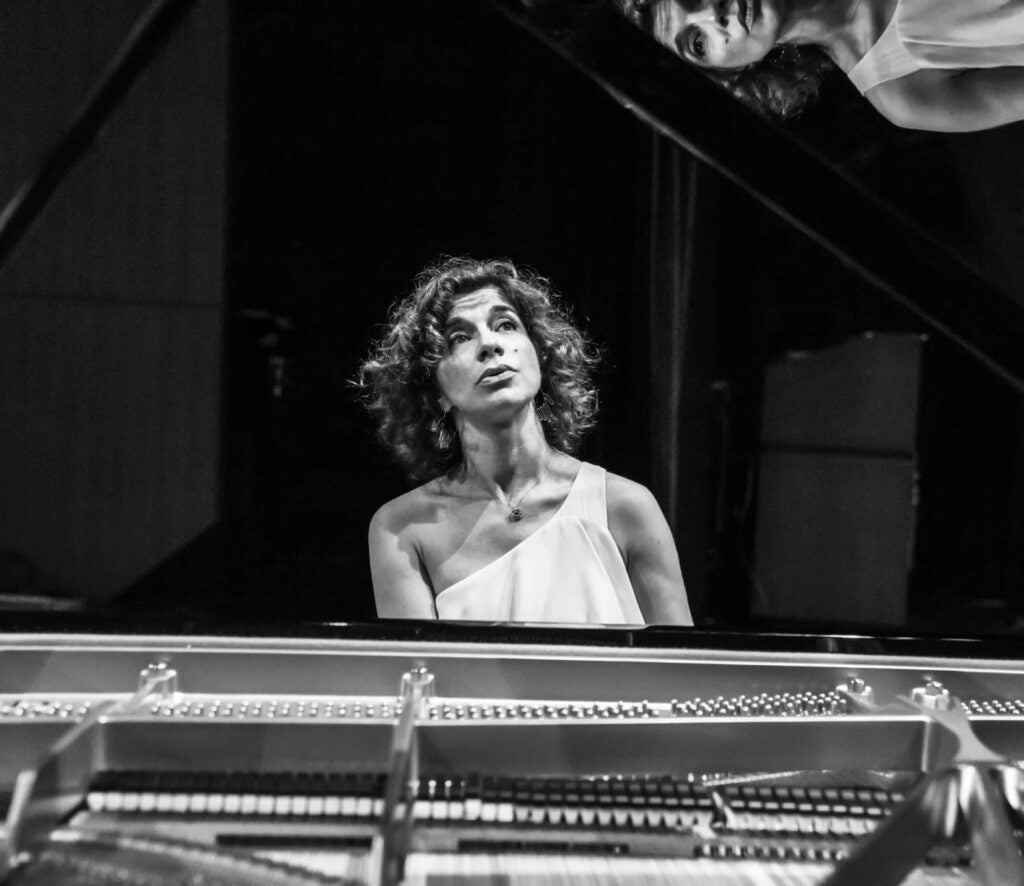
Inna Faliks
See Bio
Repertoire
Arnold Schoenberg
Five Pieces, Op. 16 (1909; re-orchestrated 1949) 17′
I. Vorgefüle (Premonitions)
II. Vergangenes (Yesteryears)
III. Farben (Colors)
IV. Peripetie (Turning Point)
V. Das obligate Rezitativ (The Obligatory Recitative)
Shulamit Ran (b. 1949)
Voices: Concerto for a flutist with orchestra (2000) 16′
I. Quasi Passacaglia
II. Voice of the Wood
III. Big Bands, Little Bands
William Adams, flutes (UCLA MM 2023)
Intermission
Eric Zeisl
Mondbilder (Moon Portraits): Four Songs on texts by Christian Morgenstern for baritone and orchestra (1928; orch. 1936) 14′
I. Der Mond steht da (The moon is there)
II. Eine goldene Sichel (A Golden Sickle)
III. Groß über schweigenden Wäldern und Wassern (Large over silent forests and waters weighs the moon)
IV. Durch die Abendwolken fliegt ein Bumerang (A boomerang flies through the evening clouds)
Jared Jones, baritone (UCLA MM 2018)
Paul Schoenfield
Four Parables: Concerto for piano and orchestra (1982-83) 29′
I. Rambling Till the Butcher Cuts Us Down
II. Senility’s Ride
III. Elegy
IV. Dog’s Heaven
Inna Faliks, piano (UCLA Professor of Piano)
Program Notes
Paul Schoenfield “Four Parables” Concerto for Piano and Orchestra
The composer has provided the following notes about the inspiration for Four Parables:
“A friend once suggested to me to take some life experiences and set them to music. The result was the Four Parables for piano and orchestra written during 1982 and 1983. Each of the four movements musically treats an actual life encounter along the lines that I imagine an author would develop a story. In this case, almost all the aspects of the music (style, harmonic language, texture and even form) were determined by the encounters and my reflections upon them.I
The opening movement, “Rambling Till the Butcher Cuts Us Down,” was a response to a debate surrounding the release of an aged quadriplegic murderer from prison. The murderer had disposed of his victims in a particularly heinous fashion, and now the courts were deciding what further purpose prison would serve a quadriplegic in his seventies. The gruesomeness of the whole incident raised in me not so much the question of why does evil exist, but the theological argument of why does anything exist at all, and the irreverent feeling that perhaps we are in some cosmic zoo performing inane acts for our spectators.
“Senility’s Ride” originated under a different title. Referring to the Goethe poem, it had originally been designated Der Erlkonig. While living in Vermont, I had met a man who was slowly growing senile. In his sounder moments he would reflect on his present condition and his youth. Nostalgically, he would speak of his past vigor, his love of dancing, his life in South America and how now this had all been taken away. During one of my last conversations with him, he mused somewhat philosophically, “Life is tantamount to a burlesque show.”
Zeisl Mondbilder (Moon Portraits) texts and translations
Texts by Christian Morgenstern (1871 – 1914)
Der Mond steht da
Der Mond steht da wie ein alter van Dyck:
ein rundes, gutmütiges Holländergesicht
mit einer mächtigen, mühlsteinartigen,
crêmefarbenen Halskrause.
Ich möcht ihn wohl kaufen,
den alten van Dyck!
Aber ich fürchte, er ist im Privatbesitz
des Herrn Zebaoth.
Ich mußte den Ablaß wieder in Schwang bringen!
Vielleicht ließ er ihn dafür mir ab . . .
Hm-hm…. Hm-hm….Hm-hm….
The moon is there
The moon is there like an old Van Dyck:
a round, good-natured Dutch face
with a powerful, millstone-like, cream-colored ruff.
I’d like to buy him, that old Van Dyck!
But I’m afraid it is privately owned by the Lord of Hosts.
I’d like his indulgence, perhaps to give it to me in return.
Hm-hm…. Hm-hm….Hm-hm….
Eine goldene Sichel
Eine goldene Sichel in bräunlichen Garben,
liegt der Mond im bronzenen Gewölk.
Mag da weit die Schnitterin sein?
Ich meine, die Schwaden bewegen sich –
oh, ich errate alles!
Ins Ährenversteck zog wohl ein Gott
die emsige Göttermaid,
irgend ein himmlischer Schwerenöter der Liebe,
Jupiter-Don Juan oder Wodan-Faust!
Und im frohem Schreck ließ sie die Sichel fallen . . .
Oh, ihr königlich,
oh ihr freien, genießenden, seligen Götter!
A golden sickle
Like a golden sickle in brownish sheaves,
the moon lies in the bronze clouds.
Could the reaper be there?
I mean, the clouds are moving
Oh, I can guess!
A god must have dragged the busy god-maiden,
some heavenly womanizer of love,
Jupiter-Don Juan or Wotan-Faust!
In joyful fright she dropped the sickle . . .
Oh, you royally free, joyful, blessed gods!
Groß über schweigenden Wäldern und Wassern
Groß über schweigenden Wäldern und Wassern
lastet der Vollmond,
eine Ägis, mit düsterem Goldschein
alles in reglosen Bann verstrickend.
Die Winde halten den Atem.
Die Wälder ducken sich scheu in sich selbst hinein.
Das Auge des See’s wird stier und glasig
als ob eine Ahnung die Erde durchfröre,
daß dieser Gorgoschild einst ihren Leib
zertrümmern werde als ob eines Schreies
sie schwanger wäre, eines Schreie’s voll Grausen,
und Todesentsetzen.
Groß über schweigenden
Wäldern und Wassern
lastet der Vollmond,
eine Ägis, mit düsterem Goldschein
alles in reglosen Bann verstrickend.
Large over silent forests and waters weighs the moon
Large over silent forests and waters
weighs the full moon,
a shelter, with a somber gold glow
entangling everything in a motionless spell.
The winds hold their breath,
the forests crouch shyly inside themselves.
The eye of the lake becomes blank and glassy,
as if the earth is freezing over.
That this Gorgon-shield would one day
shatter her body as if she were pregnant with a scream,
a scream full of horror and terror.
Large over silent forests and waters
weighs the full moon,
a shelter, with a somber gold glow
entangling everything in a motionless spell.
Durch die Abendwolken
Durch die Abendwolken fliegt ein Bumerang;
ein goldgelbes Bumerang.
Und ich denke mir: Heda! Heda! Heda!
Den hat ein Australischer Buschmann Engel
aus den seligen Jagdgründen dorthin geschleudert.
Vielleicht aus Versehen?
Der arme Buschmann.
Am Ende verwehrt ihm ein Cherub,
über den himmlischen Zaun zu klettern,
damit seine Waffe er wiederhole.
Oh, lieber Cherub,
ich bitte für den Buschmann,
ich bitte für den Buschmann bedenke:
es ist solch ein schönes,
wertvolles, goldgelbes Bumerang!
A boomerang flies through the evening clouds
A boomerang flies through the evening clouds,
a golden boomerang.
And I think to myself: Heda! Heda! Heda!
An Australian bushman angel flung it
from the blessed hunting grounds…
maybe by accident?
The poor bushman.
In the end a cherub forbids him
from climbing over the heavenly fence,
hence he retrieves his weapon.
O dear cherub,
I ask for the bushman to consider:
it is such a beautiful
valuable, golden yellow boomerang!
The Elegy was written in memory of an acquaintance, who, being convinced by religious fanatics that seeing a physician was unnecessary, died needlessly during young adulthood. The rituals, which were later related to me, conjured up the form and most of the material of this movement.
The finale, “Dog Heaven,” a jubilant Allegro mo/to, was inspired by an encounter with two children whose mother had gotten rid of the family pet as a punishment. To assuage their pain, I made up this fanciful story about a jazz club in ‘Dog Heaven’, where the streets are lined with bones and there is a fire hydrant on every corner.
