

By Robert Fink
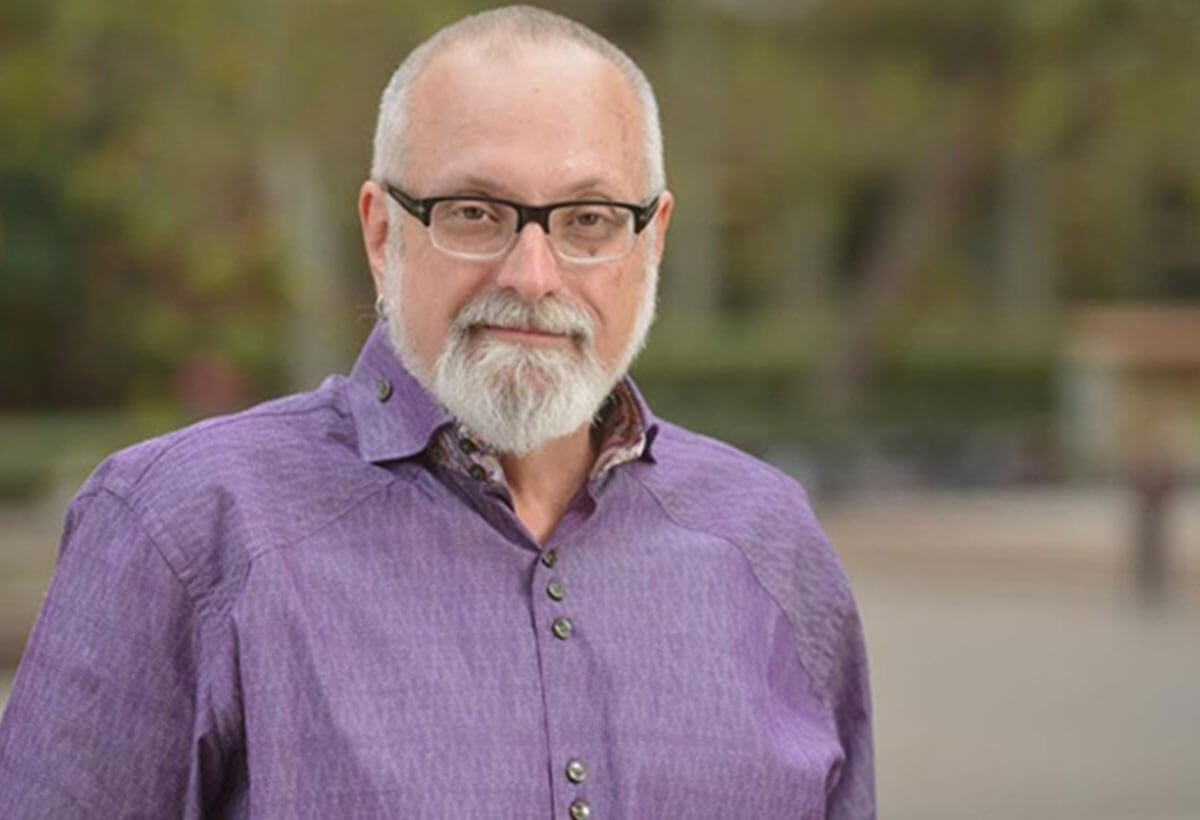
UCLA Professor Emeritus Mitchell Morris (64), of Cathedral City, California, passed away peacefully on August 19, 2026 after a long illness. Following appointments at McGill and the University of California, San Diego, he joined the UCLA faculty as an Assistant Professor in 1997, rising to the rank of full Professor with appointments in Musicology, Humanities, and LGBTQ Studies. He served as chair of Musicology from 2020 to 2022, and as chair of LGBTQ Studies between 2019 and his retirement in 2023. Professor Morris was an expert on the music of Skryabin with deep interests in early 20th-century Russian culture, as well as a pioneering figure in critical musicology with special interests in queer studies, psychoanalytic theory, opera, musical theater and film, ecomusicology, and the experience of desire in popular music. He was the author of The Persistence of Sentiment: Display and Feeling in Popular Music of the 1970s (California, 2013), and a co-editor of the Oxford Handbook of the American Musical (2011), for which he wrote several chapters. A key figure in the institutionalization of queer musicology in the US, he was instrumental in the creation of the LGBTQ Study Group of the American Musicological Society. An influential pedagogue who mentored several generations of graduate students, Professor Morris received the Distinguished Teaching Prize from UCLA in 2003, and his foundational UCLA lecture course on LGBTQ pop music was recognized by the AMS’s Philip Brett Award in 2012.
Mitchell Bryan Morris was born and raised in rural North Carolina, the oldest son of Mitchell Bryan Morris, Sr. and Lillian Reid Morris, both schoolteachers. He came from a musical household with strong roots in Southern spirituality, which, along with his early consciousness of gay identity, fostered a lasting sense of cultural difference. Largely self-educated in the arts, and with an omnivorous intellect, he won a full scholarship to Duke University, where he originally planned to study science. After switching to musical humanities he sang tenor in the collegium and played horn in the wind ensemble while imbibing music history from Jan Herlinger, R. Larry Todd, Tilman Seebass, and Warren Kirkendale. After an undergraduate term at Oxford, his interest in Russian modernism led him to Columbia University and then to the Music department at the University of California, Berkeley, where he entered graduate study in 1987.
While at Berkeley, Morris researched Russian Silver Age music and literature under Richard Taruskin, focusing on the “transcendental strain” in the works of pianist-composer Alexander Skryabin. He participated in Berkeley’s vibrant early music scene, working with Philip Brett, Richard Crocker, Alan Curtis, Nicholas McGegan, and John Butt, and his love of opera blossomed into a performing vocation, culminating in a deeply committed stage turn as the ominous Peter Quint in Benjamin Britten’s The Turn of the Screw. Morris’s feel for opera eventually led him to fashion a libretto with his friend and UCLA colleague, composer Roger Bourland, based on the final days of the Mexican soprano Ángela Peralta (La Paloma y el Ruiseñor, 2014), leading to a premiere and a civic plaque honoring his achievement at the theater in Mazatlán that bears her name.
Those who knew Morris as a young man recall the quiet but magnetic presence of a mercurial mind which retained information from voracious reading across a range of disciplines completely unknown to conventional musicology. His enthusiasms galvanized Berkeley’s music faculty and its students, introducing many for the first time to queer feminist voices like Julia Kristeva and Eve Sedgwick and to the incipient critical musicology being developed in their wake by Rose Subotnick, Liz Wood, Suzanne Cusick, and Susan McClary, whose work then circulated only as xeroxed samizdat passed from hand to hand. It was Morris who convinced Philip Brett that it was safe to convene the extracurricular reading group on sex and gender which inspired a cluster of his fellow students to seek careers in the “new musicology.” Morris himself, building on a deep identification with queer operatic characters like Peter Quint and Lulu’s Countess Geschwitz, developed a mode of textual interpretation based on “reading as an opera queen,” providing a title for his much-cited contribution to Ruth Solie’s era-defining edited volume, Musicology and Difference: Gender and Sexuality in Music Scholarship (1993).
Morris worked through the 1990s to forge an independent critical identity in a rapidly changing field. His credentialing thesis on Skryabin was largely set aside, its search for an erotics of musical transcendence recurring, defamiliarized, in a head-spinning variety of musical contexts. Morris took seriously the holy minimalism of Arvo Pärt and the ecotopian maximalism of John Luther Adams and reclaimed “weak” 1970s pop genres like Philly soul, prog rock, and queer disco by staging the critical redemption of musical camp and sentimentality.
Morris was a spellbinding university lecturer whose offhanded, improvisatory charm cloaked a capacious associative memory, immense rhetorical control, and an operatic sense of the classroom as theater. As a doctoral advisor he was beloved by the multiple generations of students who blossomed under his non-judgmental attention – especially those who shared his sense that queerness could be the basis for aesthetic perception and pleasure. Transformed into a powerful, mutually supportive cadre of scholars, they spread out across the field and came back at national conferences to surround him and be enfolded into a durable circle of care and (yes!) gossip.
Long-time friends and colleagues recognized a sensitive person whose rich inner life led him to keep his material existence simple to the point of austerity: all he needed was room for his books and music, a place to cook, and space for multiple, indispensable cats (an elegant animal he rightly considered totemic). A self-proclaimed introvert, he carried on an exceptional range of correspondence, priding himself on keeping track of everyone else’s affairs while few knew all of his. Into this disciplined life came one great romantic relationship, with the former Rodrigo Maccioni, a Brazilian émigré. He and Morris found each other online, met, courted, and were married in 2016; for the next ten years, they shared sickness and health as true soulmates.
Professor Morris is survived by his husband, Rigo, of Cathedral City, CA; and his younger brother Philip, of Poplar Branch, NC. He will be laid to rest in a private ceremony; his family, friends, and colleagues expect to host a memorial event at a date yet to be determined. Those wishing to honor his memory are requested to contribute to the Friends of Musicology at UCLA in support of the award for LGBTQ scholarship in music that bears his name; and to the LGBTQ Study Group of the American Musicological Society, of which he was a founding member.