
Modal Interchange: Conversations on 21st-Century Performance Practices
The personality of Los Angeles’s new music scene mirrors its city’s culture and geography as a whole: equal parts diversity and decentralization, in a battle for recognition and relevance that crisscrosses 650 freeway miles. This series casts a wide net around the new music community, hosting a diverse group of individuals who might not otherwise share the same artistic and academic spaces in a series of lecture-workshops geared to an audience of performers.
Modal Interchange is a series of six workshops through 2026-27. Each workshop focuses on an element of 21st-century performing, programming, and music-making in the world of contemporary music: histories of experimental music and the avant-garde, commissioning new works, concert programming, listening as an audience member, listening as a performer, score-reading and part-marking, learning and practicing contemporary works, researching and writing program notes, improvisation, and activism.
This series is conceived and hosted by violist Wendy Richman and produced in partnership with the UCLA Center for Musical Humanities. Dr. Richman is Lecturer in Performance Studies, Director of uclaFLUX, and a founding member of the International Contemporary Ensemble.
List of Events
October 14: Vicki Ray, Concert Programming and Commissioning New Works
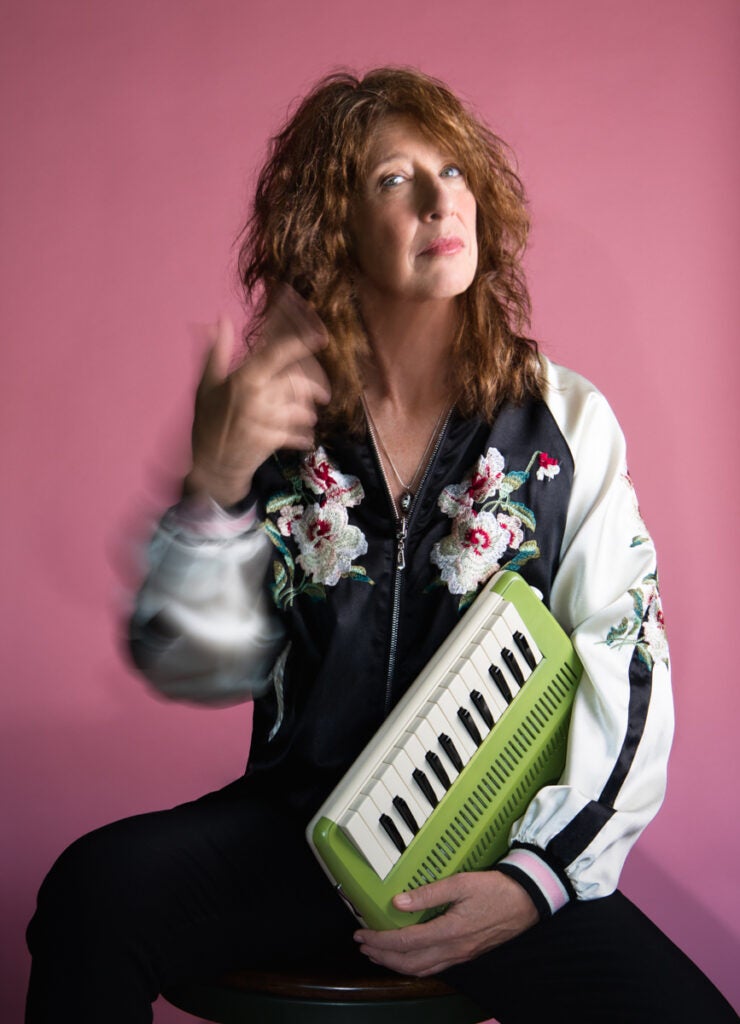
Programming as Composition
October 14, 2026
3pm-6pm
Schoenberg Music Building Green Room
Click here to RSVP
Every musician presenting a concert is: a composer! In this talk I’ll explore different ways to think about concert programming and how the works you program constitute a meta-composition. Using musical examples I’ll explore the way connections between worlds – musical and otherwise – can create fresh, interesting juxtapositions that challenge (and hopefully delight!) the performer as well as the listener. Folded into this approach is the opportunity to commission new works that can tie previously unrelated pieces together and expand the repertoire of our instrument.
Bio
Described as “phenomenal and fearless” Vicki Ray is a pianist, improviser and composer. She has commissioned and premiered countless new works by today’s leading composers. Ray is a founding member of Piano Spheres and was, for many years, the head of keyboard studies at the California Institute of the Arts where she was named the first recipient of the Hal Blaine Chair in Musical Performance. She has appeared on numerous international festivals and was a regular member of the faculty at the Bang On a Can Summer Festival at MASS MoCA. Ray has been featured on the Los Angeles Philharmonic Green Umbrella Series as soloist and collaborative artist. Her widely varied performing and recording career covers the gamut of new and old music: from Boulez to Reich, Wadada Leo Smith to Beethoven. Notable recordings include the first Canadian disc of Schoenberg’s Pierrot Lunaire with the Blue Rider Ensemble, the premiere recordings of Steve Reich’s You Are (Variations) and the Daniel Variations with the Los Angeles Master Chorale and the first recording of John Cage’s Europeras 3 and 4. Her recording of Cage’s The Ten Thousand Things on Microfest Records received 2013 Grammy nomination. Vicki can also be seen playing the chromelodeon in the Los Angeles based PARTCH ensemble. Vicki Ray is a Steinway artist.
November 16: Jonathan Hepfer, Monday Evening Concerts: Histories of Experimental Music and the Avant Garde in Los Angeles
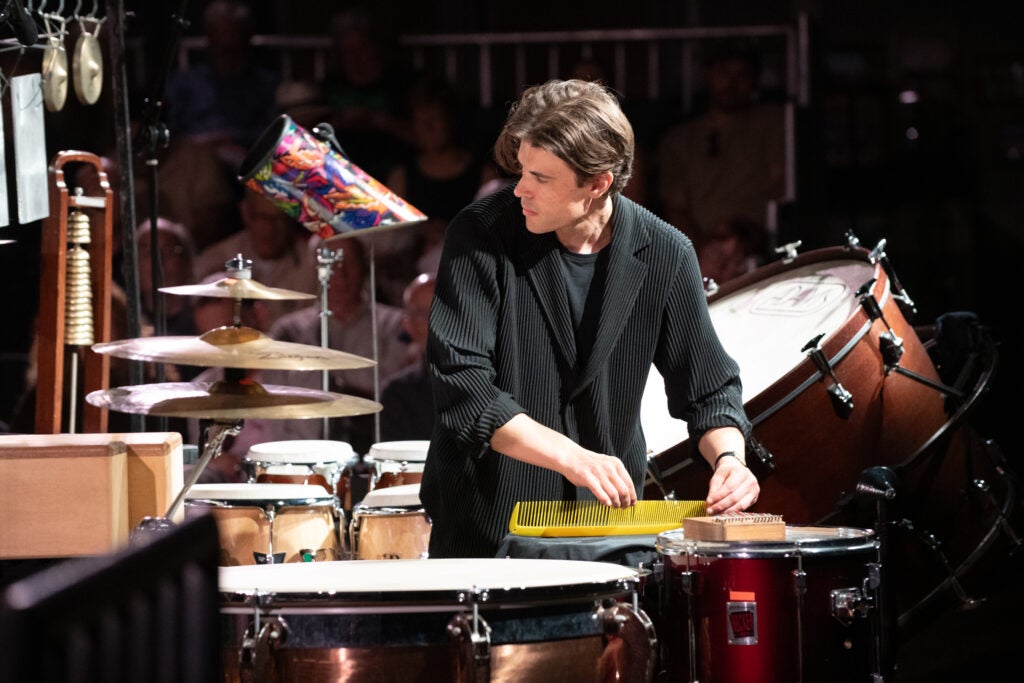
Sisyphus as Artist (Whatever prevents you from doing your work has become your work)
November 16, 2026
3pm-6pm
Schoenberg Music Building, Green Room
Click here to RSVP
Whether navigating complex scores or directing a series, the common denominator is simply problem solving: using one’s sense of logic, aesthetics, ethics, and intuition to figure out how to get from A to B. Every project or piece is completely different, requiring constant reinvention and re-equipping of one’s toolbox. More abstractly, but of equal or greater weight, is the importance of nurturing non-musical artistic and creative interests while we hone our problem-solving skills. Whether performer, presenter, painter, or poet, artists flourish when we connect through our shared goal: to make a lasting impression on the souls of those around us.
Jonathan Hepfer is a percussionist, conductor, and concert curator. He began playing classical music at age seventeen after discovering the work of John Cage while studying at SUNY Buffalo. Subsequently, Jonathan attended Oberlin Conservatory, UC San Diego and the Musikhochschule Freiburg (on a DAAD fellowship) where he studied with Michael Rosen, Steven Schick and Bernhard Wulff.
Since 2015, he has been the Artistic Director of Monday Evening Concerts (MEC) in Los Angeles as well as its resident ensemble ECHOI. At MEC, Jonathan has directed performances of major works by Pierre Boulez, John Cage, Julius Eastman, Morton Feldman, Philip Glass, Gérard Grisey, Sarah Hennies, Yves Klein, Arvo Pärt, Steve Reich, Salvatore Sciarrino, Caroline Shaw, Tyshawn Sorey, Simeon Ten Holt and Iannis Xenakis.
As a curator and producer, he has presented works by Georges Aperghis, Pierluigi Billone, Carolyn Chen, Chaya Czernowin, Julius Eastman, David Hammons, Sarah Hennies, György Kurtág, Klaus Lang, Alvin Lucier, Hans Otte, Éliane Radigue, Michael Pisaro-Liu, Caroline Shaw, Wadada Leo Smith, Steven Takasugi, Davóne Tines and Wu Tsang.
Jonathan has directed (or co-directed) projects at venues such as the Getty Museum, Harvard University, Hauser & Wirth, Jeffrey Deitch, LACMA, LAXART, Marciano Art Foundation, the Santa Monica Carousel (Frieze), Thomas Mann House and the Pinault Collection in Paris.
As a percussion soloist, Jonathan has focused extensively on the works of Georges Aperghis, Pierluigi Billone, Julius Eastman, Brian Ferneyhough, Morton Feldman, Vinko Globokar, Helmut Lachenmann, Giacinto Scelsi, Iannis Xenakis and Walter Zimmermann. In this capacity, he has performed widely across the United States, Europe and Asia.
Recent independent projects have included serving as artistic director for a portrait of Julius Eastman at the Pinault Collection in Paris (a collaboration with Anaïs Ngbanzo, Dev Hynes and Adam Tendler) and performing the role of conductor in a revival of Deborah Hay’s ‘Solo 2’ at the Getty Museum. Jonathan has also contributed to projects by friends such as Henrik Purienne (‘Tasjaki’ at Galerie Chenel), Vanessa Beecroft and Gustave Rudman (‘Two Shadows’ at Jeffrey Deitch) and Henri Levy Alexandre (Enfants Riches Déprimés S/S ’25).
He has published interviews with Meredith Monk (Autre Magazine), Éliane Radigue (Purple Magazine) and Steve Reich (Kaleidoscope Magazine). Jonathan also documented the oral histories of the pioneering generation of percussion soloists (Jan Williams, Christoph Caskel, Sylvio Gualda, Jean-Pierre Drouet, Gaston Sylvestre, Maurizio Ben Omar). Jonathan has served on the faculty at Art Center Pasadena and Cal Arts. He is interested in the ways that music intersects with visual art, literature, architecture, fashion and film.
January 11: Melissa Achten and Eli Klausner, Being a Presenter and Opening a Venue
Coming Soon
February 8: Shalini Vijayan, Listening as Audience Member and Performer
Coming Soon
April 7: Sidney Hopson, Being an Active Artist-Citizen: Shaping U.S. Arts Policy in 2027
Coming Soon
May 10: John Schneider, Building and Cultivating Audiences: Partch Ensemble’s Place in LA Music History, Broadcasting, and Commissioning
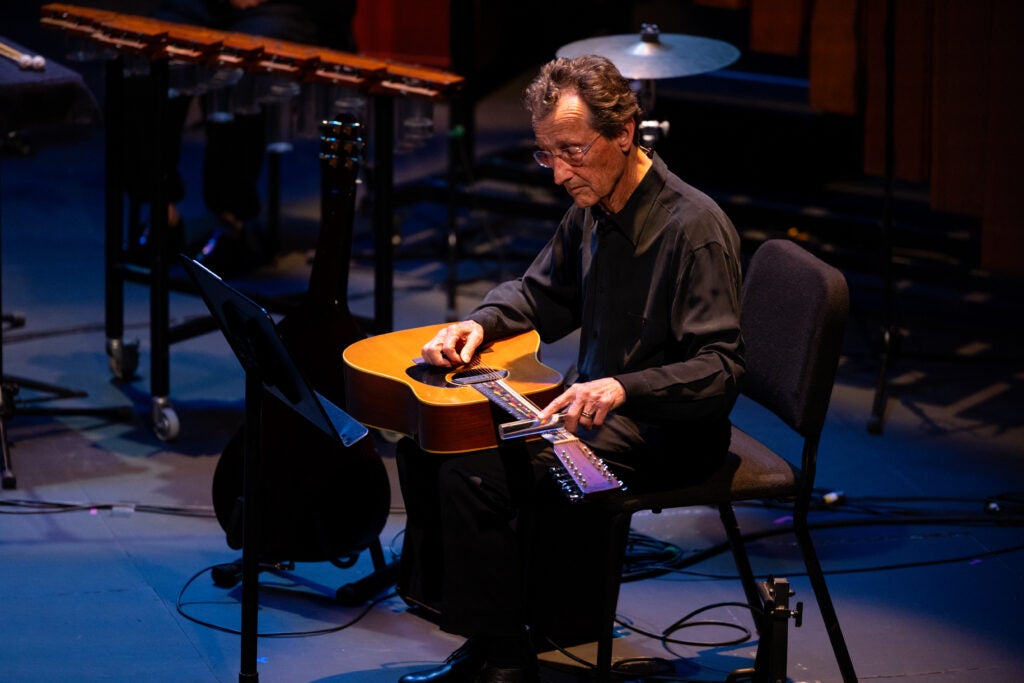
NEW MUSIC: An Acquired Taste?
May 10, 2027
3pm-6pm
Schoenberg Music Building, Green Room
Creating an audience for unfamiliar music has always been a challenge, but what about an entirely new musical language that demands exotic instruments, rare repertoire and unfamiliar composers? As founding Artistic Director of the annual MicroFest, the Grammy® Award winning PARTCH Ensemble, MicroFest Records, and producer/host of decades of radio broadcasts (KUSC, KPFK), Schneider has been a tireless advocate for so-called ‘microtonal’ music and musicians who create it. He will present concert videos, recordings, and photos from many of those presentations, and discuss the joys and challenges of opening audience’s ears, and most importantly, the gray matter found between them.
John Schneider is the Grammy® Award winning & four-time Grammy® nominated guitarist, composer, author, and broadcaster whose weekly television and radio programs have brought the guitar into millions of homes. He holds a PhD in Music & Physics from the U. C. Cardiff [U.K.], music degrees from the University of California and the Royal College of Music [London] and is past President of the Guitar Foundation of America. He has released over twenty CD’s and written dozens of articles on the guitar, while his book The Contemporary Guitar has become the standard text in the field. He has performed in Europe, Asia, the Middle East, & throughout North America, and been featured by New Music America, the DaCamera Society, Southwest Chamber Music, New American Music Festival, the Los Angeles Philharmonic, San
Francisco Symphony, Other Minds, and the BBC. He is the founding artistic director of MicroFest, the music ensembles Just Strings, PARTCH Ensemble, and founder of MicroFest Records, while his recordings can be found on the Bridge, Cambria, Etcetera, Innova, MicroFest, Mode, New Albion, Other Minds, and Pitch record labels. He can be heard weekly on Pacifica Radio’s The Global Village, www.KPFK.org. (more at www.JohnSchneider.LA).
Wendy Richman
Lecturer - Performance Studies
Violist Wendy Richman has been celebrated internationally for her compelling sound and “absorbing,” “fresh and idiomatic” interpretations with “a brawny vitality” (The New York Times, The Washington Post). As soloist and chamber musician, she has performed at Carnegie Hall, Walt Disney Concert Hall, Royce Hall, Metropolitan Museum of Art, Mostly Mozart Festival, and international festivals in Berlin, Darmstadt, Edinburgh, Helsinki, Hong Kong, Karlsruhe, Morelia, and Vienna.
Acknowledgements
This program is made possible by the Joyce S and Robert U. Nelson Fund. Robert Uriel Nelson was a revered musicologist and music professor at UCLA, who, together with his wife, established a generous endowment for the university to make programs like this possible.