

Alum Matt Hansen and his parents, Erin and Brian Hansen, have just created the Hansen Family Endowment for scholarships to support students studying ethnomusicology or the global music industry.
By Robert Baker
I met Matt Hansen on the patio of a Santa Monica coffee shop, tucked behind Def Jam Records in repurposed industrial space. He was recently back from one world tour and about to embark on another. “I’m thankful just to be back in LA for a few months,” he said.
Not that Hansen showed any signs of wear. Dressed casually in a black t-shirt, trucker cap and sunglasses, he waves off the offer of shade. “I was going to sit out in the sun this afternoon anyway,” he explains.
Much like his music, Hansen seems almost incapable of inauthenticity. Despite millions of followers on social media, despite headlining sold-out world tours, Hansen seems unconcerned by the trappings of celebrity. If anyone has recognized him (almost a sure bet in this hip, post-industrial space), they aren’t letting on. And Hansen couldn’t seem to care less. He treasures his many fans and followers, who in turn treasure their connection to his deeply emotional and unequivocally honest music. At the same time, he doesn’t really consider himself famous and is careful not to become addicted to the need to be loved.
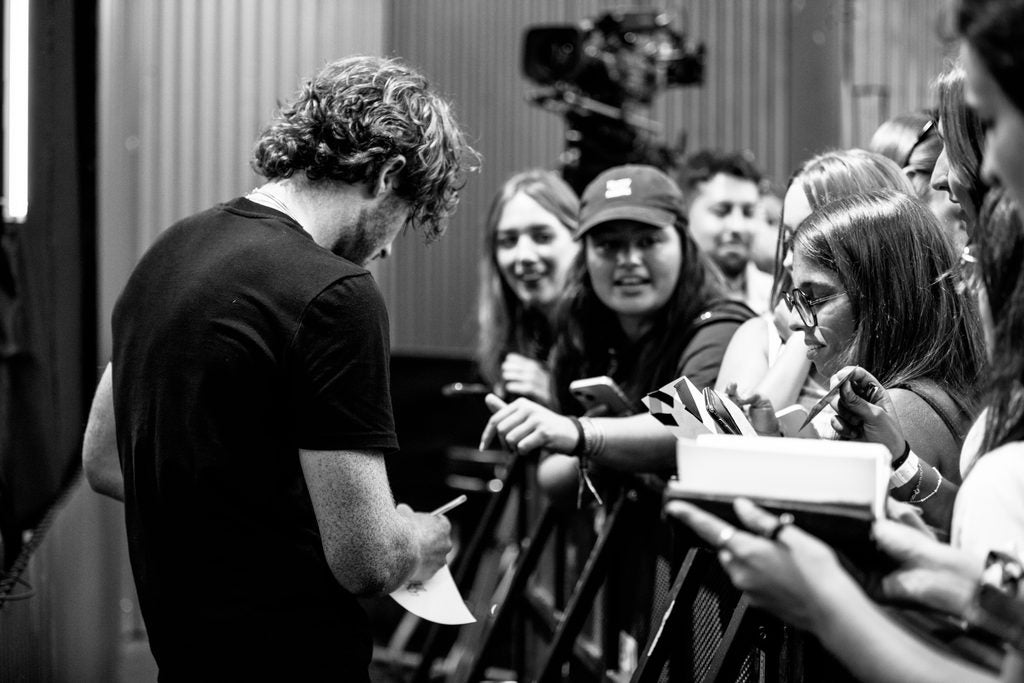
The endowed scholarship bears the hallmarks of Hansen’s own musical journey. Hansen majored in ethnomusicology, mainly because he loves music from all across the world. “When I’m on tour, I’ll grab three or four records in every record shop. I’ll have no idea what they are, sometimes they will be in different languages, and I’ll bring them home, and I’ll listen to them. I love that discovery.”
Some of that can be chalked up to the Department of Ethnomusicology’s venerable tradition of bi-musicality—the pedagogical practice of teaching music as both theory and practice. Students take classes, but also join performance ensembles on world traditions, from Ghana to Tibet, from Mexico to India. At UCLA, Hansen learned how to play instruments he had never seen before. He studied microtonal progressions. And he learned from masters of the craft who brought varied experiences with music.
“I was really moved by people’s emotional connection to music,” said Hansen. “I played with the Iranian music ensemble, under Pejman Hadadi. He would tell me stories about how hard he worked to keep Iranian musical traditions alive. You could see his passion, his deep love. And all I could think, was—there’s so much to learn from that.”
Given Hansen’s honesty and deep connections to global music, it should not surprise anyone that you can find his fans on every continent. But it sometimes surprises Hansen. He recounted his recent trip to South Africa, where he played the Montreux Jazz Festival. Hansen, who has no record label and who had never been to the country before, couldn’t figure the booking. “I went out on the stage, and I was so confused why they had booked me—no one there would know the music. And I look out in the audience, and people are singing my songs. And the next day, people are walking up to me with the Google Translate app to talk to me about the music.”
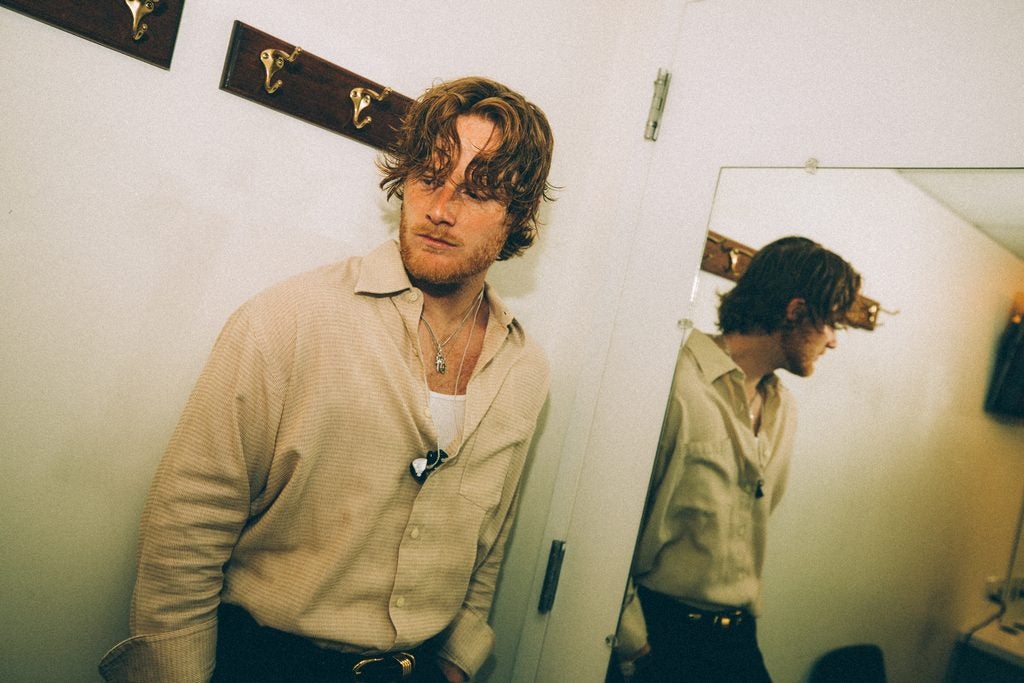
Hansen started at UCLA in 2018, and at times wasn’t sure of himself as he started off in a demanding school of music. “I was a little closed off when I arrived. I felt like I needed to fade back, not step on anybody’s toes, and stay in the background. And I didn’t really grasp that the best thing I could do in education was get out of my comfort zone.”
Hansen recalled a pivotal moment when he played with the Afro-Cuban ensemble, where he had to sing in Spanish—a language he barely knew. And while the Matt Hansen of 2026 appears at ease on the stage and the (social media) screen, the same was not true for the student trying out Afro-Cuban music for the first time.
So he went for it.
“I said to myself, I’m going to try this, just try it. And there I was, singing in front of everybody. And dancing, too. I mean—dancing was not a thing that I did, ever. But I did it.”
Like many students of that time, COVID upended his life. The disruption, the social distancing—it pushed him off one path and left him uncertain and drifting. Briefly he contemplated leaving school altogether. Ultimately, it led him to the rooftop of Parking Deck 3 on the far northern edge of campus, where he videorecorded himself performing covers at the top of his lungs. He uploaded Frank Ocean’s “Godspeed” to TikTok and it went viral. Really viral. Almost overnight, it had tens of millions of views.

Instant fame in the midst of pandemic isolation can prove disorienting. His inbox flooded with interest from record executives. There was pressure to push on. And there were also moments of serendipity, like when Hansen discovered in Fall 2022 that he was trending in Tehran.
“My cover of “Titanium” was being picked up by Iranian influencers and reused. I didn’t know why, I was really confused,” said Hansen. “And I looked at the comments, and they are all in Farsi.”
The people of Iran had taken to the streets to protest the killing of Mahsa Amini, a Kurdish woman who had been beaten by Iran’s morality police for not wearing her hijab in public.
She later died in police custody. The palpable anger of widespread protests—largely spontaneous and leaderless—caught the world’s eye. And Hansen’s cover of “Titanium” became part of the soundtrack of rebellion.
Hansen used the moment to raise money for the Center for Human Rights in Iran. The experience stayed with him throughout the years, making him reflect on what success was, and what it was worth.
After his career in the music industry began to take off, Hansen and his family decided to do something that would have a lasting impact. They endowed a scholarship for students studying ethnomusicology or the global music industry.
“I’ve realized how lucky I was at UCLA, building a foundation of knowledge, meeting a great network of people that I love,” said Hansen, “I want others to be able to have that experience too.”