

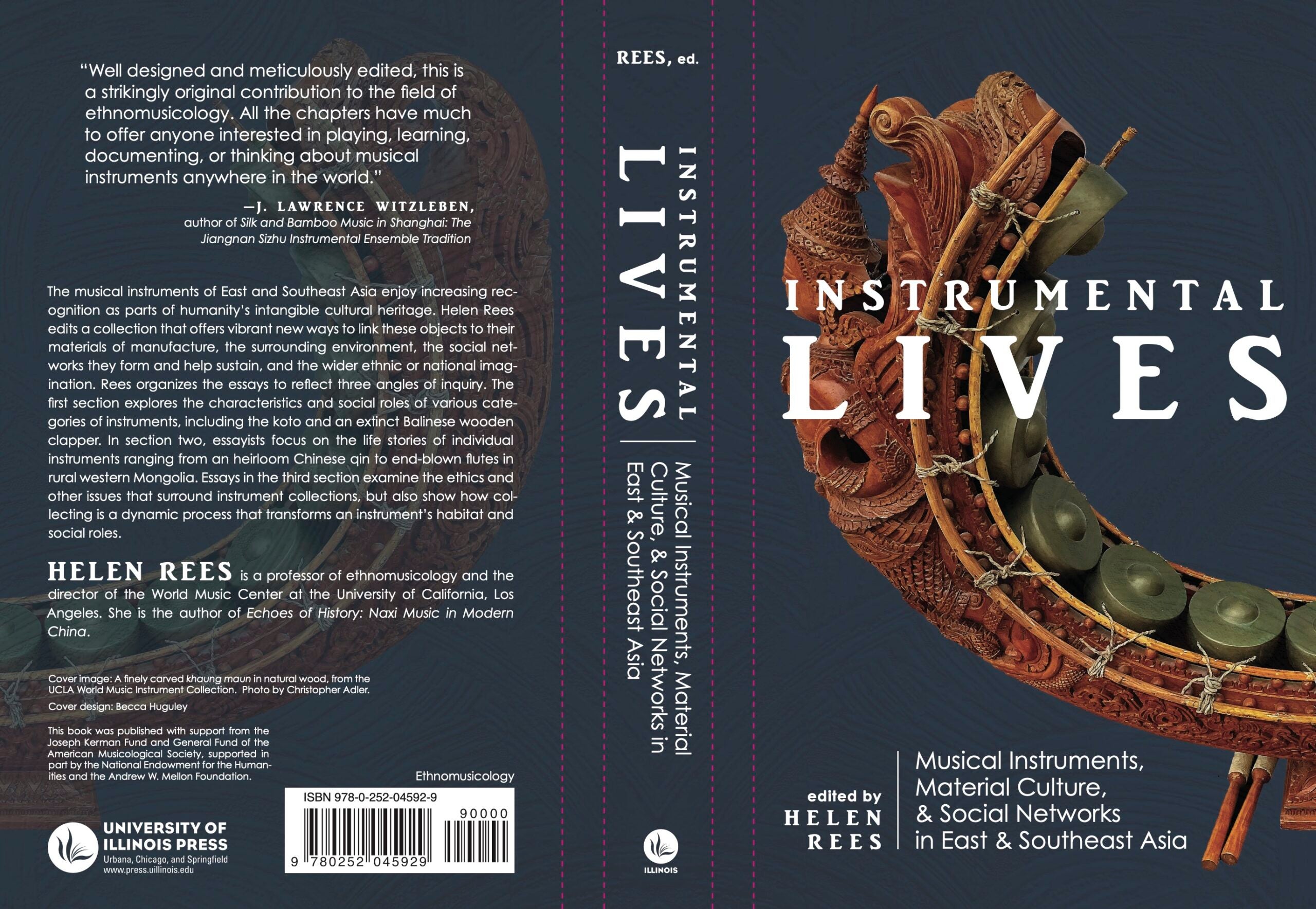
Instrumental Lives: Musical Instruments, Material Culture, and Social Networks in East and Southeast Asia, published by the University of Illinois Press and edited by Helen Rees, is joint winner of the 2026 Klaus P. Wachsmann Prize for Advanced and Critical Essays in Organology. The award was announced on November 7 at the Society for Ethnomusicology’s annual meeting in Bloomington, Indiana.
Awarded biennially, the Wachsmann Prize recognizes outstanding scholarship in organology, the study of musical instruments. It is the only award in the field of organology to extend to edited volumes of scholarship.
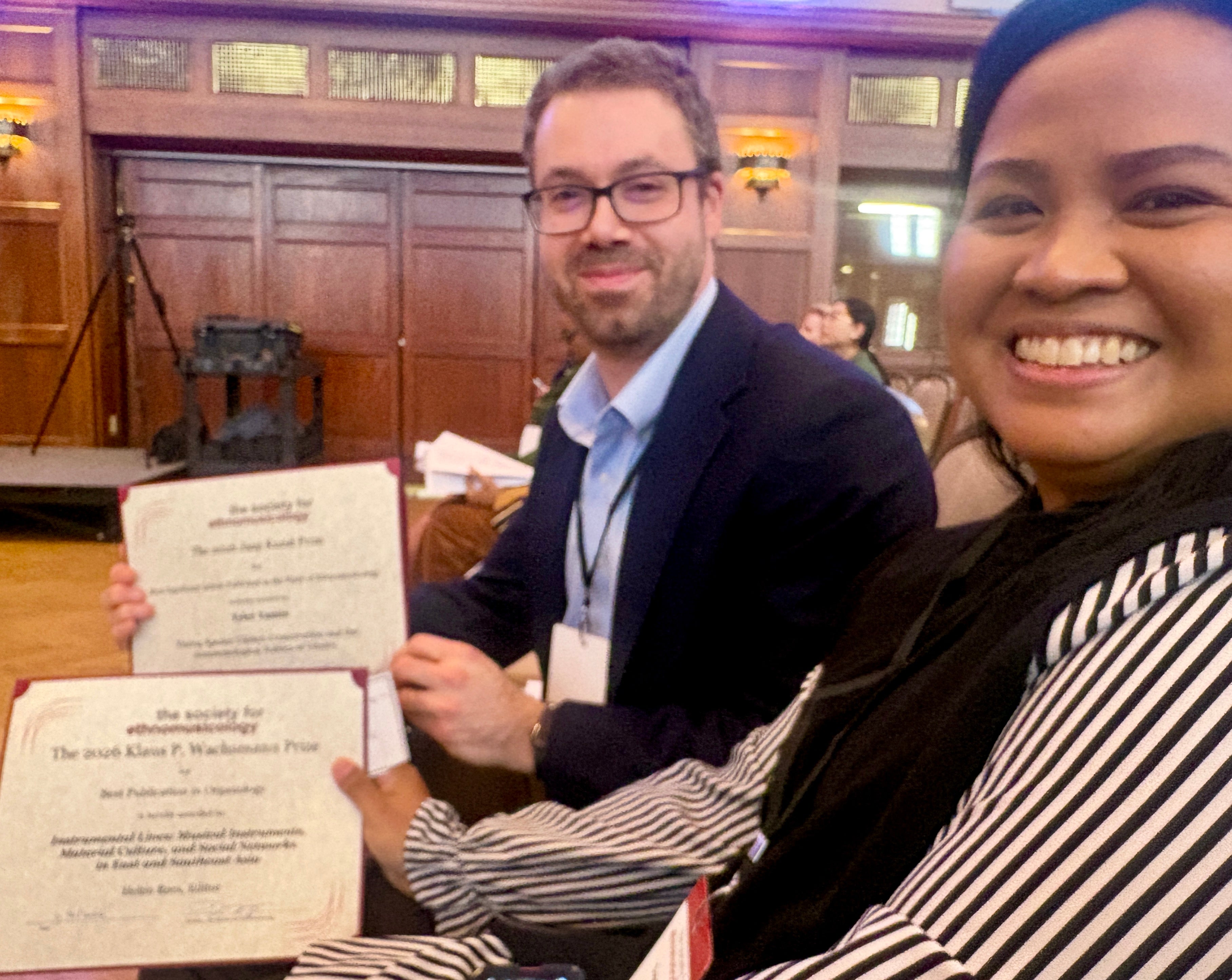
Three of the book’s seven chapters were written by UCLA scholars. Helen Rees, professor and chair of the Department of Ethnomusicology at The UCLA Herb Alpert School of Music, edited the volume and authored an essay on the role of Asian instruments in the founding of UCLA’s World Musical Instrument Collection, established in the late 1950s. A chapter on the revival of an extinct Balinese musical instrument was contributed by UCLA alumnus Tyler Yamin (PhD, 2022), now a visiting assistant professor at Bucknell University. Supeena Insee Adler, curator and conservator of the WMIC, adjunct associate professor, and director of the Music of Thailand ensemble, contributed a piece on her repair and revival of the historically important Thai musical instruments in the UCLA collection. Adler’s chapter also received honorable mention for the 2025 Article Prize of the International Council for Traditions of Music and Dance.
The volume explores musical instruments of East and Southeast Asia, everything from their production and material culture to their role in creating and sustaining social communities. Essays are organized into three sections. The first explores instrument categories, or types of instruments—for example, Japanese koto zithers in general. This contrasts with section two, which focuses on the life stories of individual instruments. Essays in section three look at the pragmatics, ethics, and social questions that arise from instrument collections, and how the very act of collecting instruments transforms their habitat and social roles.
Beyond the contributions of UCLA scholars, the volume also highlights the importance of the university’s research collections. The World Musical Instrument Collection figures prominently in two of the three essays in the final section, while the UCLA Ethnomusicology Archive’s extensive field recordings and documentary holdings provided essential resources for the chapters by Yamin, Adler, and Rees.