

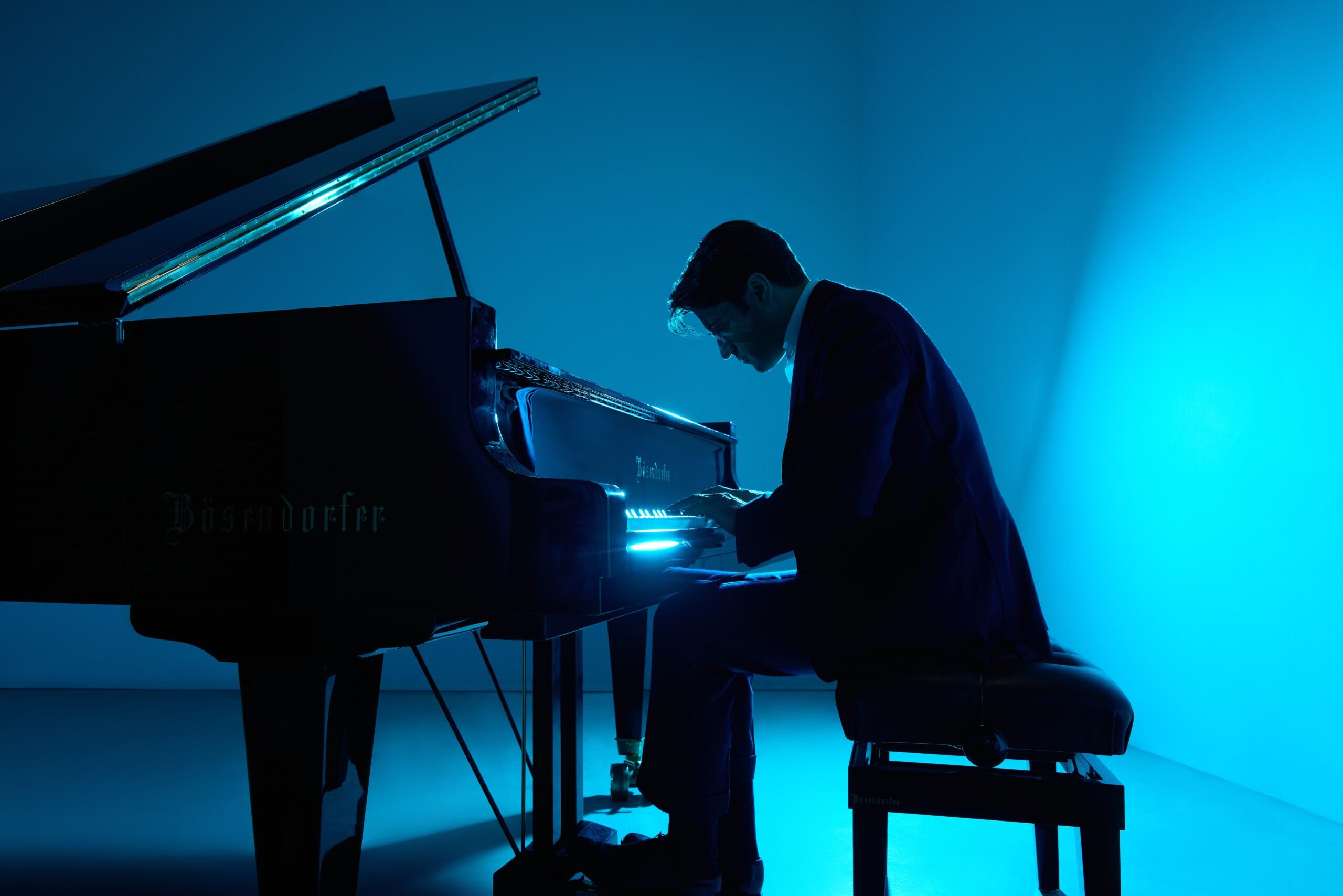
What makes a masterpiece? And what makes a masterpiece alive?
For pianist David Kaplan, what’s written on the page is not enough. It never was. As a young student, he found extemporizing easier than sightreading. Certainly more fun. He invented passages while practicing Mozart and Bach. He tried the patience of his teachers with extended improvisation during lessons.
Now that lifelong impulse to improvise is ingrained in his second solo album, quasi una fantasia, released November 20 on Orchid Classics.
At the album’s heart are Beethoven’s two Op. 27 piano sonatas, both subtitled Sonata quasi una Fantasia, including the celebrated “Moonlight Sonata.”
But be prepared for something different. Kaplan introduces improvised embellishments and transitions. Beethoven is reinterpreted and, at times, reimagined.
“Classical scores were never meant to be sacred tablets intended for eternal posterity,” explained Kaplan.
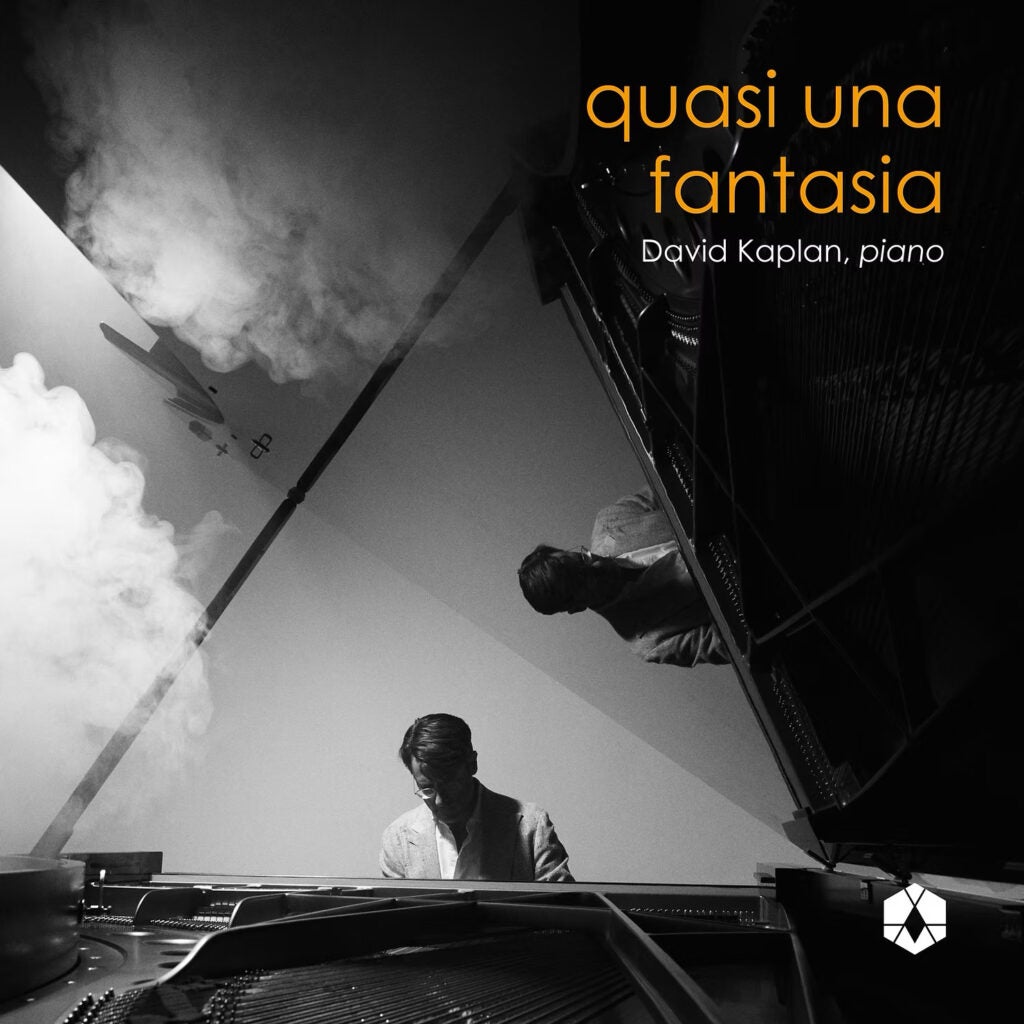
The album grew out of a recital program Kaplan premiered at Los Angeles’ Zipper Hall in the Piano Spheres series.
Alongside Beethoven, Schumann and Brahms (and Ligeti and Louis Couperin) are contemporary compositions commissioned by Kaplan: Christopher Cerrone’s Passagework, Anthony Cheung’s Holding Patterns and Andrea Casarrubios’ Sandglass.
Each offers a different perspective on musical freedom. Cheung’s piece demands meticulous adherence to rhythmical notation while opening space for improvisation. Its forceful dance across upper and lower registers. Cassarubios’s depiction of sand through an hourglass allows the piano to evoke everything from gathering energy to cascades to eventual stillness.
Kaplan’s improvisation also serves as a connective tissue for pieces otherwise separated by centuries. Using preludes and transitions, Kaplan creates what he calls
“the illusion of continuity between disparate musical languages.”
Because even masterpieces require reinvention, or at least reinterpretation.