


A new collection of scholarly essays honors Michael Beckerman, dean of The UCLA Herb Alpert School of Music, for his contributions to musicology and his influence on generations of scholars.
Cross-Cultural Dialogues: Essays in Honor of Michael Beckerman is a Festschrift, a 540- page volume of containing 38 essays assembled by colleagues, students, and fellow scholars to recognize a distinguished academic’s contributions to a field. The collection reflects Beckerman’s five decades of scholarship, particularly his groundbreaking work on Central European music, while also demonstrating the breadth of his intellectual interests and influence.
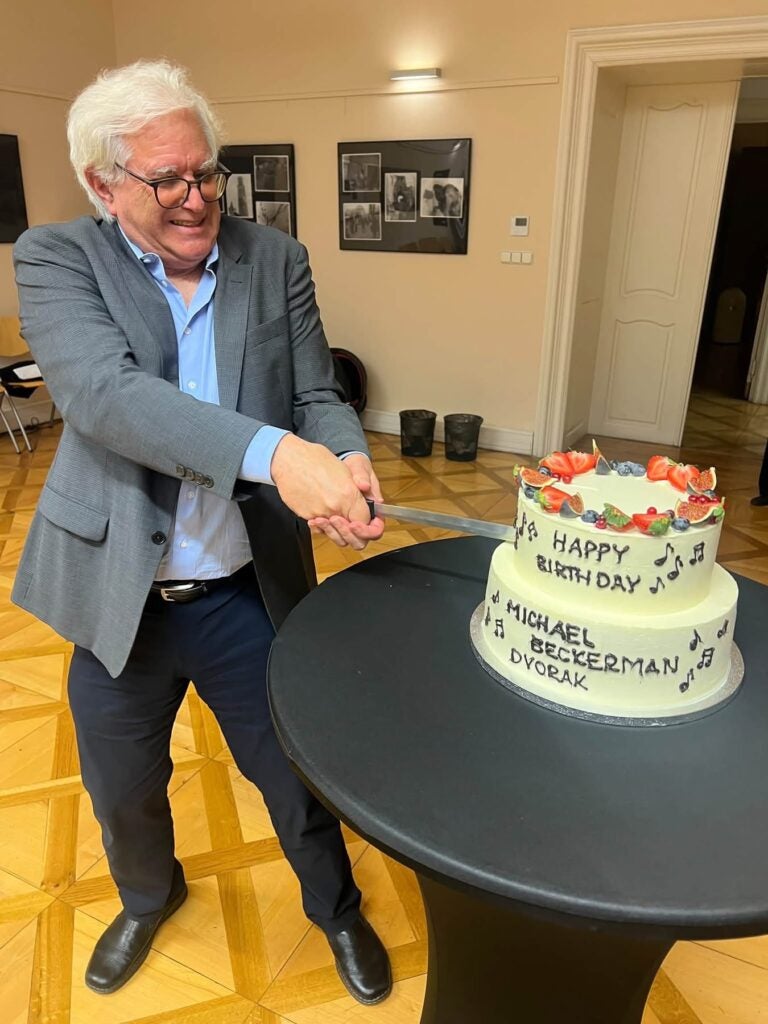
The volume, which will be distributed by the University of Chicago Press, was presented to Beckerman in September 2026 at NYU Prague, where he had been invited to give a talk. Unbeknownst to him, former students and colleagues had gathered to celebrate his birthday and his career.
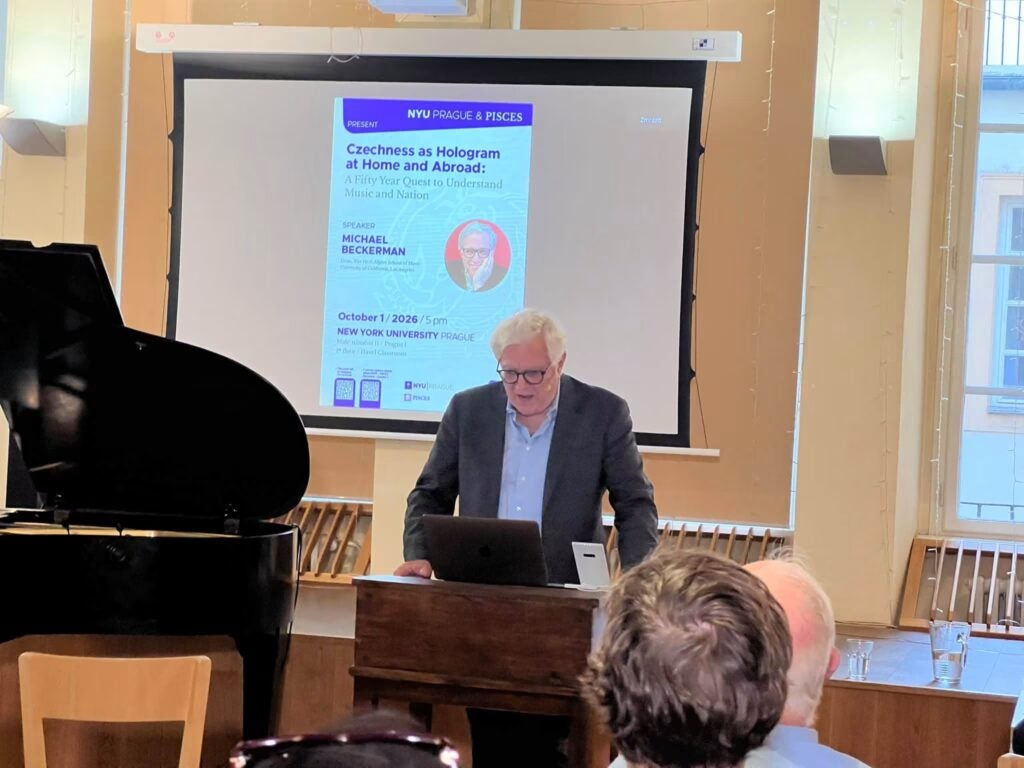
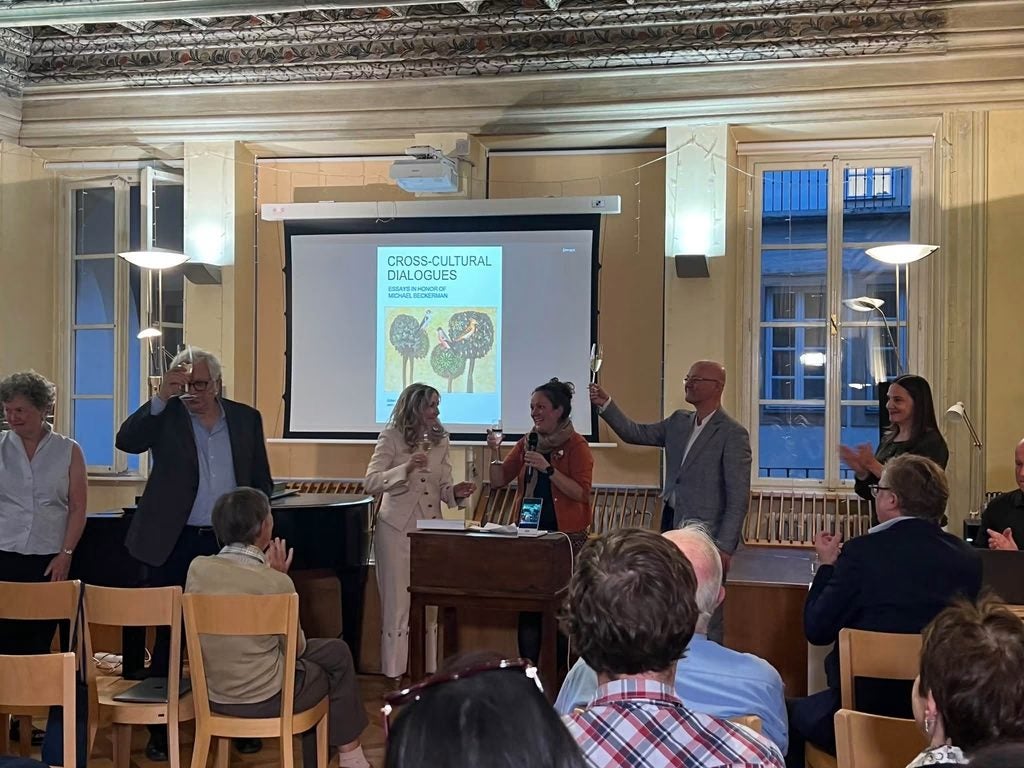
“It really was a surprise,” said Beckerman, now one year into his tenure as Dean of The UCLA Herb Alpert School of Music. “And I was thrilled by the variety and the quality of the essays.”
The volume’s first three parts, comprising more than half the contributions, explore sacred and secular music of Central Europe, Czech identities, and music in the concentration camps. These subjects lie at the heart of Beckerman’s scholarly work, building on his groundbreaking studies of Dvořák, Janáček, and Martinů and extending into his exploration of the creative world in and beyond concentration camps.
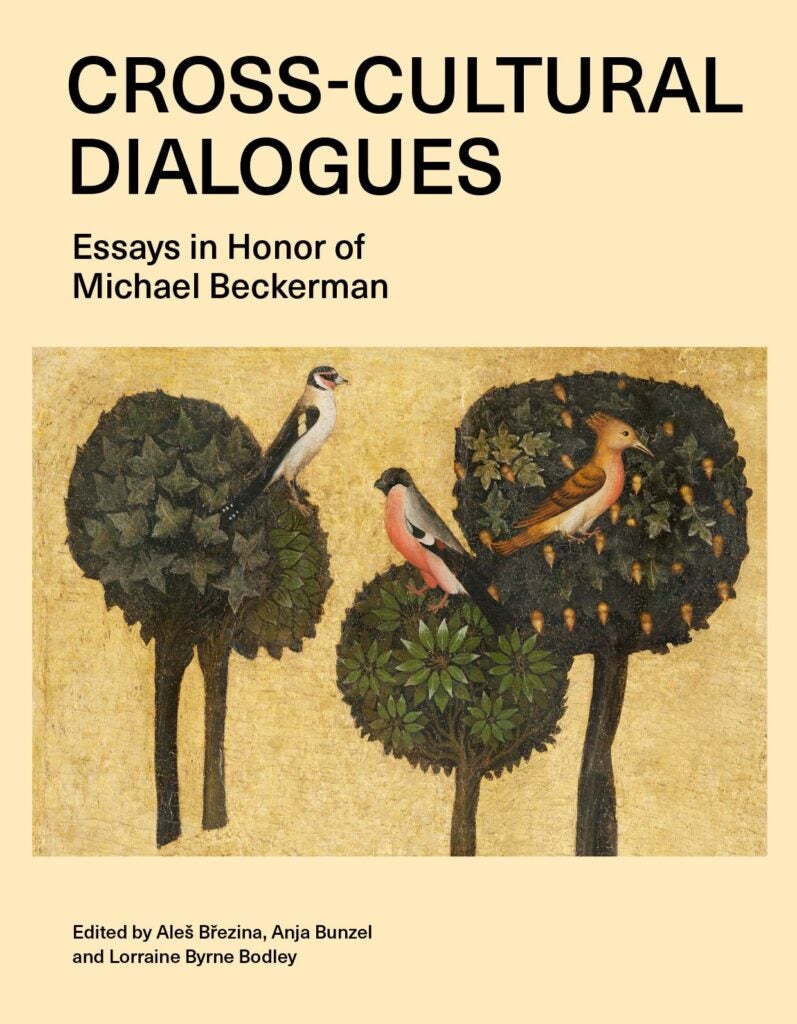
This essay collection is written in celebration of a remarkable academic leader and scholar whose writing on Czech and Eastern European music … as well as on music in the concentration camps, has profoundly shaped the musicological landscape. Unafraid to be controversial, Michael Beckerman’s approach represents a number of vital challenges to musicology.
-Aleš Březina, Anja Bunzel and Lorraine Byrne Bodley
The connections are often as personal as they are scholarly. Jiří Kopecký of Palacký University in Olomouc, Czech Republic, analyzed Bohuslav Martinů’s piano cycle The Puppets, a classic of piano pedagogical literature but nonetheless dismissed by some musicologists as trivial. Not so Beckerman, who not only has treated The Puppets seriously as both performer and scholar, but also collected Czech puppets, which he continues to display in his office. Susan McClary of Case Western Reserve University compared their approaches to foregrounding marginalized music and the laughter they both shared recovering from surgery they happened to have at the same time.
The subjects range far beyond Central Europe, itself a reflection of Beckerman’s capacious intellectual curiosity. Essays address everything from broad, state-of-the-field inquiries to closely focused case studies, from songs to symphonies, and from Bizet to W. E. B. Du Bois. What connects them is a persistent interrogation of the relationship between music, art, and society—an approach that has been a hallmark of Beckerman’s own scholarly inquiry.
Indeed, the notion of cross-cultural dialogue here goes deeper than conventional academic gestures toward interdisciplinarity. The authors explore the perception of music through literature and cinema, and scrutinize the very acts of listening, imagining, and making meaning from musical experience. The result is a collection that takes seriously not only music itself, but the many ways it enters into human consciousness and social life.
In one particularly suggestive essay, J. Martin Daughtry uses the popular classic “Killing Me Softly” to scrutinize the phenomenon of the “earworm.” Often dismissed as irrelevant or contrasted with the supposedly more substantial experience of listening to “real” music, earworms become, in Daughtry’s account, moments of unexpected connection—with the past, with other people, and with the world around us. What might seem a minor or even irritating musical experience becomes an occasion for examining memory, perception, and the intimate ways music inhabits our lives.
That willingness to take seemingly marginal musical experiences seriously, and to follow them wherever they lead, helps explain the extraordinary breadth of the volume. It also speaks to why Beckerman was singled out for this honor.
It is not simply the shelf-load of books, articles, papers, and lectures, both scholarly and public, produced over a career spanning five decades. Nor is it simply that Beckerman’s work has become a point of departure for virtually any deep study of Dvořák and Janáček. Those accomplishments alone would justify the honor. But the range of subjects and approaches represented in Cross-Cultural Dialogues suggests an influence that cannot be measured by publications or citations alone.
Look instead to the scholarly community Beckerman has cultivated. He has inspired students and colleagues through his commitment to individual intellectual and personal development. He has provoked them with his own restless curiosity. He has never surrounded himself with acolytes or shown interest in creating a “Beckerman school” of musicology. Rather, his influence is most apparent in the individuality and independence of the scholars who have worked with him.
Intellectual rigor and controversial stances sit alongside imagination and generosity. For Beckerman, these have never been competing impulses. They are part of the same scholarly temperament. The volume’s dedication, written magnanimously, but in sparing prose by Lorraine Byrne Bodley, speaks of this. It attributes Beckerman’s breadth to his nimble mind, his “vitality and creativity.” Its authors also cite his “uncompromising critical feistiness, unusually subtle and wide-ranging musical knowledge, profound musicality, extraordinarily imaginative research and great personal generosity.”

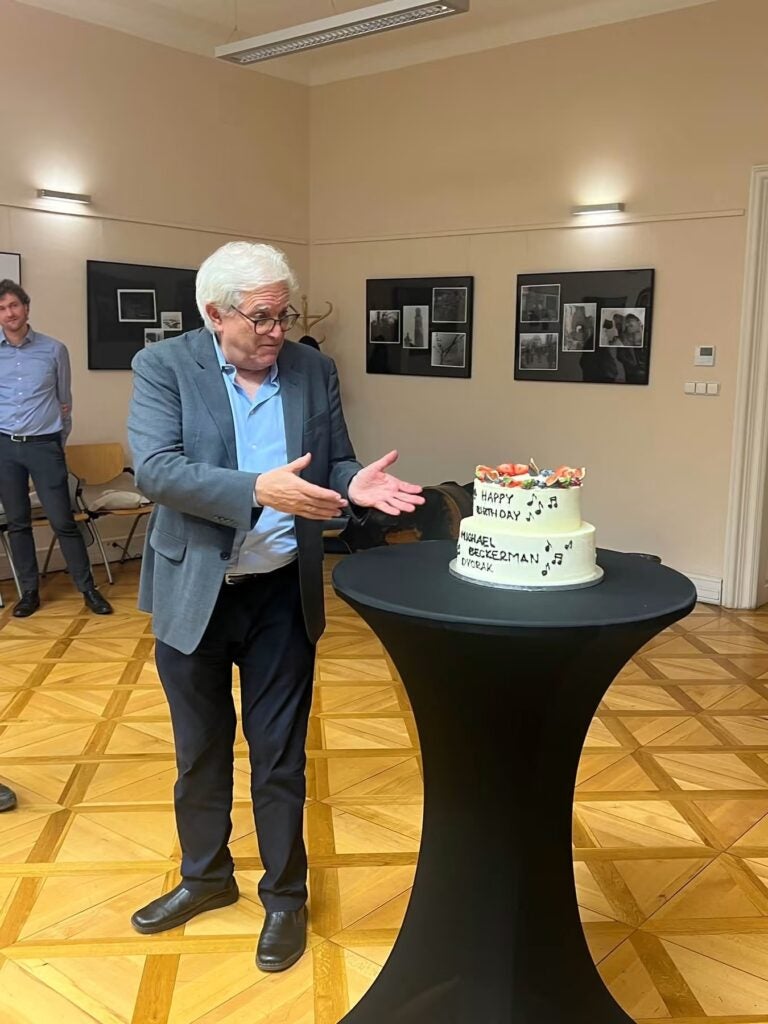
There may not be a Beckerman school, but there is definitely a Beckerman ethos: a commitment to friendship and warmth, to scholarly community and to a broader public. It is an ethos of acceptance and belonging, but also of rigor and principled disagreement. And most importantly, an enduring respect for engagement with audiences both within and outside the academy.
That ethos was on display at Beckerman’s celebration in Prague this September, where scholarly debate mixed with music and friendship. Beckerman was surprised not only with the Festschrift, but also with performances of Czech folk music and a “flash mob” performance of the opening of Smetana’s Bartered Bride, which took place in Prague’s central plaza. Colleagues and former students also joined remotely to sing him “Happy Birthday,” the song a subject of one of Beckerman’s articles. Then they offered one more song, this time in Czech.