


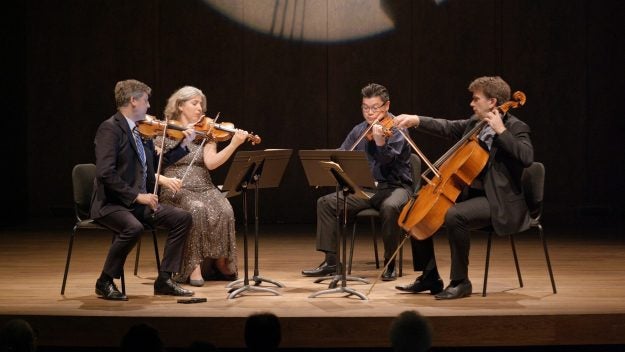
The Ehnes Quartet continues its eagerly anticipated Beethoven Quartet Cycle at UCLA!
The Ehnes Quartet, in its exciting three-year partnership with the UCLA Herb Alpert School of Music as the school's Visiting String Quartet in Residence, presents the next thrilling installments of its comprehensive six-concert chronological exploration of Beethoven's complete string quartets. These two upcoming performances in Schoenberg Hall showcase the ensemble's signature interpretive depth, seamless collaboration, and profound musical insight as they delve deeper into Beethoven's evolving mastery of the medium.
As 2027 approaches—the 200th anniversary of Beethoven's death (March 26, 1827)—this cycle arrives at a poignant moment, illuminating the enduring power and timeless relevance of his quartets. Drawing on Professor William Kinderman's seminal study The String Quartets of Beethoven, the series highlights Beethoven's transformative processes: motivic evolution, variation, and interconnection. These middle-period works build on the foundations of the early quartets with greater symphonic scope, emotional intensity, and structural innovation, bridging toward the profound depths of his late masterpieces.
Program III – The third concert of the cycle
The "Rasumovsky" Quartets
Wednesday, February 3, 2027 at 7:30pm
Schoenberg Hall, UCLA
-String Quartet in F Major, Op. 59, No. 1 — Expansive and heroic in scope, this grand opener features a noble first movement of symphonic breadth, a deeply lyrical Adagio, and a buoyant finale that demands technical brilliance and ensemble cohesion. Often likened to an "Eroica" for strings, it marks Beethoven's bold expansion of the quartet form.
-String Quartet in E Minor, Op. 59, No. 2 — Intense and emotionally charged, with turbulent contrasts and a profound sense of drama. The work showcases Beethoven's mastery of tension, rhythmic drive, and lyrical introspection, reflecting the heroic spirit of his middle period.
-String Quartet in C Major, Op. 59, No. 3 — A brilliant culmination to the set, opening with a dramatic slow introduction that gives way to exuberant energy. Highlights include the singing Andante, a graceful Menuetto, and a dazzling fugal finale full of vitality and defiance.