
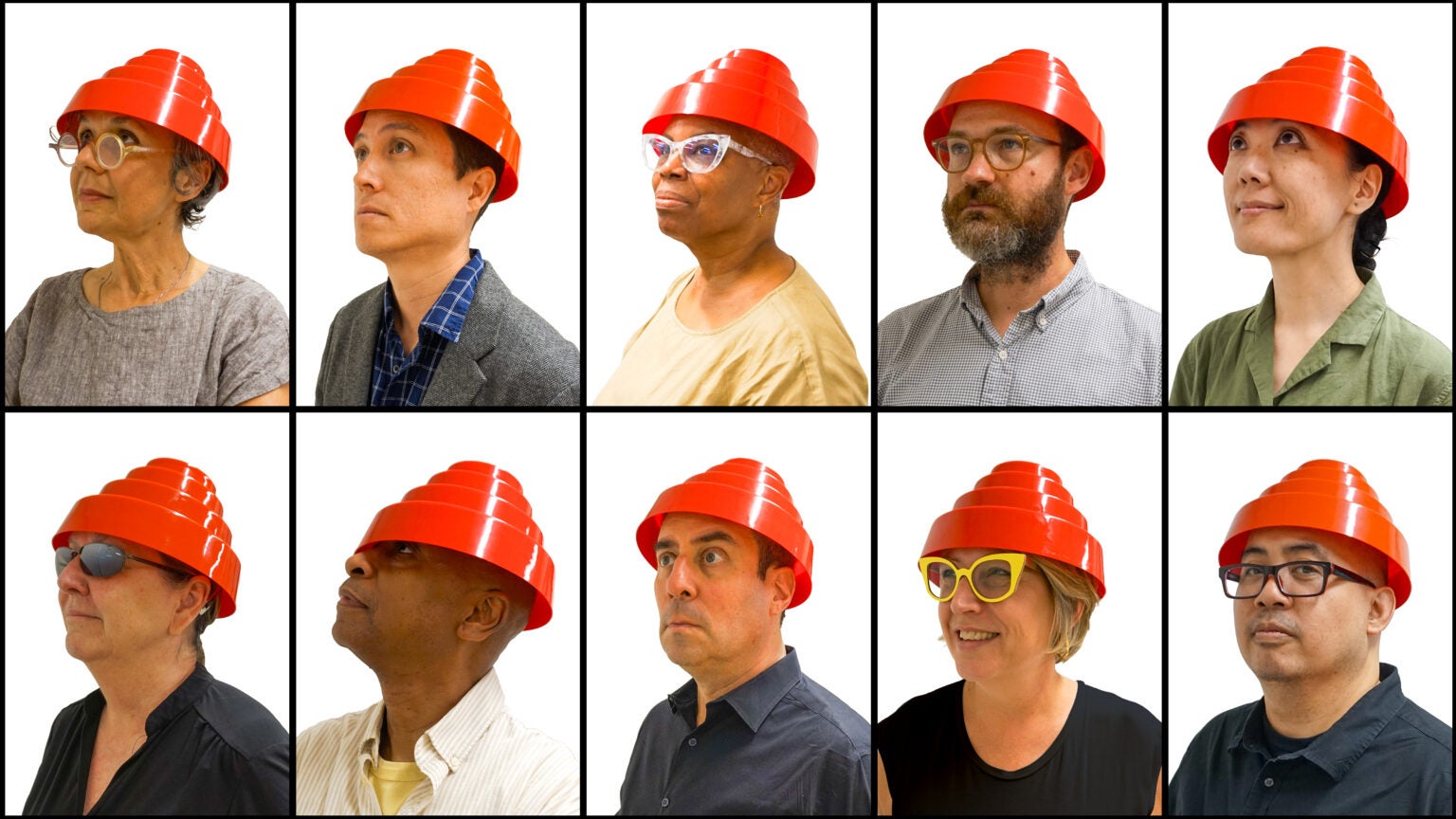
Theoreticals Return
Music of UCLA Theory Faculty
Wednesday, October 28, 2026
8:00 p.m.
Schoenberg Hall of Music
The UCLA Herb Alpert School of Music
Performers
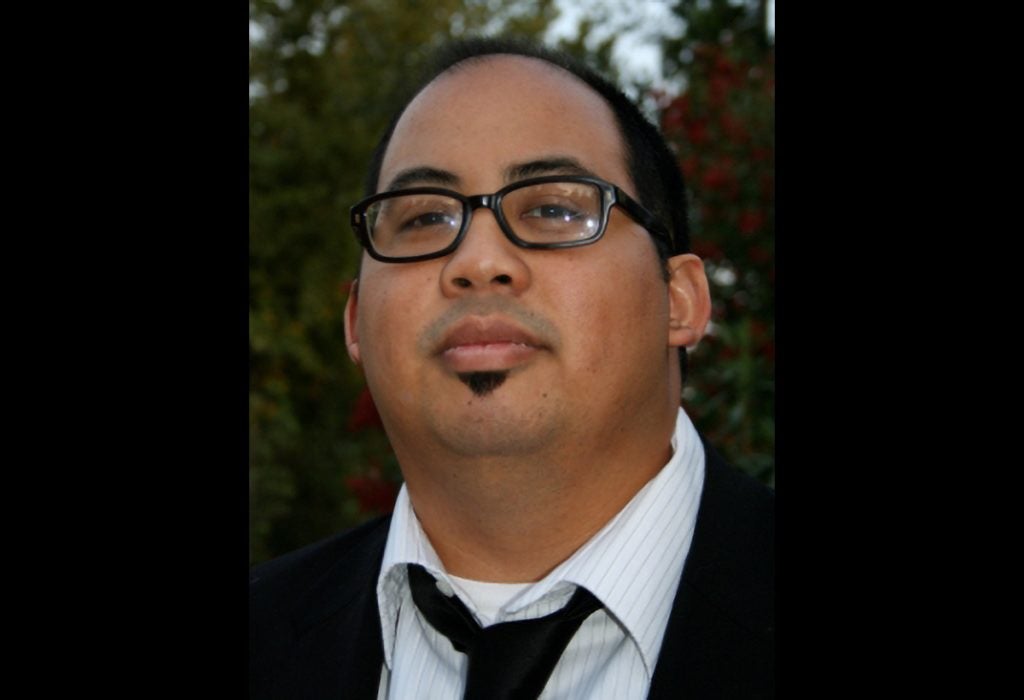
Dante De Silva
See Bio
Dante De Silva is a Los Angeles-based composer and musician. His music has been described as “haunting” (Classical Sonoma) and “beautiful” (Los Angeles Times) to “sparkling” (San Francisco Classical Voice) and “fun” (Sequenza21). From his early days in a rock band up until the present, Dante has always aimed to create music that evokes emotions ranging from the simple to the complex. To conjure those emotions, his compositions incorporate a characteristic balance of lyricism, simplicity, humor, fragility, and even savagery.
He has received commissions from Grammy-winning pianist Gloria Cheng, Opera Parallele, the Verdehr Trio, the B Band, and the Humboldt State University Percussion Ensemble, among others. In addition to his commissions, performers of his work include Talea Ensemble, Pacific Serenades, pianist Ryan MacEvoy McCullough, What’s Next, and Composers Inc. His music has been performed throughout the U.S., as well as parts of Canada and Europe.
De Silva holds a Ph.D. in composition from UCLA, where his primary teachers were David Lefkowitz and Paul Reale, an M.A. in composition from UC Santa Cruz with David Cope and Paul Nauert, and a B.A. in music with an emphasis in piano performance from Humboldt State University, where he studied with Brian Post (composition), Eugene Novotney (percussion, composition), and Deborah Clasquin (piano).
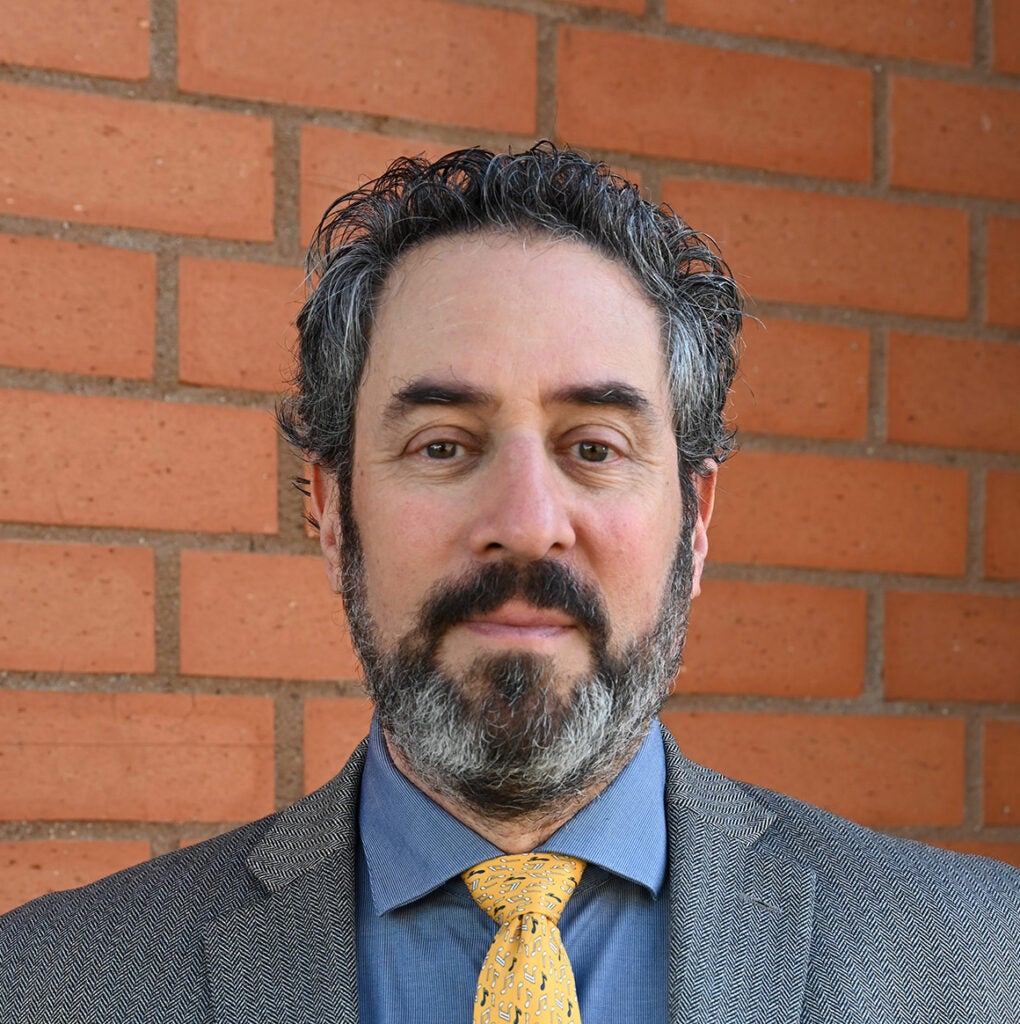
David S. Lefkowitz
See Bio
Composer, theorist, and professor David S. Lefkowitz has won international acclaim, with performances in Japan, China, Hong Kong, Taiwan, Russia, Ukraine, Switzerland, Italy, Netherlands, UK, France, Germany, Hungary, Czechoslovakia, Spain, Canada, Mexico, Israel, and Egypt. He has won recognition from Fukui Harp Music, ASCAP Young Composers, NACUSA, Guild of Temple Musicians, Chicago Civic Orchestra, Washington International, Society for New Music’s Brian Israel, ALEA III, and Gaudeamus Music Week. He has had residencies with the University of Nevada/Las Vegas, National Sun-Yat Sen University (Kaoshiung, Taiwan), National Capital Normal University (Beijing, China), Herzen University (St. Petersburg, Russia), and Meet the Composer. He has presented his music at countless universities across four continents and throughout the United States. He has also been a judge for many competitions for composers, locally, nationally, and in St. Petersburg, Russia.
Lefkowitz has received more than 50 commissions for new works, from soloists Inna Faliks, Gloria Cheng, Suzana Bartal, Susanne Kessel, David Geringas, Grace Cloutier, Petteri Iivonen, Robert Paterson, and Hans Joachim Dumeier; and for ensembles incluing Yarlung Artists for Elinor Frey and David Fung and for Lindsay Deutsch and Joanne Pearce Martin, Pacific Serenades, Coretet for Quartet Integra and for the Sibelius Piano Trio, Cantor’s Assembly, Glory Star Children’s Chorus, Center for Jewish Culture and Creativity for the Synergy Ensemble, Debussy Trio, Russian String Orchestra, Moscow Contemporary Music Ensemble, Herzen University for the St. Petersburg in the Mirror of the World’s Cultural Heritage competition, Irina Donskaya for a harp quartet, Cornell University Glee Club, Baroque Camerata of Zhongshan Daxue (Kaoshiung, Taiwan), Harvard Westlake Symphony Orchestra, and for the Beijing City Opera Company.
David S. Lefkowitz’s more than 150 compositions range from intimate works for many different solo instruments to large ensemble music for orchestra and for wind ensemble, and for choir, soloists, and orchestra.
Lefkowitz’s compositions have been released on more than twenty commercial recordings, including on Bridge, Yarlung, Albany, and Parnassus Records, including four all-Lefkowitz recordings: David S. Lefkowitz Preludes and Fugues on Bridge Records, Harp’s Desire: The Harp Music of David S. Lefkowitz and Music of Contradictions on Albany Records, and Inner World: the Music of David S. Lefkowitz on Yarlung Records. His most recent composition, Green Mountains, Now Black, commissioned for Quartet Integra string quartet, was released on Yarlung Records late last year.
About Lefkowitz’s two-book set of Preludes and Fugues for Solo Piano, guitarist and record producer David Starobin wrote “every once in a while a project comes by which seems so original that I am challenged to re-screw my ears on and such was the case with Lefkowitz’s Preludes and Fugues for Piano.” “Genuinely fascinating … this set of 26 [Preludes and Fugues] is as contemporary in approach, outlook and sound as was Bach’s work in its day. … [Lefkowitz’s] strong sense of rhythm and willingness to combine and juxtapose disparate elements of keyboard writing frequently lead to music that is enjoyable and often surprising,” wrote Mark J. Estrin. And Jonathan Widran wrote “Listening to [Disc 1] feels like you’re listening to a wildly inventive, ultra-exploratory contemporary master composer for piano, truly on par with the greats from throughout the centuries. … Overall, Preludes and Fugues for Piano is a fascinating work that opens fresh and exciting new doors of what’s possible in contemporary piano based classical music.”
Lefkowitz holds degrees from the Eastman School of Music/University of Rochester (Ph.D.), where he studied with Joseph Schwantner and Samuel Adler, University of Pennsylvania (MA), where he studied with George Crumb, and Cornell University (BA), where he studied with Karel Husa. He is Professor of Music Composition and Theory at UCLA, where he has also served as Chair of the Division of Composition and Vice-Chair of the Department of Music.
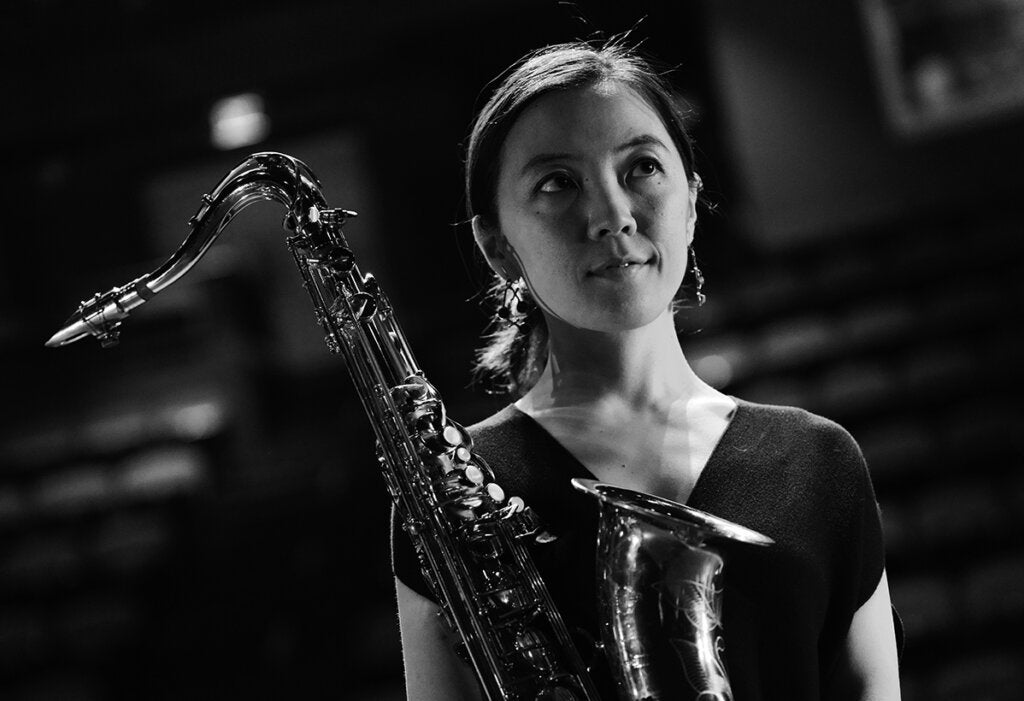
Hitomi Oba
See Bio
Hailed by the LA Times as a “powerfully inventive” and “remarkably versatile L.A. musician with a penchant for crossing all over the musical place,” saxophonist and composer Hitomi Oba’s work emphasizes the integration of improvisation with pre-composed music.
She has written for and performed in various jazz and classical new music settings, including commissions by the Los Angeles Philharmonic’s Green Umbrella series and the Seattle Symphony’s chamber series, and as a member of Kenny Burrell’s Los Angeles Jazz Orchestra Unlimited and the Jon Jangtet. In addition to leading her own ensembles, ranging from trios to big band, Oba is a co-founder of the new music collective, LA Signal Lab, premiering and recording stylistically diverse new music including a collaborative, multi-genre cantata. Her second jazz album, “Negai,” released under Japanese label M&I and distributor Pony Canyon, received a prestigious “Swing Journal 42nd Annual Jazz Disc Award.” Her most recent album, “Water Stem,” was released from Asian Improv Records in May 2023. A new orchestral work, co-composed with Erika Oba and based on the writing of award-winning author and organic farmer, David “Mas” Masumoto, will be premiered by the Fresno Philharmonic in February 2025.
Originally from Berkeley, CA, Oba is currently based in Los Angeles, teaching at the University of California, Los Angeles directing several progressive and exploratory jazz ensembles, teaching jazz saxophone lessons, and developing and teaching multi-genre music theory curricula. Oba was previously a faculty member at Cal State Los Angeles and Pasadena City College and presents masterclasses and workshops on improvisation, composition, and saxophone at various institutions.
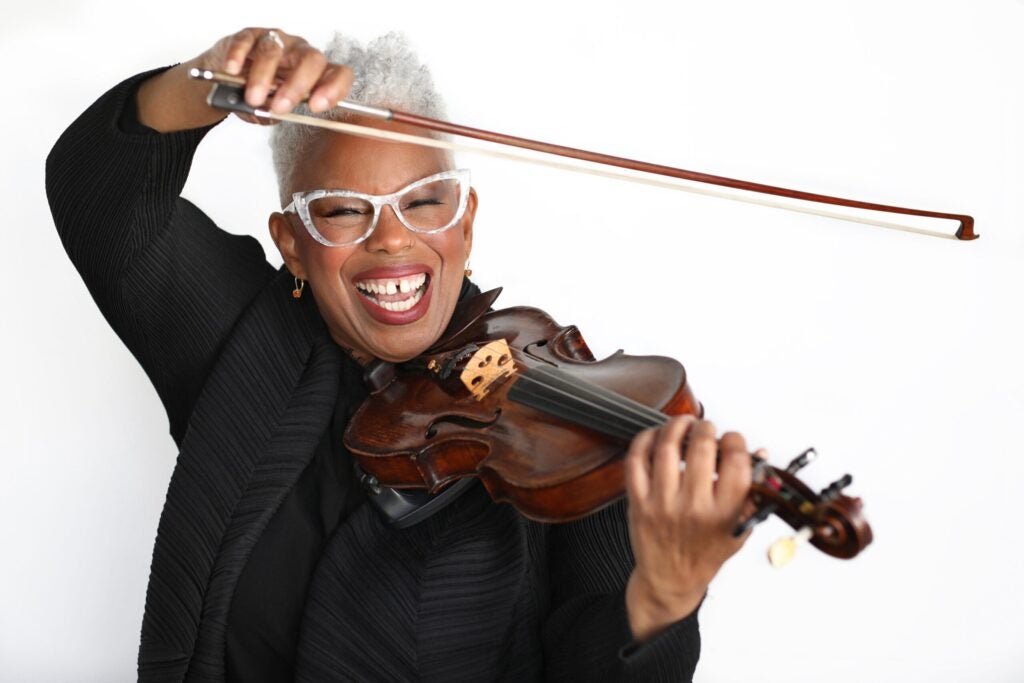
Regina Carter-Garnett
See Bio
A recipient of the 2023 NEA Jazz Masters Fellowship, a MacArthur “genius” award, and a Doris Duke Artist Award, violinist Regina Carter has been widely hailed for her mastery of the instrument and her drive to expand its possibilities. Her current project, Gone in a Phrase of Air, is a musical, spoken word, and media exploration of the impact of urban renewal beginning in the 1950s on Black and immigrant communities and the displacement that resulted—of people and culture—from neighborhoods in Regina’s hometown of Detroit to others in St. Louis, Chicago, New York City, and elsewhere. In the work’s collection of original and reimagined music of the era, Regina shines a spotlight on what’s been lost—gone in a phrase of air—then finds celebration in the ashes.
Regina began studying violin at the age of four using the Suzuki method. She attended Cass Technical High School in Detroit, and her training continued at the New England Conservatory of Music and at Oakland University in Michigan.
A winner of multiple readers’ and critics’ poll awards from DownBeat, JazzTimes, and other publications and a three time Grammy nominee, Regina tours with her own group and has appeared frequently as a guest soloist, including with such performers as Wynton Marsalis and JALC, Kenny Barron, Arturo O’Farrill, the late bassist Ray Brown, Omara Portundo, Chucho Valdes, Mary J Blige, Dolly Parton , Rhiannon Giddens, Steve Turre, Stefon Harris, the late Aretha Franklin, Joe Jackson, Billy Joel, Akua Dixon, Cassandra Wilson, Sweet Honey In The Rock, Eddie Palmieri, Papo Vasquez and others.
Her albums include a self-titled solo debut Regina Carter (Atlantic 1995), Something for Grace (Atlantic 1997), Rhythms of the Heart (Verve 1999), Motor City Moments (Verve 2000),Paganini: After a Dream (Verve,2003), on which she made history by being the first non-classical violinist to play Niccolò Paganini’s Il Cannone, I’ll Be Seeing You: A Sentimental Journey (Verve 2006), Reverse Thread (E1 Music, 2010), Southern Comfort (Sony Masterworks, 2014); Ella: Accentuate the Positive (OKeh, 2017); and Swing States: Harmony in the Battleground (Tiger Turn, 2020).
Regina recently joined the esteemed faculty of The UCLA Herb Alpert School of Music. Past positions have included being on faculty at Manhattan School of Music and New Jersey City University, resident artist for San Francisco Performances and resident artistic director for SFJAZZ. She has also served three times as a jurist for the Pulitzer Prize for music and as a film and music panelist for the Kresge Artist Fellowships. She received an honorary doctorate of humane letters from Albion College in 2006
Regina resides in Maywood, New Jersey, with her husband drummer, composer, and educator Alvester Garnett. She also volunteers as an End-of-Life Doula.
Noah Meites
See Bio
Born and raised in the city of Chicago, the music of Noah Meites (b. 1982) has been recognized nationally by BMI, SCI/ASCAP, the Max and Gretel Janowski Fund, the Virginia Center for Creative Arts, and the Atlantic Center for the Arts. He has been a featured composer at the Bowdoin International Music Festival/Charles E. Gamper Festival of Contemporary Music, June in Buffalo, the Pacific Rim Music Festival, Seoul National University’s NONG Festival, the April in Santa Cruz Festival of New Music, the Oregon Bach Festival Composers Symposium, the University of Michigan, the University of California Los Angeles, the Festival de Musica Antigua in Guatemala, and the Royal Conservatory of the Hague’s Spring Festival.
Meites’ major teachers include Louis Andriessen (with whom he worked closely during a year of intensive postdoctoral study), Diderik Wagenaar and Martijn Padding (the Royal Conservatory of the Hague), and Paul Nauert, Hi Kyung Kim, and David Cope (the University of California Santa Cruz). His other notable teachers include Martin Bresnick, Tamar Diesendruck, and Robert Beaser. Noah holds Doctoral and Masters degrees in Music Composition from UC Santa Cruz and a Bachelor’s degree in Literature and African studies from Brown University.
Also active as a trumpet player, Meites has appeared as a soloist with the UC Santa Cruz Wind Ensemble and is a recipient of Brown University’s Weston Prize for Instrumental Performance. An accomplished improviser, Meites earned a performance certificate in jazz performance from the Centre des Musique Didier Lockwood in Dammarie-Les-Lys, France.
Meites currently resides in Los Angeles where he recently co-founded L.A. Signal Lab, a composer/performer collective dedicated to challenging artificial stylistic boundaries through the commissioning and performance of diverse new works.
Dwayne Milburn
See Bio
Dwayne Milburn is a native of Baltimore, Maryland. He is a 1986 graduate of UCLA (BFA in Music) and a 1992 graduate of the Cleveland Institute of Music (MM in Orchestral Conducting). He received his PhD in Music from UCLA in 2009. In 1993, Milburn began his career as one of only 24 commissioned officer conductors in the U.S. Army Band program. After assignments that included The U.S. Army Band “Pershing’s Own” (Washington, D.C.), The U.S. Army Field Band (Fort Meade, Md.), and the Army Bands Liaison to U.S. Army Central Command (Camp Arifjan, Kuwait), he became the commander of the U.S. Army Europe Band and Chorus (Sembach, Germany). Milburn retired from the Army in 2018 with the rank of Lieutenant Colonel and received the German Army Cross in Silver and the Presidential Legion of Merit. In addition to his responsibilities as a lecturer in music at UCLA, Milburn is in great demand as a conductor, composer, arranger, and clinician. He currently serves as the music director and conductor of the Chamber Orchestra of St. Matthew’s in Pacific Palisades. He has over 20 published works for choir, symphonic band, and orchestra.
Nick DePinna
See Bio
A protégé of musical luminary James W. Newton Jr., composer and trombonist Nick DePinna also trained in Western Art Music composition with David Lefkowitz, Paul Chihara, and Ian Krouse, while simultaneously receiving mentorship from American artists of the African musical diaspora including Kenny Burrell and Jon Jang.
Jan Berry Baker
See Bio
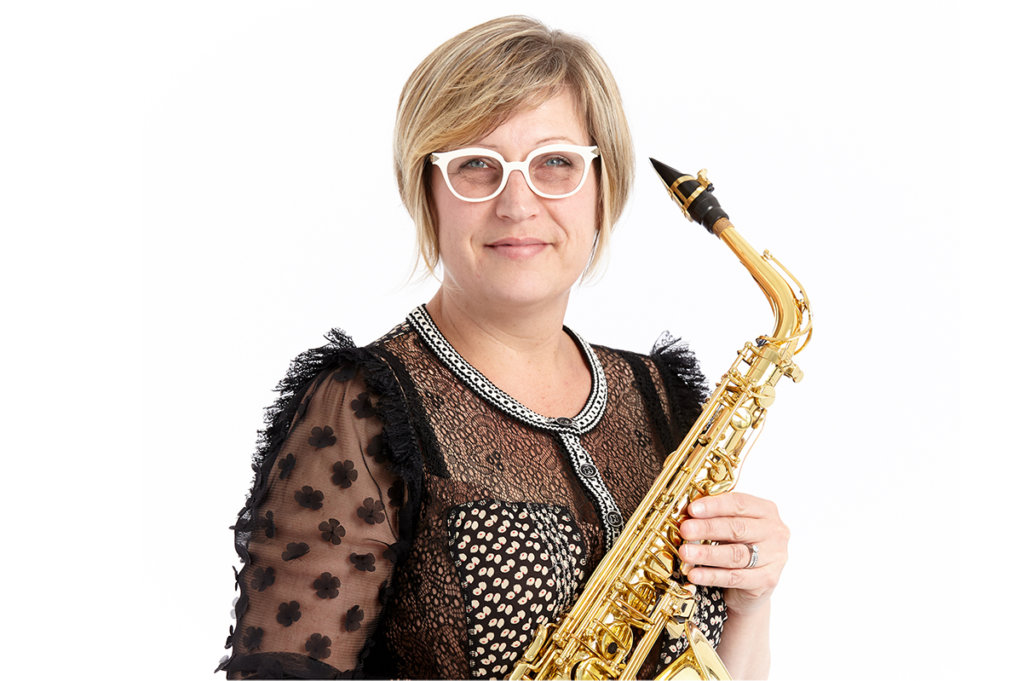
Canadian-American saxophonist Jan Berry Baker has performed as a soloist, chamber, and orchestral musician on many of the world’s great stages. Recent engagements include performances across the United States, Canada, Japan, Mexico, France, Germany, Scotland, England, Ukraine, Switzerland, Austria, and the Czech Republic. She has been featured as a concerto soloist with orchestras in Canada, Ukraine, USA, and most recently with the Sinfonica de Oaxaca in Mexico.
An advocate of contemporary music, Jan is Co-Artistic Director and saxophonist with Atlanta-based new music ensemble Bent Frequency. Founded in 2003, Bent Frequency brings the avant-garde to life through adventurous and socially conscious programming, cross-disciplinary collaborations, and community engagement. Committed to exploding marginalized programming in classical music, one of BF’s primary goals is championing music by women, composers of color and LGBTQIA+. In the last few years, she and Co-Artistic Director and percussionist Stuart Gerber have formed the Bent Frequency Duo Project. Together, they have commissioned over 50 new works for saxophone and percussion and have given countless performances of these works across the USA, Mexico, and Europe including their Carnegie Hall debut in 2016. Their work to fund the creation, performance and recording of new music has been supported by numerous national and international grants such as the Copland Foundation, French American Cultural Exchange (FACE), Barlow Foundation, Amphion Foundation, Ditson Foundation, Mid Atlantic Arts Foundation (National Endowment for the Arts/Andrew Mellon Foundation), and Culture Ireland to name a few.
Jan regularly performs with orchestras such as the LA Philharmonic, Lyric Opera of Chicago, Grant Park Orchestra, Chicago Philharmonic, Atlanta Opera and Atlanta Ballet and has appeared with the Chicago Symphony Orchestra, Atlanta Symphony Orchestra, Joffrey Ballet, Paris Opera Ballet, Chicago Chamber Players, and American Ballet Theater. She can be heard on American Orchestral Works with Grant Park Orchestra (Cedille), The Golden Ticket with the Atlanta Opera (Albany), The BF Duo Project recording Diamorpha (Centaur), Citizens of Nowhere featuring works for clarinet and saxophone (Albany) and is a featured performer on John Liberatore’s Line Drawings (Albany) and Robert Scott Thompson’s Folio, Vol.1, Vol. 2 and Solace (Aucourant).
As an artist and educator, Jan has held residencies at the Summer Institute for Contemporary Performance Practice (SICPP), Nürnberg Tage Aktueller Musik, Sam Houston State New Music Festival (TX), Charlotte New Music Festival, University of Georgia, New Music on the Point (VT) and Dakota Chamber Music Festival. She is highly sought after as a masterclass teacher and speaker, and has given presentations on contemporary music, entrepreneurship, nonprofits and grant writing, community engagement, socially conscious programming, career development and mentoring at major schools of music across the country.
Dr. Baker is Professor of Saxophone and Woodwind Area Head at the Herb Alpert School of Music at UCLA and currently serves as the Vice Chair of the Department of Music and Special Assistant to the Dean for Faculty Mentoring. Prior academic appointments include Georgia State University, Chicago College of Performing Arts at Roosevelt University, Northwestern University and University of Alberta. She studied with Frederick L. Hemke, William H. Street and Barbara Lorenz and earned a Doctor of Music degree in saxophone performance from Northwestern University. She is a founding member of the Committee on Gender Equity in the North American Saxophone Alliance and served as the inaugural leader of the CGE Mentoring Program. Jan Berry Baker is a Selmer Paris, Vandoren, and Key Leaves performing artist.
Varty Manouelian
See Bio
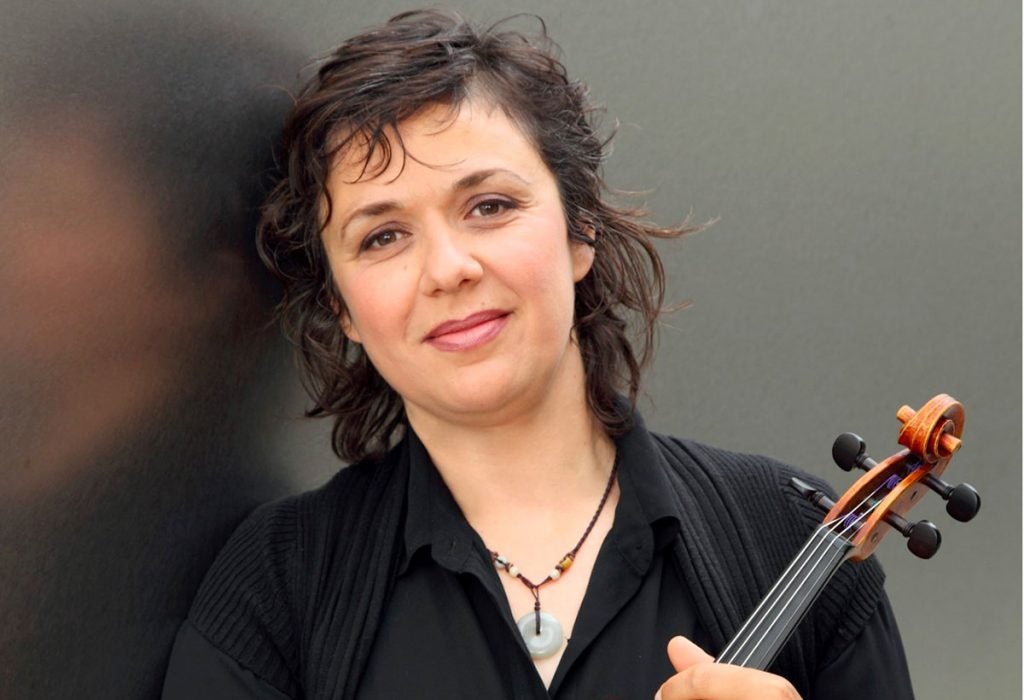
Varty Manouelian made her American Debut in 1993 with the North Carolina Symphony as First Prize winner of the Bryan International Competition. Shehas also been a prize winner at anumber of other competitions in Europe, including the Kotzian International Competition and the Wieniawski International Violin Competition. Manouelian has recorded and appeared as a soloist with numerous orchestras in the United States, Bulgaria, Russia, Armenia, Poland, Spain and Italy. Her chamber music performances include Marlboro Music Festival, Apple Hill Festival, Sebago Festival, El Paso Festival, Olympic Music Festival, among others. She has collaborated as a chamber musician with such artists as Joshua Bell, Yuja Wang, Kim Kashkashian, Rohan de Saram, Garrick Ohlsson, Nobuko Imai, Thomas Adès, and members of the Juilliard, Guarner, Tokyo, Brentano, Borromeo, and Mendelssohn string quartets.
Dedicated teacher and educator, Varty Manouelian is a Lecturer of Violin at the UCLA Herb Alpert School of Music, teaches violin and chamber music at the Colburn Academy and CSPA, and spends summers coaching chamber music at the Apple Hill Festival in New Hampshire. She has been an active participant at LA Philharmonic’s Music Outreach programs, having taught at YOLA since its inception, as well as at the Renaissance Arts Academy.
Prior to joining the Los Angeles Philharmonic in 2004, Manouelian was a member of the Detroit Symphony Orchestra. In Los Angeles, she frequently performs at the Los Angels Philharmonic’s Chamber Music Society and Green Umbrella new-music series, as well as at Camerata Pacifica, Monday Evening Concerts, and the Dilijan Series. Her recording credits include archival radio recordings for the Bulgarian State Radio, and CDs on Albany and Bridge Records labels. Her recent CD of Complete Violin Works of Stefan Wolpe (jointly with Movses Pogossian) made the 2015 Top Ten list in Sunday Times (UK). Varty Manouelian holds degrees from the State Music Academy in Bulgaria and the Cleveland Institute of Music, where she studied with Boyan Letchev and Donald Weilerstein.
David Kaplan
See Bio
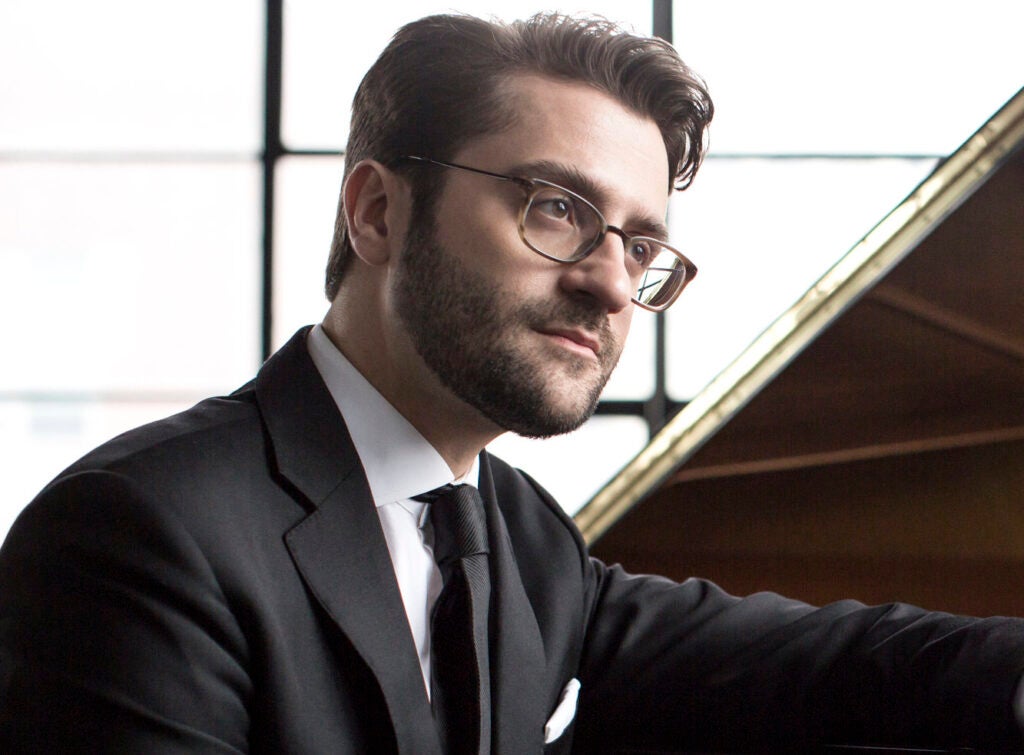
David Kaplan, pianist, has been called “excellent and adventurous” by The New York Times, and praised by the Boston Globe for “grace and fire” at the keyboard. He has appeared as soloist with numerous orchestras, including the Britten Sinfonia and Das Sinfonie Orchester Berlin. Known for diverse and creative recital programs, he has appeared at the Ravinia Festival, Washington’s National Gallery, Strathmore, and Bargemusic. Kaplan’s New Dances of the League of David, mixing Schumann with 16 new works, was cited in the “Best Classical Music of 2015” by The New York Times.
Kaplan has collaborated with the Attacca, Ariel, Enso, Hausman, and Tesla String Quartets, and is a core member of Decoda, the Affiliate Ensemble of Carnegie Hall. He has appeared at the Bard, Seattle Chamber Music, Mostly Mozart, and Chamber Music Northwest festivals, and is an alumnus of Tanglewood, Ravinia-Steans Institute, and the Perlman Music Program. Kaplan has recorded for Naxos and Marquis Records, as well as with Timo Andres in the acclaimed disc, Shy and Mighty (2010), for Nonesuch. For 2021, he commissions renowned composers Anthony Cheung and Christopher Cerrone for two works based on music written by one another, to be programmed with fantasy-form works from L. Couperin to Elliott Carter.
Passionate about teaching, Kaplan was appointed Assistant Professor of Piano at the UCLA Herb Alpert School of Music in 2020. Kaplan’s distinguished mentors over the years include the late Claude Frank, Walter Ponce, Miyoko Lotto, and Richard Goode. With a Fulbright Fellowship, he studied conducting at the Universität der Künste Berlin with Lutz Köhler, and received his DMA from Yale University in 2014. Preferring Yamaha and Bösendorfer pianos, David is proud to be a Yamaha Artist. Away from the keyboard, he loves cartooning and cooking, and is mildly obsessed with classic cars.
Theresa Dimond
See Bio
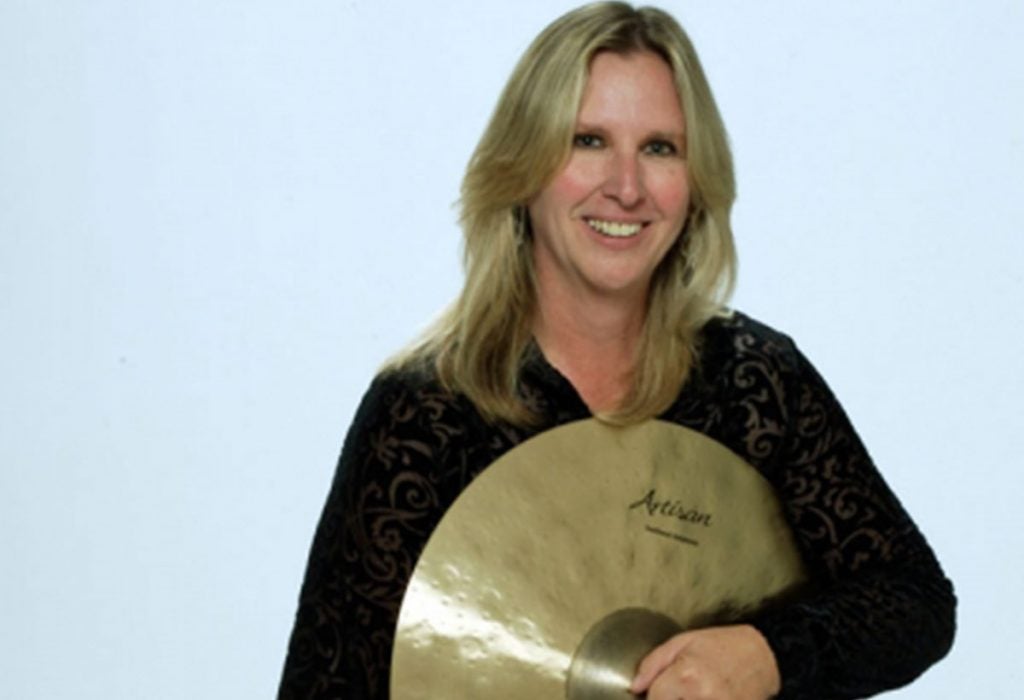
Originally from Phoenix, Arizona, Theresa Dimond began her percussion studies with Mervin Britton at age 8. Upon moving to Los Angeles, she attended the University of Southern California where she studied with Ken Watson, earning a B.M., M.M. and D.M.A. in Music Performance. As a student, she also attended the Interlochen National Music Camp, the Aspen Music Festival, the Music Academy of the West and the Los Angeles Philharmonic Institute. She has studied with the late Mitchell Peters (Los Angeles Philharmonic), Neil De Ponte (Oregon Symphony), F. Michael Combs (formerly of the University of Tennessee) and the late Charlie Owens (Philadelphia Orchestra).
Dimond is currently the principal percussionist of the Los Angeles Opera Orchestra. She has been a member of the orchestra since its inception in 1985. The LA Opera Orchestra has recently won four Grammy Awards for its recordings of Kurt Weill’s The Rise and Fall of the City of Mahagonny, and John Corigliano’s The Ghosts of Versaille.
As a free-lance musician in Los Angeles, Dimond has worked with every orchestral ensemble in the city, including the LA Philharmonic and Los Angeles Chamber Orchestra. As well as her duties at LA Opera, she is currently Principal Percussion of the Pasadena Symphony and Pops and Principal Timpanist of Muse/ique, the Los Angeles Master Chorale and the California Philharmonic. She has worked with many preeminent conductors including Leonard Bernstein, Michael Tilson Thomas, Jeffrey Kahane, Placido Domingo, Herbert Blomstedt, Kent Nagano, Esa-Pekka Salonen, Gustavo Dudamel and James Conlon. A highlight of her career has been performing with soprano Dawn Upshaw, and members of the Boston Symphony, on a contemporary music tour. Dr. Dimond has also appeared as soloist at the Aspen, Sun Valley and Tanglewood Summer Music Festivals.
Dimond serves on the faculties of UCLA, UC, Irvine, Pomona College, Whittier College and Cerritos College. She has previously taught at her alma mater, USC. In 1998, she founded TouchDown Publications, a music publishing company which edits and publishes opera percussion parts.
One of a handful of experts on the cimbalom, a Hungarian hammered dulcimer, she has performed with Pierre Boulez, Lalo Schifrin, Esa-Pekka Salonen, Kurt Masur, Dawn Upshaw, and Grant Gershon on that specialty instrument. Her recording credits include The Curious Case of Benjamin Buttons, Far from Heaven, The Dewey Cox Story, Rush Hour 3, Rocky 5, andEdward Scissorhands, to name but a few.
Dimond makes her home in the Mt. Washington area of Los Angeles, with her husband, Jim, their dog, Monte, and their two cats, Tiggy and Widget.
Repertoire
(Scroll down for program notes)
DANTE DE SILVA (b. 1978)
Alone, Except For All the Ghosts (c. 11 minutes)
Jan Berry Baker, alto saxophone
DAVID S. LEFKOWITZ (b. 1964)
…as the waves at twilight… (Miniature IV for violin) (c. 4 minutes)
Unbearable Longing (Miniature VIII for violin) (c. 6 minutes)
Varty Manouelian, violin
REGINA CARTER &
HITOMI OBA (b. 1984)
A Space: Painting 1 (ca. 5 minutes)
We Wear the Mask (ca. 5 minutes)
Regina Carter, violin
Hitomi Oba, saxophone
NOAH MEITES (b. 1982)
Fracture Mechanics (c. 12 minutes)
Adrianne Pope and Mona Tian, violins
Linnea Powell, viola
Mia Barcia-Colombo, cello
~ Intermission ~
DWAYNE S. MILBURN (b. 1963)
Losing Love (c. 11 minutes)
- In former days/Oh, when I was in love (anonymous/A.E. Houseman)
- The Expiration (John Donne)
- I loved you once (Alexander Pushkin)
Yani Araujno, tenor
Dwayne S. Milburn, piano
NICK DEPINNA (b. 1985)
Quintet (c. 18 minutes)
Nature Collaging
Free Drawing
Watercoloring
Jan Berry Baker, soprano and alto saxophones
Hitomi Oba, soprano and tenor saxophones
Regina Carter, violin
Theresa Dimond, vibraphone and marimba
David Kaplan, piano
Program Notes
DANTE DE SILVA (b. 1978)
Alone, Except For All the Ghosts (c. 11 minutes)
Jan Berry Baker, alto saxophone
ALONE, EXCEPT FOR ALL THE GHOSTS, written for Jan Berry Baker, is directly inspired by the coming-of-age story from the game Monument Valley 2. In my interpretation of the game, the mother character teaches her daughter life skills as the child grows up until the young daughter eventually becomes an independent person. The piece tells the story from the mother’s perspective.
The story starts with the mother trying to get the child to learn different skills by copying her mother, just as the saxophone’s first section is immediately repeated in the next section. As the child continues to copy her mother, mistakes are naturally made, and the electronics reflect those mistakes through manipulation of the original saxophone sound through different distortion, pitch-shifting, and modulation effects. When the child grows up and moves away, the mother realizes she is alone again, and the loneliness is only accompanied by occasional memories and samples from the past. The mother soon learns to become independent again herself, and in the final joyous reunion of mother and child, both learn that they (and their respective themes) can both be independent and effortlessly harmonize together.
– Dante De Silva
DAVID S. LEFKOWITZ (b. 1964)
…as the waves at twilight… (Miniature IV for violin) (c. 4 minutes)
Unbearable Longing (Miniature VIII for violin) (c. 6 minutes)
Varty Manouelian, violin
In my Miniatures series, I pulled inspiration from the instruments for which each piece was written — Miniature I for viola, Miniature II for flute, Miniature III for harp, Miniatures IV and VIII for violin, Miniature V for clarinet, Miniature VI for marimba or marimba duet, and Miniature VII for saxophone, saxophone trio, or saxophone and electronics. …as the waves at twilight… (Miniature IV for violin) was written in 1992, and Unbearable Longing (Miniature VIII for violin) was originally written in 1994 as a companion piece for the the earlier composition. Both explore the possibilities of inner, private dialogue, between two parts of the same self.
REGINA CARTER &
HITOMI OBA (b. 1984)
A Space: Painting 1 (ca. 5 minutes)
We Wear the Mask (ca. 5 minutes)
Regina Carter, violin
Hitomi Oba, saxophone
NOAH MEITES (b. 1982)
Fracture Mechanics (c. 12 minutes)
Adrianne Pope and Mona Tian, violins
Linnea Powell, viola
Mia Barcia-Colombo, cello
Text
Flaws in the material produce
stress concentrators that cause premature failure
Sharp corners produce
large stress concentrations
Intergranular, Transgranular, Elastic Strain Energy
Stress intensity is a function of loading,
crack size, and structural geometry
Cracks grow faster as amplitude increases
DWAYNE S. MILBURN (b. 1963)
Losing Love (c. 11 minutes)
- In former days/Oh, when I was in love (anonymous/A.E. Houseman)
- The Expiration (John Donne)
- I loved you once (Alexander Pushkin)
Yani Araujno, tenor
Dwayne S. Milburn, piano
Text
In former days/Oh, when I was in love (anonymous; A.E. Houseman)
In former days we’d both agree
That you were me, and I was you.
What has happened to us two,
That you are you, and I am me?
Oh, when I was in love with you,
Then I was clean and brave,
And miles around the wonder grew
How well did I behave.
And now the fancy passes by,
And nothing will remain,
And miles around they’ll say that I
Am quite myself again.
The Expiration (John Donne)
So, so, break off this last lamenting kiss,
Which sucks two souls, and vapours Both away,
Turn thou ghost that way, and let me turn this,
And let our selves benight our happiest day,
We ask’d none leave to love; nor will we owe
Any, so cheap a death, as saying, Go;
Go; and if that word have not quite kill’d thee,
Ease me with death, by bidding me go, too.
Oh, if it have, let my word work on me,
And a just office on a murderer do.
Except it be too late, to kill me so,
Being double dead, going, and bidding, go.
I loved you once (Alexander Pushkin)
I loved you once, love even yet, it may be,
Within my soul has not quite died away;
But let that cause you no anxiety;
I would not give you pain in any way.
I loved you helplessly and hopelessly,
With jealously and timidity brought low;
I loved you so intensely, tenderly,
I pray to God another love you so.
NICK DEPINNA (b. 1985)
Quintet (c. 18 minutes)
Nature Collaging
Free Drawing
Watercoloring
Jan Berry Baker, soprano and alto saxophones
Hitomi Oba, soprano and tenor saxophones
Regina Carter, violin
Theresa Dimond, vibraphone and marimba
David Kaplan, piano
QUINTET is an installment of “Music for Children,” an ongoing series of macroscopically-focused compositions designed to accompany routine, creative, and play-based activities for children ages 2-6. In collaboration with Little Sunshine House CDC, a Reggio Emilia-inspired program based in Los Alamitos, California, the implementation of these works will begin in 2027.
Tonight, we will perform 6-minute abridged versions of each activity, presenting most musical material, but notably bypassing their full, process forms. The complete version of each activity typically lasts around 25 minutes.
– Nick DePinna
