
Between Heaven and Earth: A Percussion Chamber Music Showcase
UCLA Herb Alpert School of Music
Monday November 9, 2026
Schoenberg Hall
8:00pm
Performers
Theresa Dimond
See Bio
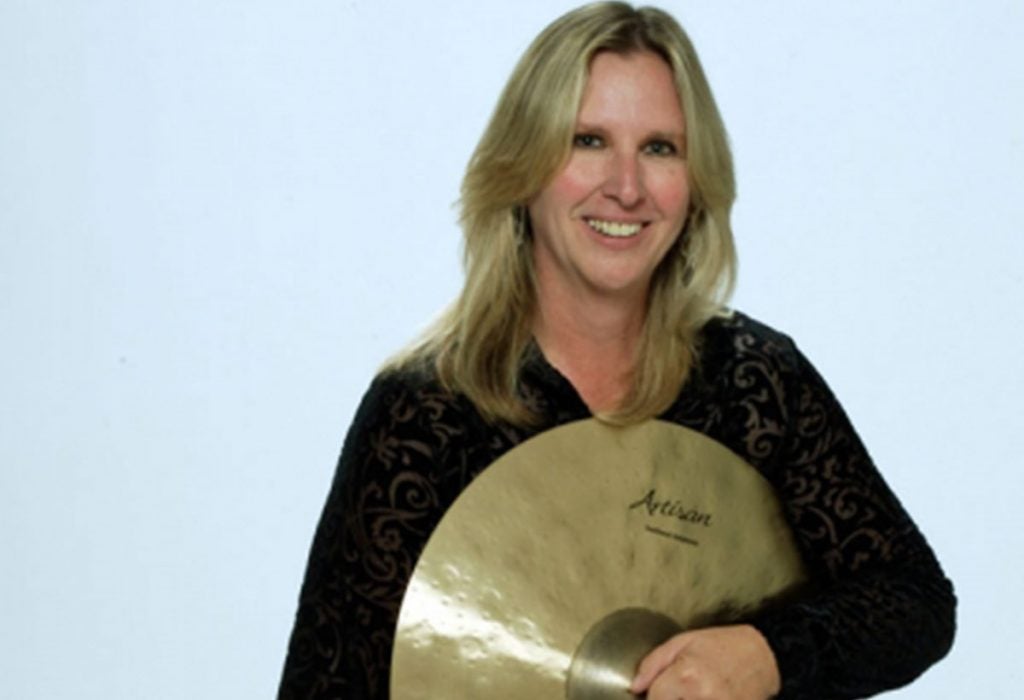
Originally from Phoenix, Arizona, Theresa Dimond began her percussion studies with Mervin Britton at age 8. Upon moving to Los Angeles, she attended the University of Southern California where she studied with Ken Watson, earning a B.M., M.M. and D.M.A. in Music Performance. As a student, she also attended the Interlochen National Music Camp, the Aspen Music Festival, the Music Academy of the West and the Los Angeles Philharmonic Institute. She has studied with the late Mitchell Peters (Los Angeles Philharmonic), Neil De Ponte (Oregon Symphony), F. Michael Combs (formerly of the University of Tennessee) and the late Charlie Owens (Philadelphia Orchestra).
Dimond is currently the principal percussionist of the Los Angeles Opera Orchestra. She has been a member of the orchestra since its inception in 1985. The LA Opera Orchestra has recently won four Grammy Awards for its recordings of Kurt Weill’s The Rise and Fall of the City of Mahagonny, and John Corigliano’s The Ghosts of Versaille.
As a free-lance musician in Los Angeles, Dimond has worked with every orchestral ensemble in the city, including the LA Philharmonic and Los Angeles Chamber Orchestra. As well as her duties at LA Opera, she is currently Principal Percussion of the Pasadena Symphony and Pops and Principal Timpanist of Muse/ique, the Los Angeles Master Chorale and the California Philharmonic. She has worked with many preeminent conductors including Leonard Bernstein, Michael Tilson Thomas, Jeffrey Kahane, Placido Domingo, Herbert Blomstedt, Kent Nagano, Esa-Pekka Salonen, Gustavo Dudamel and James Conlon. A highlight of her career has been performing with soprano Dawn Upshaw, and members of the Boston Symphony, on a contemporary music tour. Dr. Dimond has also appeared as soloist at the Aspen, Sun Valley and Tanglewood Summer Music Festivals.
Dimond serves on the faculties of UCLA, UC, Irvine, Pomona College, Whittier College and Cerritos College. She has previously taught at her alma mater, USC. In 1998, she founded TouchDown Publications, a music publishing company which edits and publishes opera percussion parts.
One of a handful of experts on the cimbalom, a Hungarian hammered dulcimer, she has performed with Pierre Boulez, Lalo Schifrin, Esa-Pekka Salonen, Kurt Masur, Dawn Upshaw, and Grant Gershon on that specialty instrument. Her recording credits include The Curious Case of Benjamin Buttons, Far from Heaven, The Dewey Cox Story, Rush Hour 3, Rocky 5, andEdward Scissorhands, to name but a few.
Dimond makes her home in the Mt. Washington area of Los Angeles, with her husband, Jim, their dog, Monte, and their two cats, Tiggy and Widget.

UCLA Percussion Ensemble
See Roster
Demitrius Alleyne
Justin Barker
Liam Doran
Henry Fairbanks
Isaiah Gilliam
Isaac Gonzalez
Bradley Harris
Erica Hou
Tu Han Huynh
London Johnson
Jeffrey Lee
Derick Shu
Ian Sun
Trey Tappan
Kennethson Thang
Liam Tran
Chelsey Wang
Trent Williams
Harry Zheng
Theresa Dimond, Director
Repertoire
Heavy Metals (2020)
Rick Dior (b. 1964)
High Rise (2017)
John Paul Chapman (b. 1975)
Between Heaven and Earth Suite (2024)
Pius Cheung (b. 1982)
II. Earth
III. Mankind
V. Finale: Ritual Dance
Erica Hou, marimba soloist
INTERMISSION
Geographical Fugue From Gesprochen Musik (1930)
Ernst Toch (1887 – 1964)
Ogoun Badagris (1976)
Christopher Rouse (1949 – 2019)
Blue Rondo à la Turca (1959)
Dave Brubeck (1920), Arr. Jeffrey Moore
September (1978)
Maurice White, Al McKay, and Allee Willis, Arr. Percussion Collective
Bboy MoBro, guest artist
Program Notes
Heavy Metal by Rick Dior
These program notes were provided by the publisher, Tapspace Percussion:
“Scored for an octet of percussionists, Rick Dior’s Heavy Metal takes its name quite literally: it is composed entirely for metallic percussion instruments and found objects, without a single drum or keyboard in sight. Where traditional unpitched percussion ensembles often rely on membranes (drums or timpani) for low-end drive and rhythmic weight, Heavy Metals challenges the performers to generate an infectious, multi-layered groove strictly through resonant alloys, industrial scrap, and tuned metal.
The instrumentation spans both standard concert gear and industrial hardware, including brake drums, anvils, metal crashers, hanging springs, pipes, thunder sheets, opera gongs, triangles, and a waterphone. Dior weaves these disparate colors into an interlocking tapestry of bright attacks, dark scrapes, sustained rings, and visceral syncopation. Rather than treating metal merely as an abrasive or purely special-effects texture, the work approaches it with the rhythmic precision and groove of a jazz rhythm section. The result is a high-energy, clanging showcase that highlights the wide expressive range, theatricality, and unexpected warmth of struck metal.
Rick Dior is an American percussionist, composer, educator, and studio owner born in Brooklyn, New York. He studied under prominent teachers including Jack Winters, Joe Morello, Fred Hinger, and Walter Rosenberger, earning his performance degree from the Manhattan School of Music. Throughout his career, he has performed with many legendary artists including Ray Charles and Aretha Franklin—and has maintained a career in studio recording through his mobile and project facility, Acoustic Barn Productions. As an educator, he has served as the Professor of Percussion at the University of North Carolina at Charlotte since 2001.”
Heaven and Earth by Pius Cheung
The following program notes were provided by the composer, Pius Cheung:
“Heaven and Earth is loosely based on creationism. While there are certain moments in the music that relates to my Chinese heritage, the subject matter itself is quite universal. This piece explores the ethereal ideal of ‘Heaven’, the powerful grounding of ‘Earth’, and the place in between these opposites where union and peace can be found.
Originally commissioned by the Ju Percussion Group in 2018, it was written as a multi-soloist concerto with orchestra. Since then, it has gone through several revisions including as a ballet with percussion ensemble accompaniment, percussion ensemble suite with marimba soloist, marimba duo, and marimba solo.”
There are five sections (Heaven/Earth/Mankind/Union/Finale) in one continuous through-composed piece. It is scored for two marimbas, vibraphone, xylophone, Japanese taiko drums, china and jing cymbal. This evening we will perform three sections, Earth, Mankind and the finale, Ritual Dance.
High Rise by John Paul Chapman
The following program notes are provided by the publisher:
“Composed by John Paul Chapman, High Rise is an energetic, programmatic work scored for eight percussionists. The piece musically captures the ambitious ascent and industrial complexity of constructing a modern skyscraper from the ground up. To evoke the architectural environment of steel beams, mechanical engines, and soaring heights, each of the eight performers commands a large group of individual instruments that integrate keyboard mallet instruments, unpitched metals, drums, and resonant auxiliary instruments. Chapman distributes a standard four-drum timpani setup across four separate players (one drum per station), weaving timpani glissandi directly into complex mallet runs on marimba, vibraphone, xylophone, chimes, and glockenspiel. These textures are layered with found-object and industrial timbres—such as brake drums, resonant glassware, and metal hardware—contrasted against dry instrumental timbres like woodblocks, log drums, and tom toms.
Stylistically, High Rise merges contemporary classical chamber percussion with idioms borrowed from jazz and the blues. As the piece unfolds, syncopated grooves, shifting metric accents, and blues-infused harmonies simulate the momentum and organized frenzy of active construction. Shifting between delicate, shimmering resonances and driving, full-ensemble climaxes, Chapman creates a sonic scaffolding that continually builds upward, culminating in an exhilarating musical celebration of urban engineering. You will hear a number of his stated musical influences in this piece including Radiohead, Sigur Ros, and Flaming Lips.”
John Paul Chapman (b. 1975) is Director of Percussion for the Ozark District in Missouri. He holds a Bachelor of Music and Master of Music Degree in Composition from Missouri State University. His student and professional career have centered on drum corps as he is a former member of Nite Express and the Phantom Regiment Drum and Bugle Corps. For over a decade, he has composed original scores, arrangements, and electronic designs for numerous marching bands in Missouri, Oklahoma, and Florida, as well as wind ensemble and percussion ensemble works.
Geographical Fugue by Ernst Toch
In 1930, the prominent Austrian German composer Ernst Toch participated in the Neue Musik Berlin festival, a progressive event that explored the intersections of music, modern technology, and mass media. For this festival, Toch composed a radical suite titled Gesprochene Musik (Spoken Music), designed to investigate the rhythmic and acoustic properties of the human voice stripped of traditional pitch. The third and final movement of this suite became Toch’s most enduring legacy: the Geographical Fugue.
Though written entirely for a spoken chorus without instrumental accompaniment, the piece adheres strictly to the rigorous contrapuntal architecture of a traditional Baroque fugue. It features an exposition with recursive entrances of voices (traditionally entering in order from tenor, alto, soprano, to bass), melodic augmentation, and interwoven thematic development. Instead of singing notes, however, the choir “speaks” percussion-like syllables derived from an exotic list of global place names. The original German text—featuring rhythmic names like Ratibor, Mississippi, Honolulu, Titicaca, and Popocatepetl—was later translated into English with the collaboration of avant-garde composer John Cage and Henry Cowell. Cage, who was present at the 1930 Berlin premiere, championed the score, leading to its publication and its eventual transformation into a beloved choral showpiece worldwide.
At its core, the Geographical Fugue brilliantly asks the question, “Are speech and music intrinsically related?” By utilizing the distinct phonetic textures of vowels and consonants, Toch converts a geography lesson into an energetic, percussive tour de force.
Ernst Toch is buried in the Veteran’s Memorial Cemetery, directly west of the UCLA campus.
Geographical Fugue
Trinidad!
And the big Mississippi
And the town Honolulu
And the Lake Titicaca
The Popocatepetl is not in Canada
Rather in Mexico, Mexico, Mexico
Canada, Málaga, Rimini, Brindisi
Canada, Málaga, Rimini, Brindisi
Yes, Tibet, Tibet, Tibet, Tibet
Nagasaki, Yokohama
Nagasaki, Yokohama
Tibet, Tibet, Tibet, Tibet
Ogoun Badagris by Christopher Rouse
The following program notes were provided by the publisher:
“Written in 1976 during Christopher Rouse’s graduate studies at Cornell University under Karel Husa, Ogoun Badagris stands as one of the most iconic, virtuosic, and frequently performed masterworks in the modern percussion ensemble repertoire. The piece takes its title and inspiration from Haitian Vodou mythology. Ogoun Badagris is a fierce, aggressive spirit—frequently associated with war, iron, and politics. In Haitian tradition, rituals honoring Ogoun involve intense, driving polyrhythms, frenetic drumming, and ecstatic possession dances. Rouse sought to capture this raw, primal energy through a Western contemporary classical lens, building a relentless sonic engine that pushes performers to their physical and technical limits.
Scored for an ensemble of six percussionists, Ogoun Badagris relies heavily on an array of non-pitched percussion—including bongos, congas, tam-tams, woodblocks, and bass drums—to drive its complex rhythmic machinery. The music operates almost entirely on kinetic momentum. It opens with an electrifying surge of syncopated pulses that build in density, volume, and urgency. Throughout the work, shifting meters, ostinatos, and violent dynamic contrasts create an atmosphere of escalating ritualistic trance.
While Rouse would later become internationally renowned for his massive orchestral canvases and deeply tragic symphonic statements (winning the Pulitzer Prize in 1993 for his Trombone Concerto), Ogoun Badagris showcases his lifelong fascination with visceral, high-impact rhythm—foreshadowing the intense emotional extremes and rhythmic drive that would define his entire compositional career.”
Blue Rondo à la Turca by Dave Brubeck
The publisher provides the following program notes:
“Released on the Dave Brubeck Quartet’s landmark 1959 Columbia LP Time Out, Blue Rondo à la Turca stands as one of the most famous and innovative fusions of classical form and jazz improvisation in 20th-century music. While the album’s most famous track remains Paul Desmond’s Take Five, Blue Rondo à la Turca remains a masterclass in rhythmic experimentation, proving that sophisticated metric innovation could be both intellectually rigorous and immensely popular.
Dave Brubeck’s inspiration for the piece came during a 1958 State Department-sponsored tour of Turkey, where he heard local street musicians playing traditional folk music in asymmetrical meters. Fascinated by these non-Western rhythmic feels—which starkly contrasted with the standard 4/4 or 3/4 time signatures of American jazz—Brubeck set out to write a jazz piece built entirely on complex, irregular pulses.
The title is a playful bilingual pun combining “Blue” (referencing the 12-bar blues form) and Mozart’s famous Rondo alla Turca, alongside the Turkish inspiration. Rather than the standard swing feel, the main theme is driven by a tense, additive 9/8 time signature broken down into a 2+2+2+3 subdivision. As the piece progresses, Brubeck bridges disparate genres by shifting the underlying rhythm into a relaxed 4/4 blues feel, creating a brilliant bridge between Istanbul folk grooves and American cool jazz.”
September by Earth, Wind and Fire
September
Do you remember
Twenty-first night of September?
Love was changin’ the minds of pretenders
While chasin’ the clouds away
Our hearts were ringin’
In the key that our souls were singin’
As we danced in the night, remember
How the stars stole the night away, oh, oh, oh
Chorus
Hey, hey, hey
Bo-dee-oh
Say, do you remember?
Bo-dee-oh
Dancin’ in September
Bo-dee-oh
Never was a cloudy day
(*Golden dreams were shiny days) Variation
My thoughts are with you
Holdin’ hands with your heart to see you
Only blue talk and love, remember
How we knew love was here to stay
Now December
Found a love we shared in September
Only blue talk and love, remember
True love we share today
Chorus
Bridge
The bells was ringin’, oh-oh
Our souls were singin’
Do you remember never a cloudy day? Yow
Chorus
Golden Dreams were shiny Days (Variation)
Bo-dee-oh, Bo-dee-oh…
