
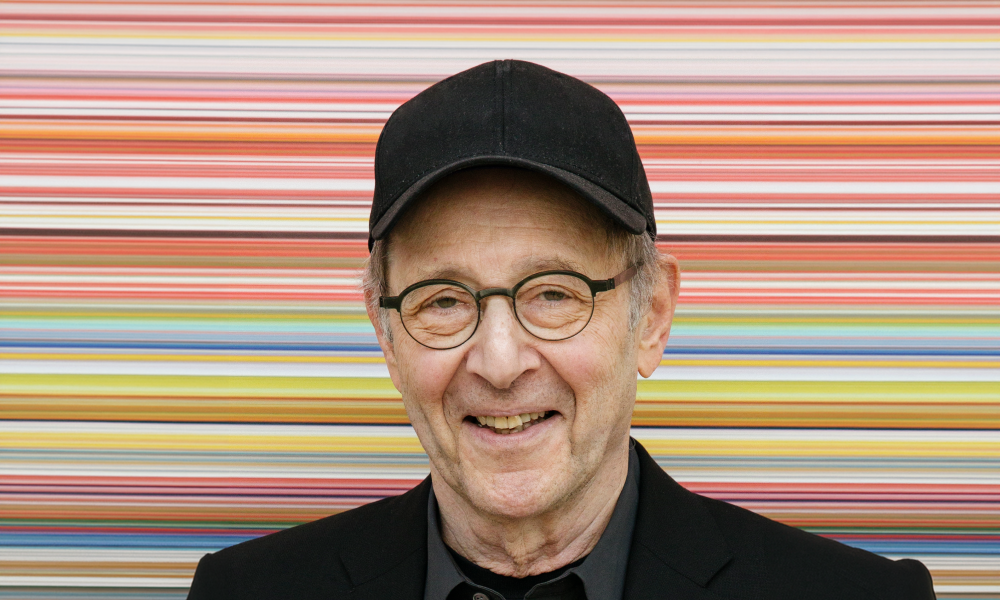
STEVE REICH @ 90
Sunday, November 1, 2026 at 4:00 PM
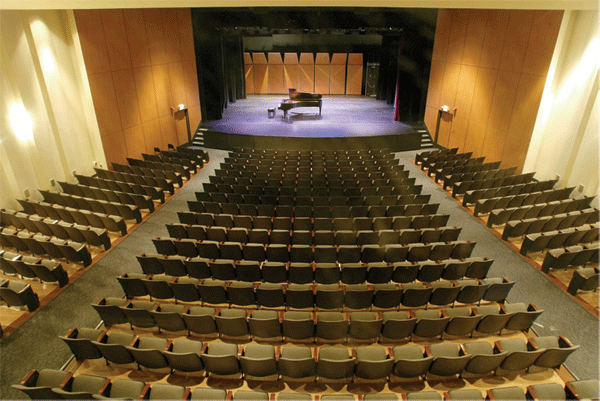
Schoenberg Hall, UCLA
To keep up with our future events, make sure to subscribe to the Milken Center’s email list here
Performers
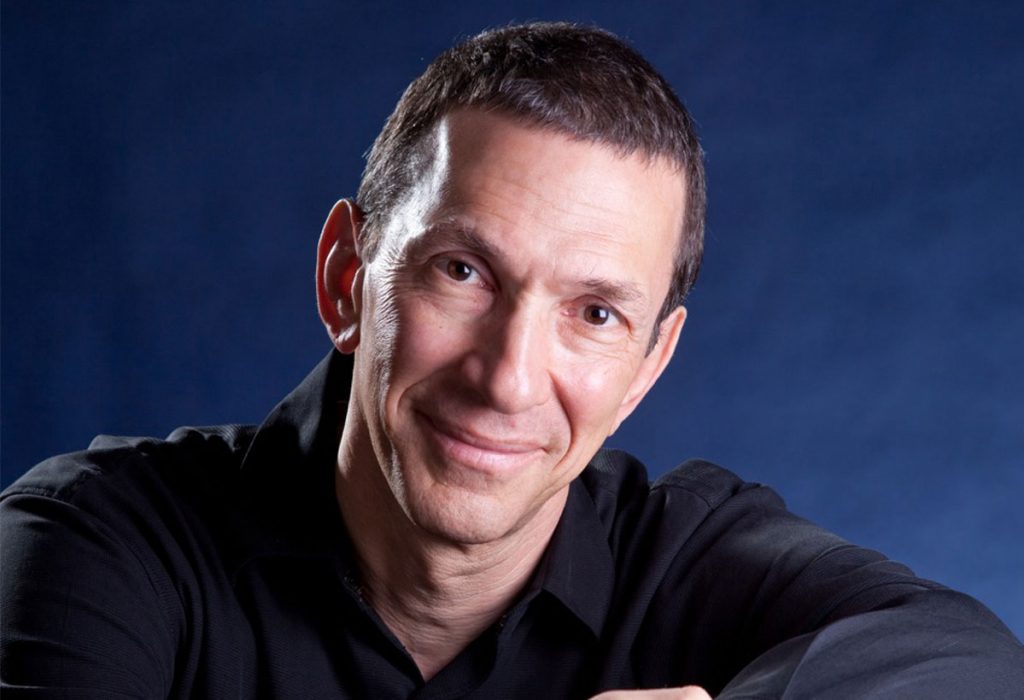
Neal Stulberg
See Bio
Heralded by the Los Angeles Times as “. . .a shining example of podium authority and musical enlightenment,” NEAL STULBERG has garnered consistent international acclaim for performances of clarity, insight and conviction. Since 2005, he has served as Director of Orchestral Studies at the UCLA Herb Alpert School of Music. From 2014 to 2018, he served as chair of the UCLA Department of Music, and currently serves as Distinguished Professor of Music Performance and Artistic Director of UCLA’s Lowell Milken Center for Music of American Jewish Experience.
In North America, Mr. Stulberg has led the Philadelphia Orchestra, Los Angeles Philharmonic, Atlanta, Fort Worth, Houston, Indianapolis, Milwaukee, Mexico City, National, New Jersey, New World, Oregon, Pacific, Phoenix, Saint Louis, San Antonio, San Francisco, Utah and Vancouver symphonies, St. Paul Chamber Orchestra and Los Angeles Chamber Orchestra, and New York City Ballet and San Francisco Ballet. A former assistant conductor of the Los Angeles Philharmonic under Carlo Maria Giulini and music director of the New Mexico Symphony Orchestra, he is a recipient of the Seaver/National Endowment for the Arts Conductors Award.
Mr. Stulberg’s European appearances have included performances in Germany with the WDR Rundfunkorchester Köln and the orchestras of Augsburg, Bochum, Dortmund, Freiburg, Herford, Jena, Münster, Nürnberg, Oldenburg and Rostock. In Holland, he has conducted the Netherlands Radio Symphony Orchestra at the Amsterdam Concertgebouw and led the Netherlands Ballet Orchestra, Netherlands Radio Chamber Orchestra, North Holland Philharmonic, Gelders Orchestra and Nieuw Sinfonietta Amsterdam. He has also appeared as guest conductor with the Stavanger Symphony Orchestra (Norway), Warsaw Chamber Orchestra, Klaipeda Chamber Orchestra (Lithuania), Athens State Orchestra, London Royal Ballet Sinfonia, Barcelona Liceu Orchestra and Norwegian National Opera Orchestra.
International engagements have also included the St. Petersburg Symphony Orchestra, Moscow Chamber Orchestra, Hong Kong Philharmonic, Taipei Symphony Orchestra, Seoul Philharmonic, Korea Philharmonic (KBS), Queensland, Adelaide and West Australian symphonies, Haifa Symphony Orchestra, Israel Sinfonietta and Ra’anana Symphonette.
An acclaimed pianist, Stulberg has appeared as recitalist, chamber musician and with major orchestras and at international festivals as pianist/conductor. His performances of Mozart concertos conducted from the keyboard are uniformly praised for their buoyant virtuosity and interpretive vigor. In 2011-12, he performed the complete Mozart sonatas for violin and piano with violinist Guillaume Sutre at UCLA’s Schoenberg Hall and at the Grandes Heures de Saint Emilion festival in France. In 2018, he performed throughout South Africa on a recital tour with saxophonist Douglas Masek and in 2022, appeared as solo pianist in the world premiere of Inclusion, a new work for pianist and chamber orchestra by Hugh Levick.
Mr. Stulberg has conducted premieres of works by Paul Chihara, Mohammed Fairouz, Jan Friedlin, William Kraft, Alexander Krein, Betty Olivero, Steve Reich, Peter Schat, Lalo Schifrin, Dmitri Smirnov, Earl Stewart, Morton Subotnick, Joan Tower and Peter van Onna, among others, and has also led works by UCLA composers Münir Beken, Bruce Broughton, Kenny Burrell, Mark Carlson, Richard Danielpour, Ian Krouse, David Lefkowitz and James Newton. He conducted the period-instrument orchestra Philharmonia Baroque in a festival of Mozart orchestral and operatic works, and has brought to life several silent movies from the early 1900s, including the Russian classic New Babylon, Shostakovich’s first film score. In August 2022, he conducted the North American premiere of Bas-Sheve, a recently rediscovered and orchestrated 1924 Yiddish-language opera by composer Henekh Kon and librettist Moishe Broderzon, at the Ashkenaz Festival in Toronto. In 2023, Stulberg led acclaimed performances of Dave Brubeck’s cantata, The Gates of Justice (1969) and the West Coast premiere of Lera Auerbach’s Symphony No. 6 (Vessels of Light) (2022) as part of the School of Music’s Music and Justice series, presented in collaboration with the Lowell Milken Center for Music of American Jewish Experience. And in May 2025, he conducted West Coast premiere performances of Tod Machover’s 2018 opera, Schoenberg in Hollywood, as part of the celebration of Arnold Schoenberg’ sesquicentennial.
Collaborators have included John Adams; Leonard Bernstein; Chris, Dan and Darius Brubeck; Dee Dee Bridgewater; John Clayton; Omar Ebrahim; Mercer Ellington; Michael Feinstein; Philip Glass; Morton Gould; David Krakauer; Lar Lubovitch; Tod Machover; Peter Martins; Mark Morris; Angel Romero; Cornel West; and Christopher Wheeldon. He has conducted Philip Glass’ opera Akhnaten at the Rotterdam Festival and Thomas Adès’ Powder Her Face with Long Beach Opera in Los Angeles, and has recorded for Naxos, West German Radio, Donemus, Yarlung Records, Sono Luminus and the Composers Voice label.
Mr. Stulberg has maintained a career-long passion for the training of young musicians. He has conducted and taught at the New World Symphony, Indiana University Summer Institute, Juilliard School, New England Conservatory, New Zealand School of Music, Henry Mancini Institute, Los Angeles Philharmonic Summer Institute, National Repertory Orchestra, Interlochen Arts Academy, American-Russian Youth Orchestra, Turkish Music State Conservatory (Istanbul), National Conservatory of Belarus (Minsk), Central Conservatory of Music (Beijing), Capitol Normal University (Beijing), Shanghai Conservatory of Music and National Taiwan Normal University. In December 2019, he taught and lectured in Israel at the Buchmann-Mehta School of Music, Jerusalem Academy of Music and Dance and Haifa University and returned to conduct its symphony orchestra in June 2024. In March 2026, he conducts the Carlos Chávez Youth Orchestra in Mexico City.
A native of Detroit, Mr. Stulberg is a graduate of Harvard College, the University of Michigan and the Juilliard School. He studied conducting with Franco Ferrara at the Accademia Nazionale di Santa Cecilia in Rome, piano with Leonard Shure, Theodore Lettvin, William Masselos and Mischa Kottler, and viola with Ara Zerounian.
Ensemble
See Rosters
Violin I
Andrew Kwon (Concertmaster)
Michelle Sheehy
Ellie Loya (WTC 9/11)
Violin II
Anna Corcoran
Luke Santonastaso
Sina Kalkan (WTC 9/11)
Viola
Yu-Ting Hsu
Wendy Richman
Johannes Eberhart (WTC 9/11)
Cello
Niall Ferguson
Quenton Blache
Annabelle Lo (WTC 9/11)
Bass
Aidan Neuman
Flute and Piccolo
William Adams
Reina Shim
Oboe and English horn
Luca Ortolani
Gigi Brady
Clarinet and Bass Clarinet
Abraham Schenck
Pablo Lopez Ortega
Piano and Electric Organ
Andreas Apostolou
Isabelle Ragsac
Percussion
Robbie Darling
Alexa Clawson
Erica Hou
Bradley Harris
Demitrius Alleyne
Alexander Lee
Vocalists
Anna Davidson, soprano
Savannah Green, soprano
Andrea Zomorodian, soprano
Gracyn Blu, alto
Audio Engineer
Ben Maas
Repertoire
Steve Reich (b. 1936)
Eight Lines (1979; rev. 1983)
Know What Is Above You (1999)
WTC 9/11 (2010)
- 9/11
- 2010
- WTC
INTERMISSION
Video excerpts from The Cave (1993)
Tehillim (1981)
- Psalm 19:2-5
- Psalm 34:13-15
- Psalm 18:26-27
- Psalm 150:4-6
Performance footage of Steve Reich’s The Cave is provided courtesy of Alan Pierson and Alarm Will Sound. Special thanks to Ryan Ebright for his assistance.
Program Notes
Composer Notes, Texts, and Translations
Eight Lines (1979; rev. 1983)
Eight Lines is structured in five sections, of which the first and third resemble each other in their moving piano, cello, viola and bass clarinet figures, while the second and fourth sections resemble each other in their longer held tones in the cello. The fifth and final section combines these materials. The transitions between sections is as smooth as possible with some overlapping in the parts so that it is sometimes hard to tell exactly when one section ends and the next begins.
In the first, third and fifth sections there are somewhat longer melodic lines in the flute and/or piccolo. This interest in longer melodic lines composed of shorter patterns strung together has its roots in my earlier music as well as my studies in 1976-77 of the cantillation (chanting) of the Hebrew Scriptures.
Know What Is Above You (1999)
Know what is above you,
An eye that sees,
an ear that hears
and all your deeds
recorded in a book
Pirkei Avot (“Sayings of the Fathers”)
Chapter 2, Mishnah 1
Know what is above you was written in a little over a week in April 1999. It is scored for 3 sopranos and 1 alto and is in four sections. First the melody is sung by sopranos 1 and 3, it then goes immediately into canon with sopranos 1 and 3 singing against soprano 2 and alto 1. The canon is repeated again in somewhat longer rhythmic values and is then repeated a third time in still longer values coming to a cadence in G minor where it began. The singing is accompanied by 3 small tuned drums similar to the drums used in my earlier Tehillim.
The text is taken from Pirke Avot, a small tractate of the Mishna (the earliest part of the Talmud, edited into final form in the second century) which deals with ethics. It has become so popular in traditional Judaism that it is reprinted in all Prayer books. The text may seem ‘judgmental’ to our contemporary sensibility. For much of the last century, the scientific world view has viewed us only as molecules of various substances electrically charged for a shorter or longer lifetime. In contrast, this text suggests that we are not alone, that an Eternal being cares about us, that our every thought, word and deed has its effect on our character, our soul and on the souls of those around us – and that it all really matters.
WTC 9/11 (2010)
View WTC 9/11 Spoken Text HERE.
In 2009 the Kronos Quartet asked me for a piece using pre-recorded voices. My first idea was to elongate the speaker’s final vowels or consonants. Stop Action sound. Impossible in 1973 when I first thought of it. Possible in 2001 when ‘Dolly’ was begun. In this piece it was to be, and is, the means of connecting one person to another—harmonically.
I had no idea who was speaking. No subject matter. After several months I finally remembered the obvious. For 25 years we lived four blocks from the World Trade Center. On 9/11 we were in Vermont, but our son, granddaughter and daughter-in-law were all in our apartment. Our phone connection stayed open for 6 hours and our next door neighbors were finally able to drive north out of the city with their family and ours. For us, 9/11 was not a media event.
By January 2010, several months after Kronos asked me for the piece, I realized the pre-recorded voices would be from 9/11. Specifically, they would start from the Public Domain: NORAD, FDNY, and then from interviews with friends and neighbors who lived or worked in lower Manhattan.
WTC is also an abbreviation for World to Come, as my friend, the composer David Lang, pointed out. After 9/11 the bodies and parts of bodies were taken to the Medical Examiner’s office on the East Side of Manhattan. In Jewish tradition there is an obligation to guard the body from the time of death until burial. The practice, called Shmira*, consists of sitting near the body and reciting Psalms or Biblical passages. The roots of the practice are, on one level, to protect the body from animals or insects, and on another, to keep the neshama (soul) company while it hovers over the body until burial. Because of the difficulties in DNA identification, this went on for seven months, 24/7. Two of the women who sat and recited Psalms are heard in the third movement. You will also hear a cellist (who has sat Shmira elsewhere) and a cantor from a major New York City synagogue sing parts of Psalms and the Torah.
WTC 9/11 is in three movements (though the tempo remains unchanged throughout):
1. 9/11
2. 2010
3. WTC
The piece begins and ends with the first violin doubling the loud warning beep (actually an F) your phone makes when it is left off the hook. In the first movement there are archive voices from NORAD air traffic controllers, alarmed that American flight 11 was off course. This was the first plane to deliberately crash into the World Trade Center. The movement then shifts to the New York City Fire Department archives of that day telling what happened on the ground.
The second movement uses recordings I made in 2010 of neighborhood residents, an officer of the Fire Department and the first ambulance driver (from Hatzalah volunteers) to arrive at the scene, remembering what happened nine years earlier.
The third and last movement uses the voices of a neighborhood resident, two volunteers who took shifts sitting near the bodies, and the cellist/singer and cantor mentioned above.
Throughout WTC 9/11 the strings double and harmonize the speech melodies and prolonged vowels or consonants of the recorded voices. You will hear a total of three string quartets, one live, and two pre-recorded. The piece can also be played by three live quartets and pre-recorded voices.
WTC 9/11 is only 15 and a half minutes long. While composing it I often tried to make it longer and each time it felt that extending its length reduced its impact. The piece wanted to be terse.
* ‘Stretching a Jewish Vigil for the Sept. 11 Dead’, New York Times, November 6, 2001
The Cave (1993)
In the Bible, Abraham buys a cave from Ephron the Hittite as a burial place for his wife Sarah. The Cave of the Patriarchs, as it has come to be known, became the final resting place not only for Sarah, but for Abraham and their descendants as well. In Jewish mystical sources the cave is also a passageway back to the Garden of Eden. It is said that Adam and Eve are buried there.
The cave is of great religious significance for Moslems as well. While the Jews are descendants of Abraham and Sarah throught their son Isaac, the Moslems trace their lineage to Abraham through his son Ishmael born to Hagar, Sarah’s handmaid.
Today the cave, located in the largely Arab town of Hebron, in the West Bank, is completely built over and inaccessible. The ancient structures built above it reveal a long history of conflicting claims. One discovers not only the wall Herod erected around the cave, but also the remains of a Byzantine church, and finally the mosque built in the 12th century which has dominated the site ever since. Since 1967 the mosque built above the cave remains under Moslem jurisdiction, while the Israeli army maintains a presence at the site. Though tensions run particularly high, the site remains unique as the only place on earth where Jews and Moslems both worship.
The Cave is in three acts. In each act we asked the same basic questions to a different group of people. The basic five questions were: Who for you is Abraham? Who for you is Sarah? Who for you is Hagar? Who for you is Ishmael? Who for you is Isaac? In the first act we asked Israelis, in the second we asked Palestinians, and in the third we asked Americans.
Act 1:
West Jerusalem/Hebron
May/June 1989
64 minutes
Short Pause
Act 2:
East Jerusalem/Hebron
June 1989 and June 1991
40 minutes
Intermission
Act 3:
New York/Austin
April/May 1992
32 minutes
Tehillim (1981)
Psalm 19:2-5
The heavens declare the glory of G-d,
the sky tells of His handiwork.
Day to day pours forth speech,
night to night reveals knowledge.
Without speech and without words,
Nevertheless their voice is heard.
Their sound goes out through all the earth
and their words to the ends of the world.
Psalm 34:13-15
Who is the man that desires life,
and loves days to see good?
Guard your tongue from evil,
and your lips from speaking deceit.
Turn from evil, and do good,
Seek peace and pursue it.
Psalm 18:26-27
With the merciful You are merciful,
with the upright You are upright.
With the pure You are pure,
and with the perverse You are subtle.
Psalm 150:4-6
Praise Him with drum and dance,
praise Him with strings and winds.
Praise Him with sounding cymbals,
praise Him with clanging cymbals.
Let all that breathes praise the Eternal
Hallelujah.
Tehillim (pronounced “teh-hill-leem”) is the original Hebrew word for “Psalms”. Literally translated it means “praises”, and it derives from the three letter Hebrew root ‘hey, lamed, lamed’ (hll) which is also the root of halleluyah. Tehillim is a setting of Psalms 19:2-5 (19:1-4 in Christian translations), 34:13-15 (34:12-14 in Christian translations), 18:26-27 (18:25-26 in Christian translations) and 150:4-6.
The chamber version is scored for four women’s voices (one high soprano, two lyric sopranos, and one alto), piccolo, flute, oboe, cor anglais, 2 clarinets, six percussion (playing small tuned tambourines with no jingles, clapping, maracas, marimba, vibraphone and crotales), two electric organs, two violins, viola, cello and bass. The voices, winds and strings are amplified in performance. In orchestral version there are full strings and winds with amplification for the voices only.
The first text begins as a solo with drum and clapping accompaniment only. It is repeated with clarinet doubling the voice and with a second drum and clap in canon with the first. It then appears in two voice canon and at last the strings enter with long held harmonies. At this point all four voices, supported by a single maraca, doubled by two electric organs and harmonised by the strings sing 4 four-part canons on each of the four verses of the first text. When these are competed the solo voice restates the original complete melody with all drums and full string harmonisation. The second text begins immediately after a short drum transition. Here the three verses of text are presented in two or three voice harmony in a homophonic texture. Sometimes the voices are replaced by the cor anglais and clarinet or by the drums and clapping. Soon the melodic lines begin augmenting (or lengthening) and then adding melismas. The effect is of a melodic line growing longer and more ornate. After a pause the third text begins in a slower tempo and with the percussion changed to a marimba and vibraphone. The text is presented as a duet first between two and then all four voices. This third text is not only the first slow movement I have composed since my student days, but also the most chromatic music I have ever composed (with the possible exception of Variations for Winds, Strings and Keyboards of 1979). The fourth and final text resumes the original tempo and key signature and combines techniques used in the preceding three movements. It is, in effect, a recapitulation of the entire piece which then, in a coda based solely on the word “Halleluyah”, extends the music to its largest instrumental forces and its harmonic conclusion. This last movement affirms the key of D major as the basic tonal centre of the work after considerable harmonic ambiguity.
The tambourines without jingles are perhaps similar to the small drum called “tof” in Hebrew in Psalm 150 and several other places in the Biblical text. Hand clapping as well as rattles were also commonly used throughout the Middle East in the Biblical period as were small pitched cymbals. Beyond this there is no musicological content to Tehillim. No Jewish themes were used for any of the melodic materials. One of the reasons I chose to set Psalms as opposed to parts of the Torah or Prophets is that the oral tradition among Jews in the West for singing Psalms has been lost. (It has been maintained by Yemenite Jews.) This meant that I was free to compose the melodies for Tehillim without a living oral tradition to either imitate or ignore.
In contrast to most of my earlier work, Tehillim is not composed of short repeating patterns. Though an entire melody may be repeated either as the subject of a canon or variation this is actually closer to what one finds throughout the history of Western music. While the four-part canons in the first and last movements may well remind some listeners of my early tape pieces It’s Gonna Rain and Come Out, which are composed of short spoken phrases repeated over and over again in close canon, Tehillim will probably strike most listeners as quite different from my earlier works. There is no fixed meter or metric pattern in Tehillim as there is in my earlier music. The rhythm, of the music here comes directly from the rhythm of the Hebrew text and is consequently in flexible changing meters. This is the first time I have set a text to music since my student days and the result is a piece based on melody in the basic sense of that word. The use of extended melodies, imitative counterpoint functional harmony and full orchestration may well suggest renewed interest in Classical or, more accurately, Baroque and earlier Western musical practice. The non-vibrato, non-operatic vocal production will also remind listeners of Western music prior to 1750. However, the overall sound of Tehillim and in particular the intricately interlocking percussion writing which, together with the text, forms the basis of the entire work, marks this music as unique by introducing a basic musical element that one does not find in earlier Western practice including the music of this century. Tehillim may thus be heard as traditional and new at the same time.
Creating new audiences with music as the mirror The Lowell Milken Center is committed to introducing new people beyond UCLA’s campus to the musical journeys of America’s Jews and engaging them with this wonderfully rich musical heritage. The Center fosters new artistic expression, presents performances and offers educational programming in communities, such as the adult education curriculun, called Stories of Music. Much of this engagement happens through partnerships with local, national and international organizations, and features artists from UCLA, Los Angeles and beyond.
Furthering knowledge and understanding of Jewish music Music of American Jewish experience has its first permanent dedicated academic home with the establishment of the Lowell Milken Center for Music of American Jewish Experience. It unites the academic and the artistic, showcasing artists, scholars and educators to share their sounds and stories. The founding gift from philanthropist Lowell Milken advances understanding of and knowledge about the musical heritage of Jews in America. It also accelerates growth and commitment to the field by contributing to research, scholarship and performance programs at the undergraduate, graduate and faculty levels. The Lowell Milken Center builds upon the activities of the Lowell Milken Fund for American Jewish Music, established at UCLA in 2017, to expand the reach of the Milken Archive and its vast holdings of recordings, scores and historical materials to students, scholars and the public.
To keep up with our future events, make sure to subscribe to the Milken Center’s email list here.
