

Scholarship from across The UCLA Herb Alpert School of Music.
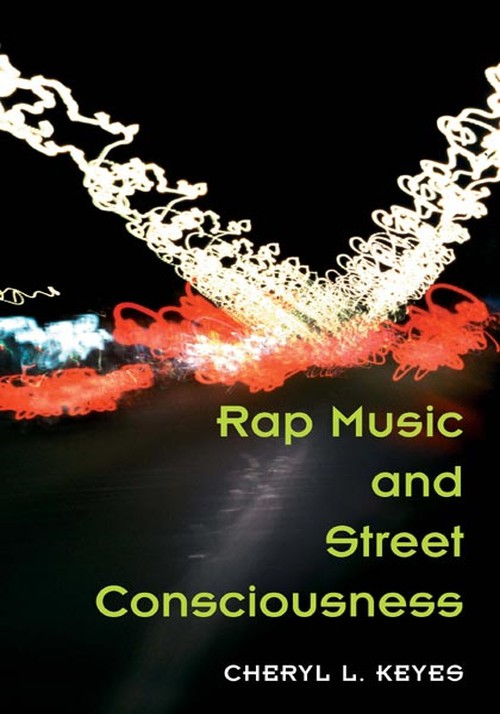
In this first musicological history of rap music, Cheryl L. Keyes traces the genre’s history from its roots in West African bardic traditions, the Jamaican dancehall tradition, and African American vernacular expressions to its permeation of the cultural mainstream as a major tenet of hip-hop lifestyle and culture.
Rap music, according to Keyes, is a forum that addresses the political and economic disfranchisement of black youths and other groups, fosters ethnic pride, and displays culture values and aesthetics. Blending popular culture with folklore and ethnomusicology, Keyes offers a nuanced portrait of the artists, themes, and varying styles reflective of urban life and street consciousness.
Drawing on the music, lives, politics, and interests of figures including Afrika Bambaataa, the “godfather of hip-hop,” and his Zulu Nation, George Clinton and Parliament-Funkadelic, Grandmaster Flash, Kool “DJ” Herc, MC Lyte, LL Cool J, De La Soul, Public Enemy, Ice-T, DJ Jazzy Jeff and the Fresh Prince, and The Last Poets, Rap Music and Street Consciousness challenges outsider views of the genre. The book also draws on ethnographic research done in New York, Los Angeles, Detroit and London, as well as interviews with performers, producers, directors, fans, and managers .
Keyes’s vivid and wide-ranging analysis covers the emergence and personas of female rappers and white rappers, the legal repercussions of technological advancements such as electronic mixing and digital sampling, the advent of rap music videos, and the existence of gangsta rap, Southern rap, acid rap, and dance-centered rap subgenres. Also considered are the crossover careers of rap artists in movies and television; rapper-turned-mogul phenomenons such as Queen Latifah; the multimedia empire of Sean “P. Diddy” Combs; the cataclysmic rise of Death Row Records; East Coast versus West Coast tensions; the deaths of Tupac Shakur and Christopher “The Notorious B.I.G.” Wallace; and the unification efforts of the Nation of Islam and the Hip-Hop Nation.
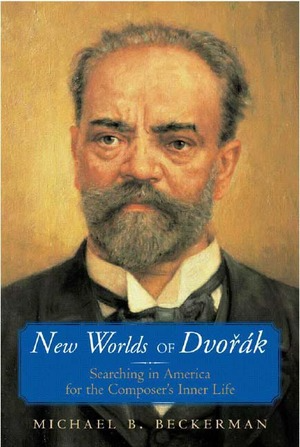
Focusing on Dvorák’s eventful stay in the United States from 1892 to 1895, this book explores the world behind the public legend, offering fresh insights into the composer’s music. We see the traditional image—that of a simple Czech fellow with a flair for composing symphonic and chamber music—give way to one of a complex figure writing works filled with hidden drama and secret programs. In his cogent examination of Dvorák’s state of mind, Michael B. Beckerman, a noted scholar of Czech music, concludes that the composer suffered from a debilitating and previously unexplored anxiety disorder during his American sojourn. Using Dvorák as a model, he argues convincingly that the biographical images we carry of composers condition the way we approach their music.
Michael Beckerman, New Worlds of Dvorák: Searching in America for the Composer’s Inner Life. New York: W. W. Norton, 2003.
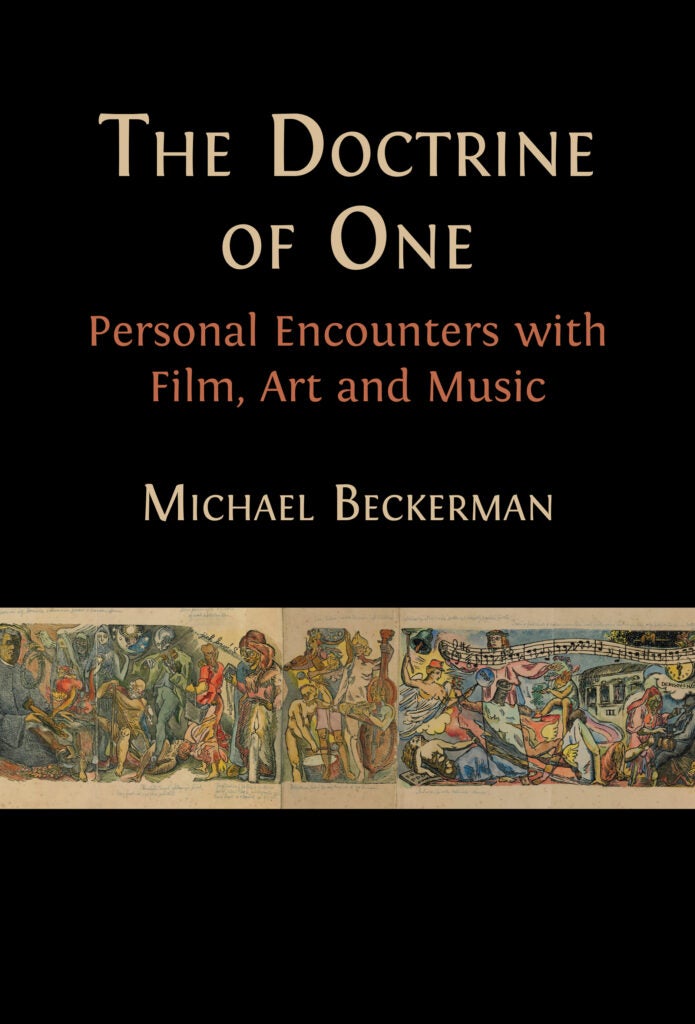
This volume is a bold and original meditation on how we interpret art, music, and culture—and what it means to listen, see, and feel differently from others. Drawing on Czech history and aesthetics, the book moves from filmmaker Hugo Haas’s coded tributes to his murdered brother, to the haunting ex libris designs of Josef Váchal, to the deeply personal resonances of Schubert’s chamber music, Dvořák’s cello concerto, and Gideon Klein’s tragic Terezín Trio. Across these vivid case studies, the author asks whether meaning in art can ever be shared—or whether it always belongs to the individual observer.
Rejecting academic rigidity Michael Beckerman celebrates the ‘splitters’—those who honor specificity, subjectivity, and the singular force of a personal response. Written in an engaging and accessible style, the book offers both a philosophical inquiry and a passionate defense of individuality in an age of conformity. It will captivate readers of musicology, cultural studies, and philosophy alike—anyone who has ever wondered what it truly means to interpret a work of art.
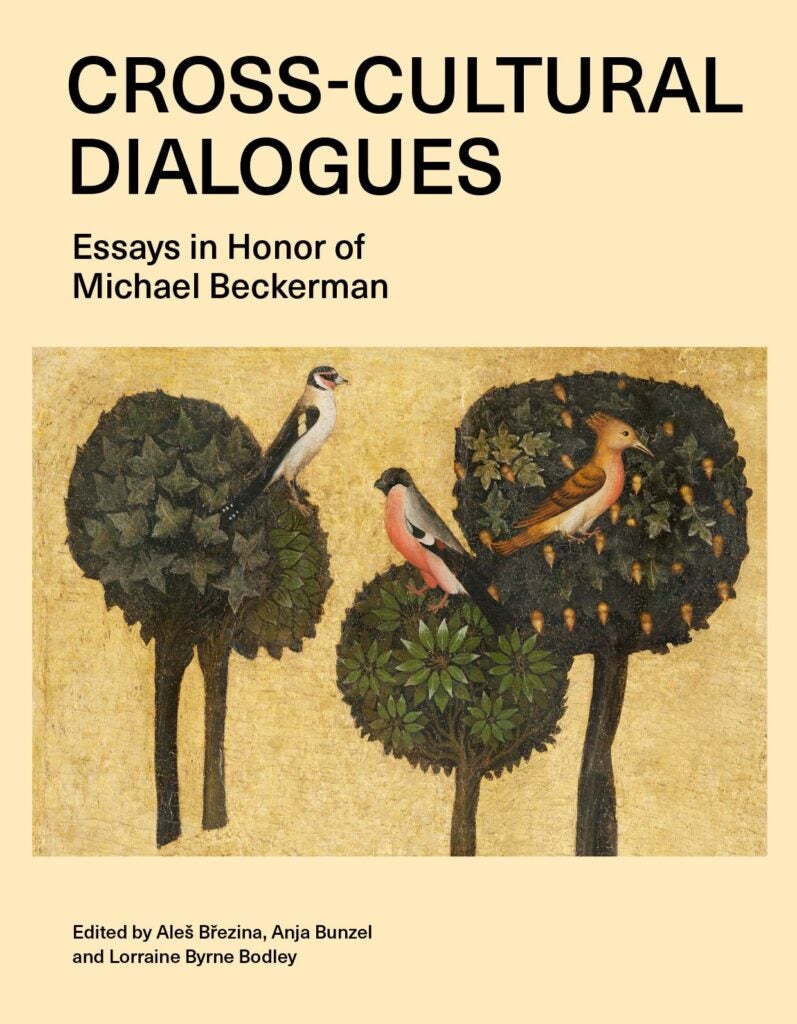
This essay collection is written in celebration of a remarkable academic leader and scholar whose writing on Czech and Eastern European music–most notably Antonín Dvorak (1841-1904), Leos Janaceck (1854-1928), Jaroslav Jezek (1906-1942), Bohuslav Martinu (1890-1959), Pavel Haas (1899-1944) and Gideon Klein (1919-1945)–as well as on music in the concentration camps, has profoundly shaped the musicological landscape. Unafraid to be controversial, Michael Beckerman’s approach represents a number of vital challenges to musicology. These range from an interrogation of the way in which we write about music history to how we consider widely diverse fields of meaning as we approach musical works, especially problematic ones. A distinguishing hallmark of Beckerman’s career is the exceptional way in which he shares scholarship with public audiences and actively addresses central challenges in contemporary concert life.
Prague: Institute of Art History of the Czech Academy of Sciences, 2026.