

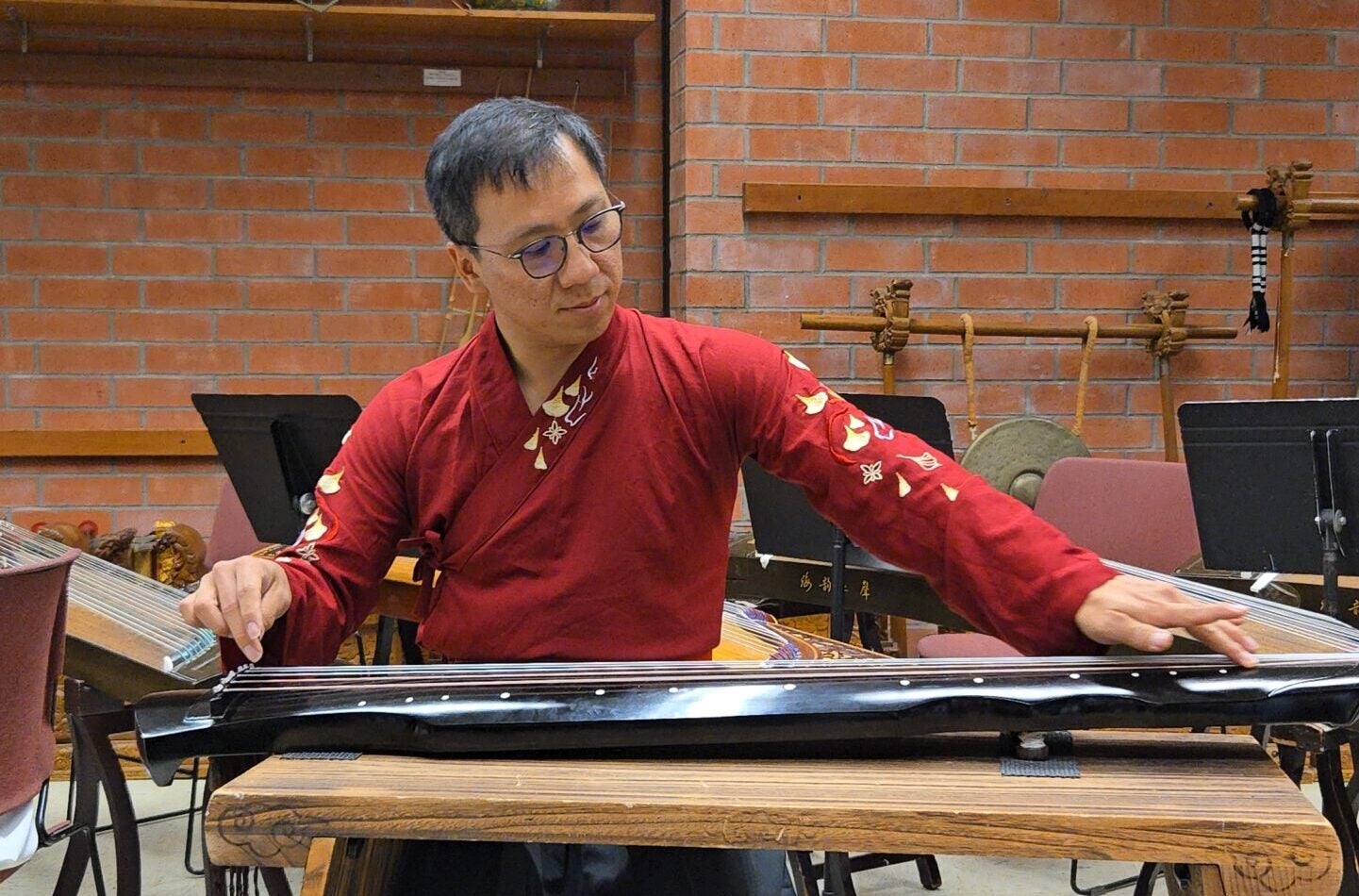
When Taiwanese graduate student Roy Huang arrived to study in UCLA’s Department of Ethnomusicology in 2025, he expected to deepen his research into the traditional music of Vietnam, Taiwan and China. And he did.
But he also found ways to fuse those traditions with jazz, klezmer and “old-time” Americana.
“I came to UCLA to do fieldwork, and there were many opportunities to immerse myself in new kinds of music,” said Huang. “I learned completely new aesthetics. In old-time music, I learned a highly rhythmic and groove-oriented approach to fiddling. Klezmer taught me the expressive use of ornamentation and flexible phrasing, while jazz challenged me to develop improvisational skills and a relaxed yet deeply rhythmic musical feel.”
Huang’s experience reflects a philosophy that has shaped UCLA for more than sixty years. The Department of Ethnomusicology hosts more than fifteen ensembles that teach the musics of the world through the pedagogical tradition of bi-musicality. This was pioneered by UCLA professor Mantle Hood, who established the UCLA Ethnomusicology Institute in 1960. The institute helped establish UCLA as one of the world’s leading centers for ethnomusicology and eventually evolved into today’s Department of Ethnomusicology.
“As a discipline, ethnomusicology relies on a combination of field and archival research with academic theory,” said Helen Rees, associate dean and chair of the Department of Ethnomusicology. “But it doesn’t stop there. It unfolds through performance, through collaboration and the exchange of musical traditions. These are living traditions that we teach, and they are sustained when people embrace and carry on these traditions.”
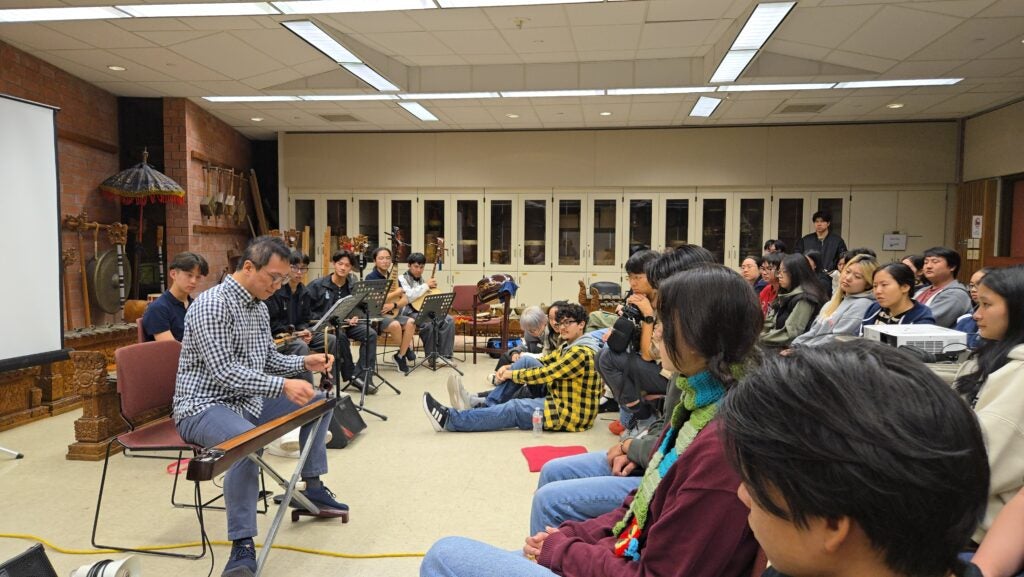
Huang brought a similar mindset. Arriving with a scholarship from Taiwan’s Board of the Foundation for Scholarly Exchange, Huang brought a project that examined one-string musical instruments and cross-cultural exchange. His research centered on the Taiwanese Bunun mouth bow and the Vietnamese đàn bầu, but at UCLA he found an environment uniquely suited to expanding those questions.
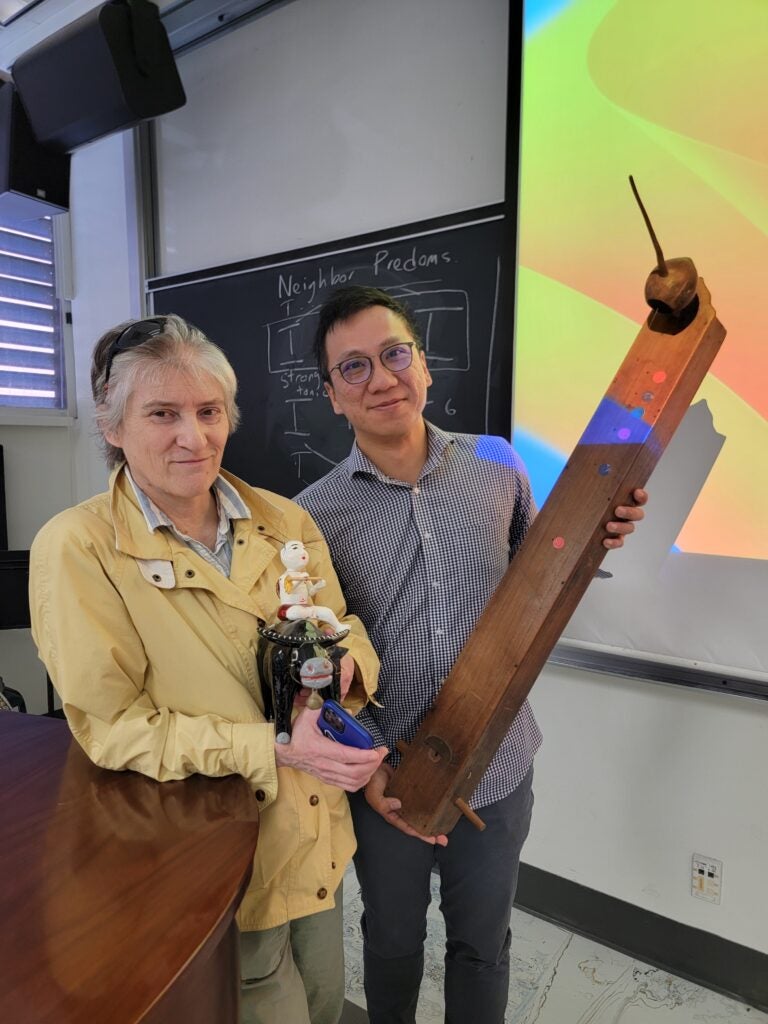
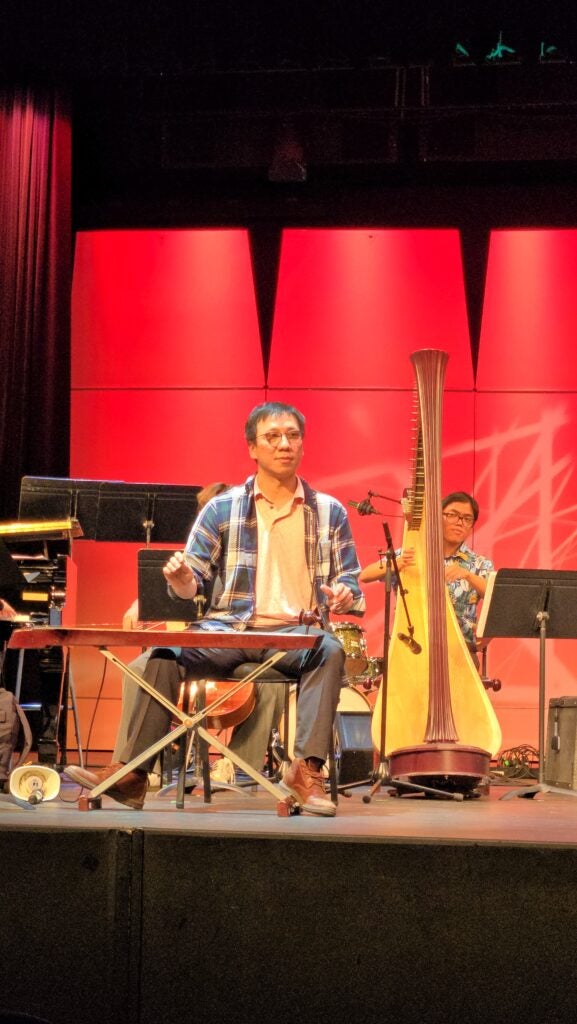
“UCLA allowed me to experiment with new possibilities for the đàn bầu in cross-cultural performance contexts,” said Huang. “I was able to incorporate the instrument into jazz arrangements and klezmer. I was also able to collaborate with Armenian duduk musicians in the Armenian concert, performing an eighteenth-century bard’s folk song.”
Huang’s collaborations extended further into world musics. “Ghanaian music introduced me to the fascinating world of polyrhythm, which can only truly be understood through bodily experience rather than intellectual analysis alone. Tibetan music challenged me to integrate singing, instrumental performance, and movement into a single artistic practice. Learning Tombak and Tabla greatly strengthened my rhythmic awareness and hand coordination.”
The Department of Ethnomusicology is built on these experiences and collaborations. Huang worked alongside faculty whose research spans musical traditions from around the world while participating in one of the nation’s most extensive university performance programs. Rather than treating performance and scholarship as separate pursuits, UCLA encourages students and visiting scholars to use each to inform the other.
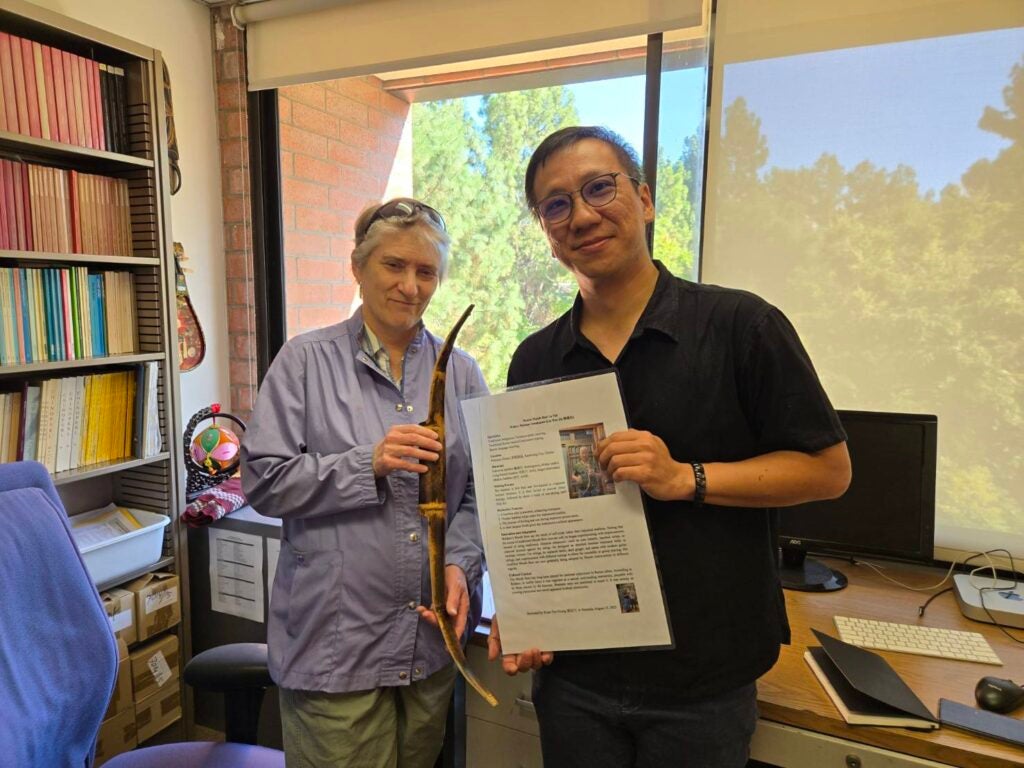
Huang’s participation contributed to this mission. He donated a traditional Bunun mouth bow to the Department of Ethnomusicology’s World Instrument Collection, and has shared his research through conferences and lecture-recitals across the United States. Those presentations have increasingly reflected ideas developed during his residency at UCLA, demonstrating how the department’s collaborative environment shaped not only his performances but also his scholarship.
“Ethnomusicology is central to our mission,” said Michael Beckerman, Dean of The UCLA Herb Alpert School of Music. “As a discipline, it embodies the kind of exchange that we want to see all throughout the school. Performance and scholarship are not separate things. They inform one another, and we are at our best when faculty and students get out of their comfort zone and try new things.”
Such collaboration was admittedly new for Huang. He had no formal background in improvisation, but he joined the Global Jazz Studies program’s Ginger Smock Combo. He wrote his first independent arrangement there—a Taiwanese folk song scored for jazz ensemble with the Vietnamese đàn bầu as the lead instrument. It became an experiment in musical translation, exploring how traditions can retain their identity while entering entirely new cultural settings.
Similar collaborations emerged throughout the year. Huang incorporated the đàn bầu into a traditional klezmer doyna, later paired it with Armenian duduk performers in the first performance of Armenian songs featuring the Vietnamese instrument, and explored American old-time fiddling alongside musicians whose traditions differed dramatically from his own.
At times, it was dizzying.
“One day in June—it was June 3—it was a big day,” said Huang. “The school of music hosted a Music and Dance of Ghana concert at Fowler Museum, a Mexican fandanguito in the courtyard, an experimental Korean composition concert at Lani Hall, a duduk class, and a UCLA Symphony performance at Schoenberg Hall.”
Just another Spring Quarter Wednesday at The UCLA Herb Alpert School of Music.