
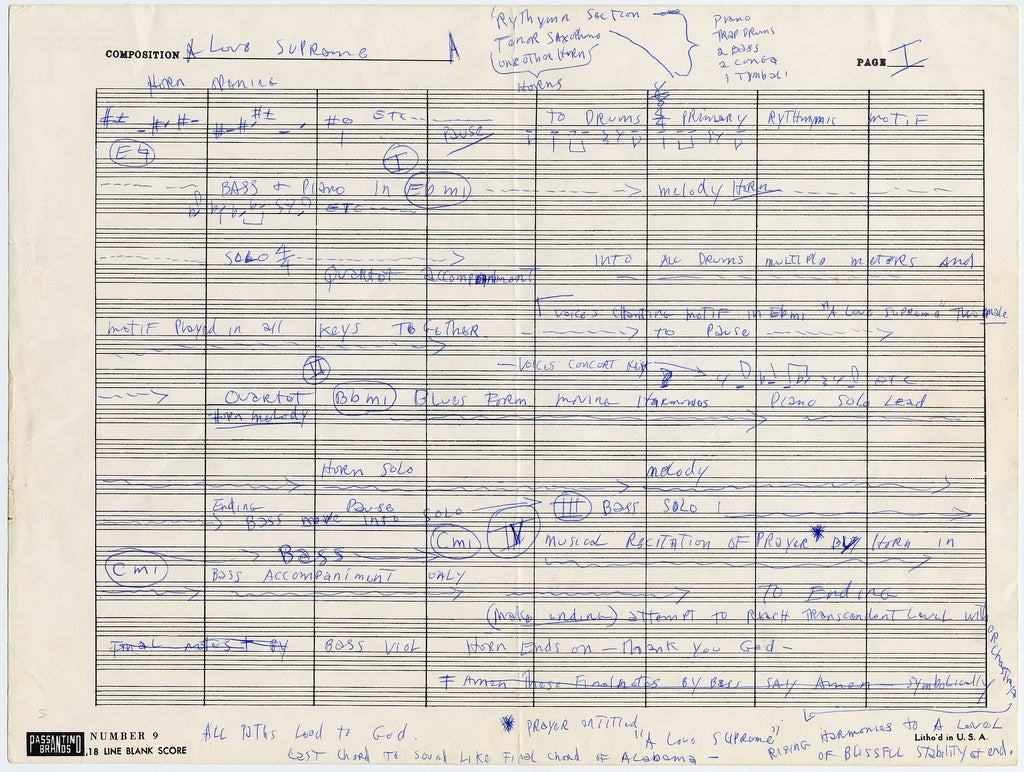
Coltrane at 100: Symposium
Lani Hall
Friday, October 9, 2026
2-6 p.m.
Participants

Salim Washington
See Bio
Salim Washington is a composer and multi-instrumentalist, playing tenor sax, flute, oboe, and bass clarinet. He has played and recorded with many of the luminaries of the art form, and has been featured in festivals and other venues throughout the United States, Europe, Africa, and Latin America. Washington has combined a life in music with a life of the mind, and is a scholar of black music and culture, having written several articles and co-written with Farah Jasmine Griffin Clawing at the Limits of Cool, a book about the collaboration between Miles Davis and John Coltrane. He currently serves as professor of Global Jazz Studies and Music at UCLA. He works to combine his artistry and pedagogy with his political conviction that we must work to improve our society with greater justice for all.
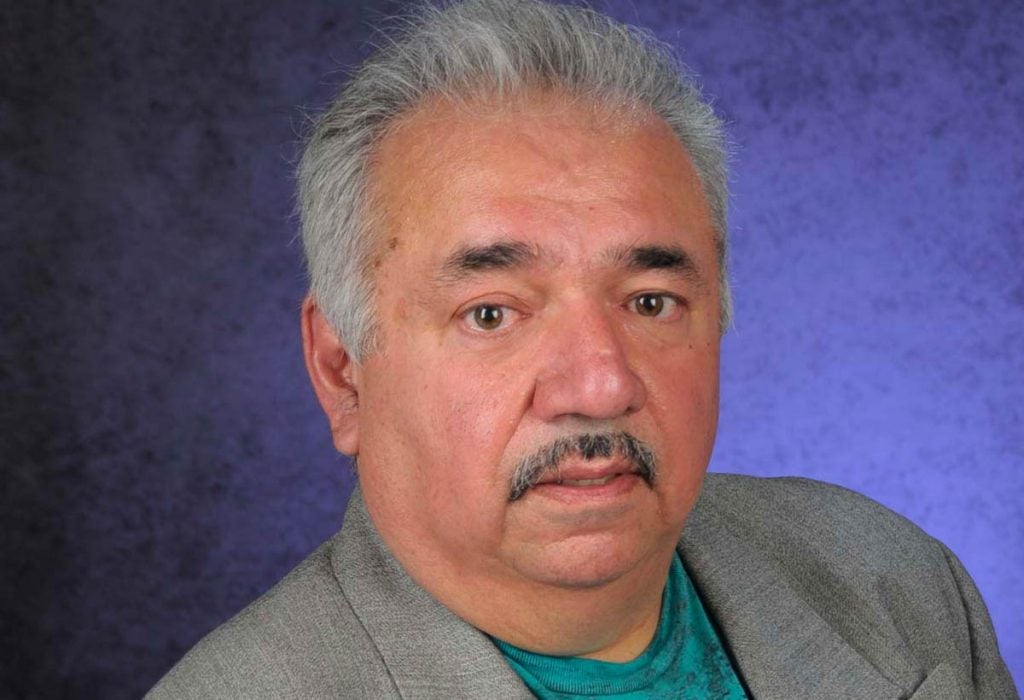
Steve Loza
See Bio
Steven Loza is a professor of ethnomusicology at UCLA, where he has been on the faculty for thirty-four years, and also served as professor of music at the University of New Mexico, where he formerly directed the Arts of the Americas Institute. He has served as chair of the Department of Ethnomusicology and of the Global Jazz Studies Interdepartmental Program, in addition to serving as director of the UCLA Center for Latino Arts. He has conducted extensive research in Mexico, the Chicano/Latino U.S., Cuba, among other areas, and has lectured and read papers throughout the Americas, Europe, and Asia. He has been the recipient of Fulbright and Ford Foundation grants among numerous others, and served on the national screening and voting committees of the Grammy Awards for many years. Aside from UCLA and the University of New Mexico, he has taught at the University of Chile, Kanda University of International Studies in Japan, and the Centro Nacional de las Artes in Mexico City.
Loza’s publications include four books, Barrio Rhythm: Mexican American Music in Los Angeles (1993) and Tito Puente and the Making of Latin Music (1999), both published by the University of Illinois Press, The Jazz Pilgrimage of Gerald Wilson (2018, University of Mississippi Press), and Barrio Harmonics: Essays on Chicano/Latino Music (in press, UCLA Chicano Studies Research Center Publications). Loza has published numerous research journal articles and edited four book anthologies, Musical Aesthetics and Multiculturalism in Los Angeles (UCLA Ethnomusicology Publications, 1994), Musical Cultures of Latin America: Global Effects, Past and Present (UCLA Ethnomusicology Publications, 2003), Musicología global: pensamientos clasicos y contemporaneos sobre la etnomusicología (CENIDIM/CONACULTA, Mexico, 2017), and Religion as Art: Guadalupe, Orishas, Sufi (University of New Mexico Press, 2009).
Loza has performed a great amount of jazz and Latin jazz, has recorded three CDs on the Merrimack label, and has produced numerous concerts and arts festivals internationally, including his role as director of the UCLA Mexican Arts Series from 1986-96 and co-director of the three time Festival de Músicas del Mundo in Mexico City. In 2008 he produced a concert at Disney Hall in Los Angeles featuring the Mexico City Philharmonic Orchestra that included the world premiere of his tone poem America Tropical, a multimedia symphonic piece based on the mural by David Alfaro Siqueiros. Loza directed a tour and cultural interchange featuring Mariachi Los Camperos de Nati Cano performing with the National Symphony Orchestra of Cuba at Casa de las Americas in Havana in 2016, and has developed various recent UCLA projects with Cuba. Recently. he has been collaborating with musicians representing various world music traditions interpreting and experimenting with improvisation in live and recorded performances.
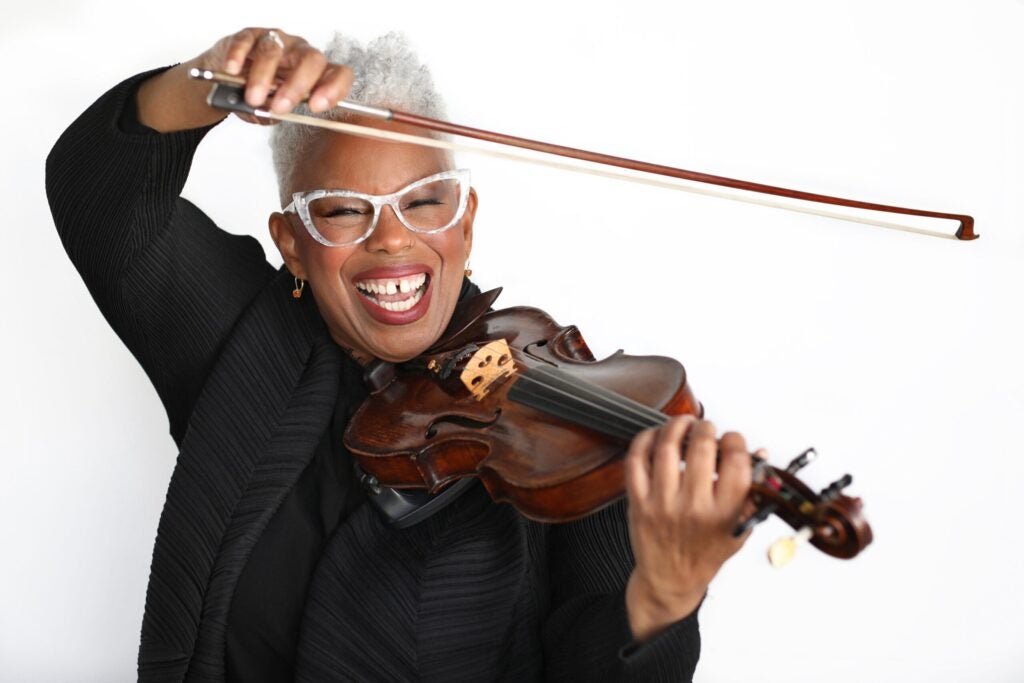
Regina Carter-Garnett
See Bio
A recipient of the 2023 NEA Jazz Masters Fellowship, a MacArthur “genius” award, and a Doris Duke Artist Award, violinist Regina Carter has been widely hailed for her mastery of the instrument and her drive to expand its possibilities. Her current project, Gone in a Phrase of Air, is a musical, spoken word, and media exploration of the impact of urban renewal beginning in the 1950s on Black and immigrant communities and the displacement that resulted—of people and culture—from neighborhoods in Regina’s hometown of Detroit to others in St. Louis, Chicago, New York City, and elsewhere. In the work’s collection of original and reimagined music of the era, Regina shines a spotlight on what’s been lost—gone in a phrase of air—then finds celebration in the ashes.
Regina began studying violin at the age of four using the Suzuki method. She attended Cass Technical High School in Detroit, and her training continued at the New England Conservatory of Music and at Oakland University in Michigan.
A winner of multiple readers’ and critics’ poll awards from DownBeat, JazzTimes, and other publications and a three time Grammy nominee, Regina tours with her own group and has appeared frequently as a guest soloist, including with such performers as Wynton Marsalis and JALC, Kenny Barron, Arturo O’Farrill, the late bassist Ray Brown, Omara Portundo, Chucho Valdes, Mary J Blige, Dolly Parton , Rhiannon Giddens, Steve Turre, Stefon Harris, the late Aretha Franklin, Joe Jackson, Billy Joel, Akua Dixon, Cassandra Wilson, Sweet Honey In The Rock, Eddie Palmieri, Papo Vasquez and others.
Her albums include a self-titled solo debut Regina Carter (Atlantic 1995), Something for Grace (Atlantic 1997), Rhythms of the Heart (Verve 1999), Motor City Moments (Verve 2000),Paganini: After a Dream (Verve,2003), on which she made history by being the first non-classical violinist to play Niccolò Paganini’s Il Cannone, I’ll Be Seeing You: A Sentimental Journey (Verve 2006), Reverse Thread (E1 Music, 2010), Southern Comfort (Sony Masterworks, 2014); Ella: Accentuate the Positive (OKeh, 2017); and Swing States: Harmony in the Battleground (Tiger Turn, 2020).
Regina recently joined the esteemed faculty of The UCLA Herb Alpert School of Music. Past positions have included being on faculty at Manhattan School of Music and New Jersey City University, resident artist for San Francisco Performances and resident artistic director for SFJAZZ. She has also served three times as a jurist for the Pulitzer Prize for music and as a film and music panelist for the Kresge Artist Fellowships. She received an honorary doctorate of humane letters from Albion College in 2006
Regina resides in Maywood, New Jersey, with her husband drummer, composer, and educator Alvester Garnett. She also volunteers as an End-of-Life Doula.
Program
Opening remarks
Salim Washington
Panel 1 (2:10 pm)
Moderator Steve Loza
Andy Beta, “Infinity as Autobiography”: Alice Coltrane’s Reimagining of John Coltrane’s Late Recordings”
Beta examines the critical reception of Alice Coltrane’s Infinity recording, and the ways in which the recording reflected upon her development as an artist.
Nadia Milad Issa, “Saint Coltrane, the Dance Eulogy, and the Spirit Veil, ‘A Love Supreme’ as Ancestral Mediation”.
This paper positions Coltrane’s canonization b the St. John Coltrane church not as an isolated action of Bay Area devotion but as a template for choreographic and religious practice alike: testimony converted into ritual, grief converted into repeated form.
Martin Hundley, “Alice Coltrane, Sound of Free Universe: Performance Practice, Technology, and Feminist Epistemology”
This paper explores the ways in which Alice Coltrane’s musical sound and instrumental performance practice expresses the complexity of her identity, world view, spirituality, and travels, both geographically and temporally. Hundley employs and ethnographic and musicological approach to Coltrane’s recording Translinear Light.
Special Guest Speaker (3:40 pm)
Panel 2 (3:50 p.m.)
Moderator Regina Carter-Garnett
Scott B. Spencer, “Meme and Variations: How Video Mashups of John Coltrane’s ‘Giant Steps’ Became a Thing”
The intent of this study is to explore John Coltrane’s online legacy, use it to expand our field’s toolset to better deal with digital texts, and to tease out their various cultural contexts.
Aaron J. Johnson, “Africa/Brass and the Communal Experience of Engaging the Music of John Coltrane”
With the vision of Reggie Workman and Charles Tolliver Africa/Brass has afforded the uncommon opportunity for musicians to communally share the experience of performing Coltrane’s music and invoking his spirit.
John-Carlos Perea, “Versions as Relations: Naima, John Coltrane, and Jim Pepper”
This paper considers the original 1959 recording of “Naima” and the subsequent versioning of it by Jim Pepper as a sonification through which to amplify Pepper’s relationship to Coltrane via Pepper’s experiences through Southern Plains Intertribal powwow musical practices.
Keynote Address (5:20 pm)
Archbishop Franzo King and members of the African Orthodox Church of John Coltrane “The Continued Relevance of John Coltrane”
