The term “early music” summons a world we have lost. The domain of the courtier, the cathedral and the carnival. The sonic realm of the sackbut, the crumhorn and the bladder pipe. But beyond that, the term can be vague, especially for the non-specialist. It lacks the expressive power of other descriptors of European music—“Classical” or “Romantic” have more evocative power—while suggesting that it is somehow “lesser”—earlier than … something more sophisticated?
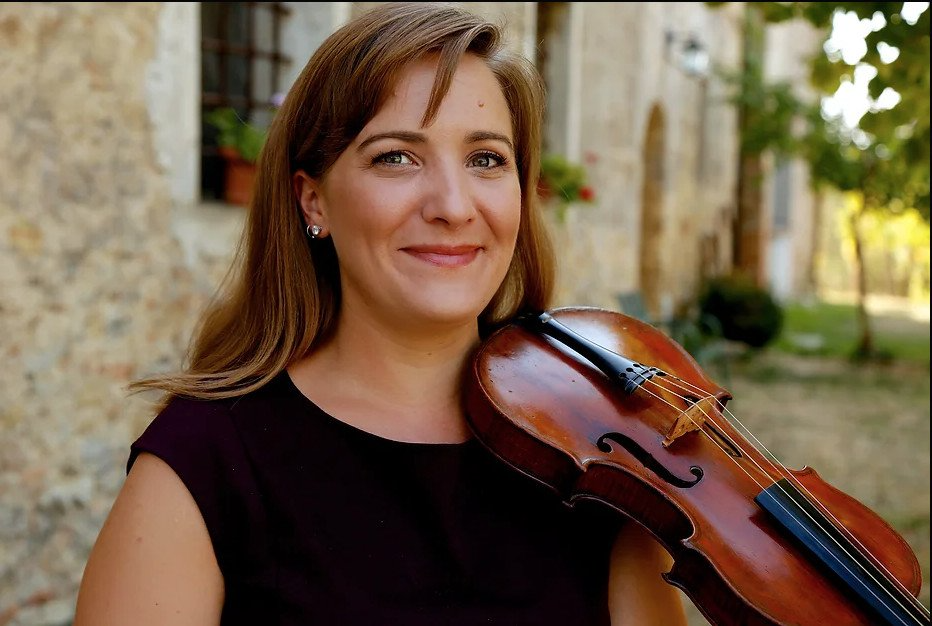
Don’t tell this to alumna Lindsey Strand-Polyak. Both a practitioner and scholar of early music, she earned her PhD in musicology from UCLA while completing her master’s in violin performance. That double training gave her a broad vista of the field. Far from monolithic or unsophisticated, early music was unruly, radical and deeply experimental.
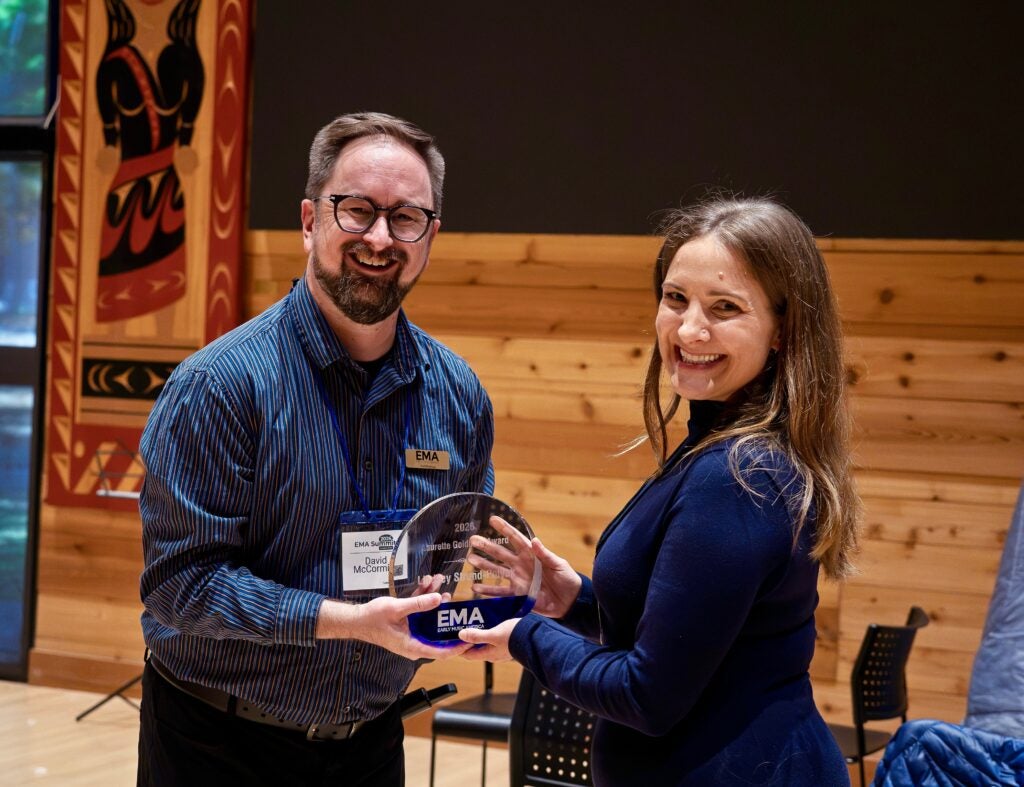
As the artistic director of the Los Angeles Baroque, Strand-Polyak brings the sound worlds of the 17th and 18th centuries to 21st-century players and audiences. She does a fair bit more than this, including directing the Pacific Northwest chamber music series Musique du Jour, and serving as the education program director for the Burton Karson Education Program of the Baroque Music Festival, Corona del Mar. This year, she is the recipient of Early Music America’s 2026 Laurette Goldberg Award, for outstanding achievement in historical performance and community engagement.
So, you’re a self-described history nerd. When were you first exposed to the field of “early music?”
Very early. I was the person growing up, who, when we were listening to the mass, I was the one saying, “oh, this is the Ordinary, and this is the Kyrie.” I was that nerd.
What was it about early music that spoke to you?
Well, the large orchestra repertoire of 19th century music was never really my thing. I was always really into the old and the really new, due to what I felt was a shared sense of adventure between the two.
Wait—so, either new music or pre-classical music?
Yes. I took a graduate seminar at UCLA taught by Susan McClary on Seventeenth Century Music that changed my life, which introduced me to the wild and crazy world of early 17th century Italian composer Dario Castello. I mean, it wasn’t common for modern violinists to know a lot of music before Bach, and I certainly fell in that camp up until that class. And it’s an amazing tradition of incredible virtuosic violinists. That subject ended up shaping my PhD work, and now my post-graduate career.
What is it that makes early music so cool?
The Seventeenth Century was such a time of experimentation. I think that’s why I felt such a kinship between the early Baroque and the Contemporary era. Everything in the early Baroque was up for grabs. New genres were being created. Even the fight between tonal harmony and modal harmony was being negotiated. It was before the formulas of the later Eighteenth Century had been settled upon.
When you listen to a piece by Dario Castello, he’s going to change moods and affects, every 30 seconds, and quite dramatically. You’re not going to know what kind of rollercoaster ride you’re on.
So, for me, coming from the post-18th century classical tradition where you feel like everything is in its right place, that for me was very exciting.
There’s a freedom to it.
Right.
But it seems that reconstructing the historical context of early music through period instruments seems more like a constraint—it focuses the attention on historical accuracy rather than artistic expression.
Well, that term “historical accuracy” is kind of a mirage, which we can discuss. Because, for starters, let’s be honest: if we are talking about historical accuracy, then I’m not allowed to play this music in the first place.
Really?
Well, not unless I was a nun, or a courtesan, in that era. Even Vivaldi’s famous virtuoso female orchestra of the Ospedale delle Pieta performed behind a screen, hidden from view.
I’ll take a moment to give a shout out to my fellow UCLA Musicology Alumni and Faculty who are at the forefront of this important research, highlighting women’s roles in Baroque music. So, Go Baroque Bruins!
Amazing! Returning specifically to historical instrument accuracy for a moment—it seems to me that focusing on the historical accuracy, down to making sure that the music is played on certain instruments, that seems like it would inhibit artistic creativity.
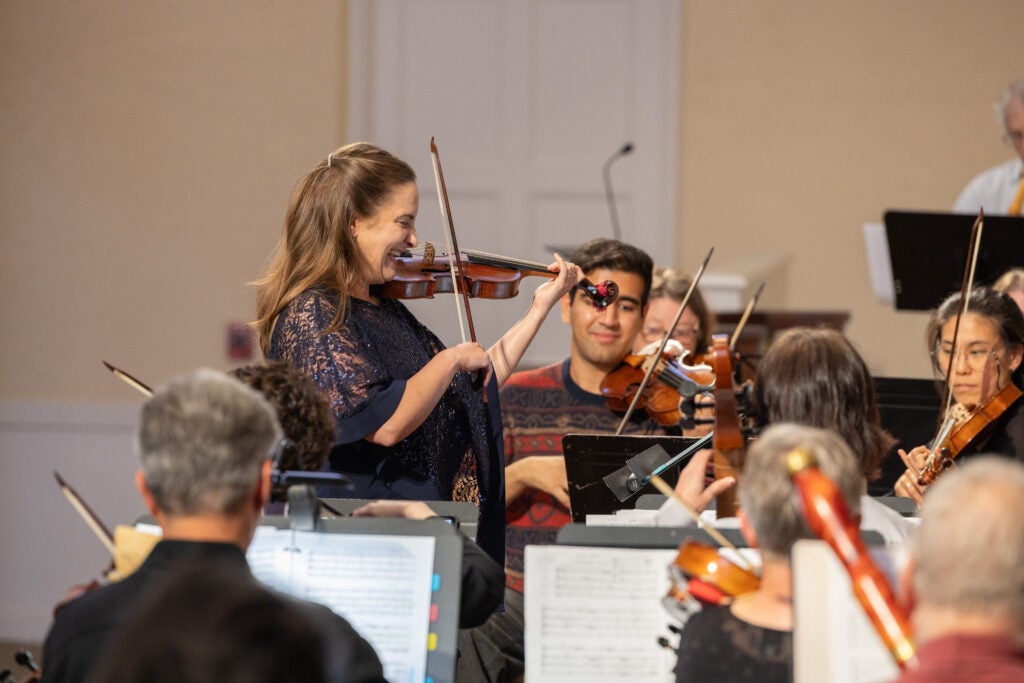
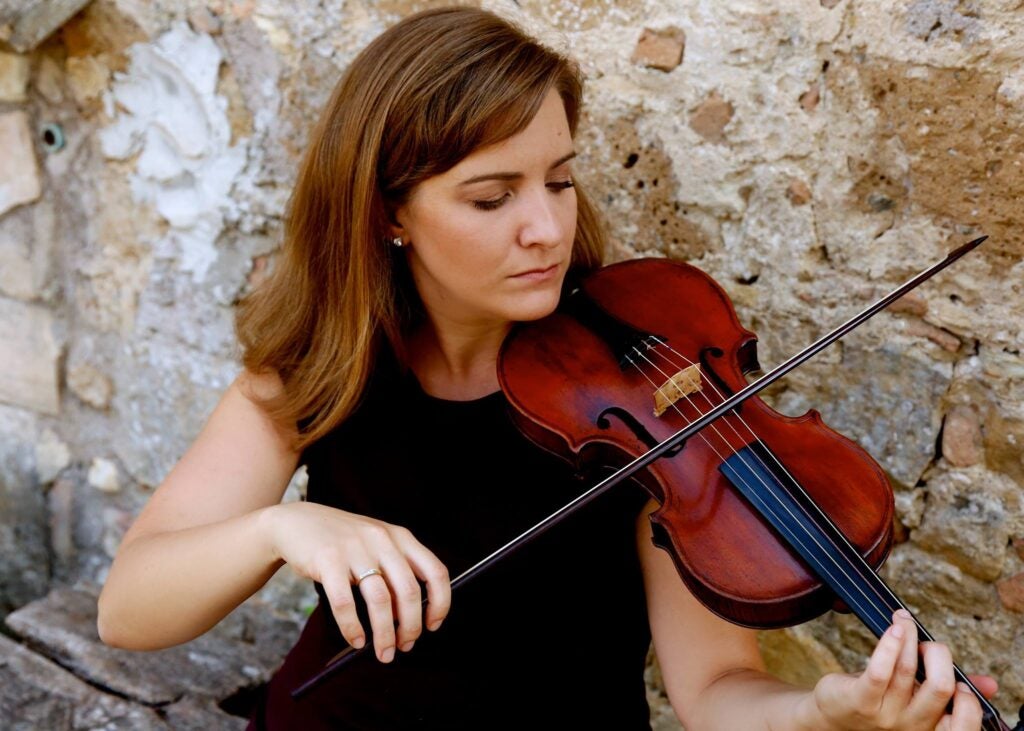
I don’t think so. When I first fell in love with this music, I realized that my modern equipment wasn’t giving me the right tools for expression. I was playing seventeenth-century music, but with a modern bow that was not designed for those timbral colors. My modern equipment was designed for a different set of aesthetics.
It’s like painting—why paint a sunset in oil versus watercolor? Either way, it’s going to be a sunset. But the tools you use give you a different mode of expression. Same is true for music. Gut strings provide tone colors that steel strings just can’t. Baroque bows make shapes and colors that a modern bow won’t.
One of the reasons that historical performance is so compelling is that it brings different perspectives into the mix. And what I tell students and audiences is that it’s not just about teaching history or tradition. It’s about owning the artistic choices that you make, and the artistic traditions that you choose. We all don’t need to do the same thing, but great artists are generally curious about exploring where things they like come from.
So, historical accuracy…
I really prefer the term “historically informed” to “historically accurate.”
Ahh. So it isn’t so rigid? You don’t have to leave modern tools at the door?
Well, while my modern violin stays home… my music is on my iPad on stage. So, no!
You’ve talked before about early music audiences—how were they different from modern audiences?
Well, the musical patrons of the 17th and 18th centuries were not the sit-quietly-in-a-dark-room and then clap-clap-and-then-go-home kind. That tradition belongs to a later era anyway. I mean, I would love to time travel and attend a historical performance of Rossini in which I’m invited to get up and go get sorbet during the “Aria di Sorbetto.” I would indeed love that. Thank you to Professor Robert Fink for that trivia tidbit, by the way!
And during the first performance of Handel’s Water Music, which was “premiered” on the royal barge floating down the Thames River, there were people basically rowboating alongside the giant boat lobbing swear words at each other and at the nobility and musicians performing aboard.
Is this something we can experience at the Los Angeles Baroque concerts?
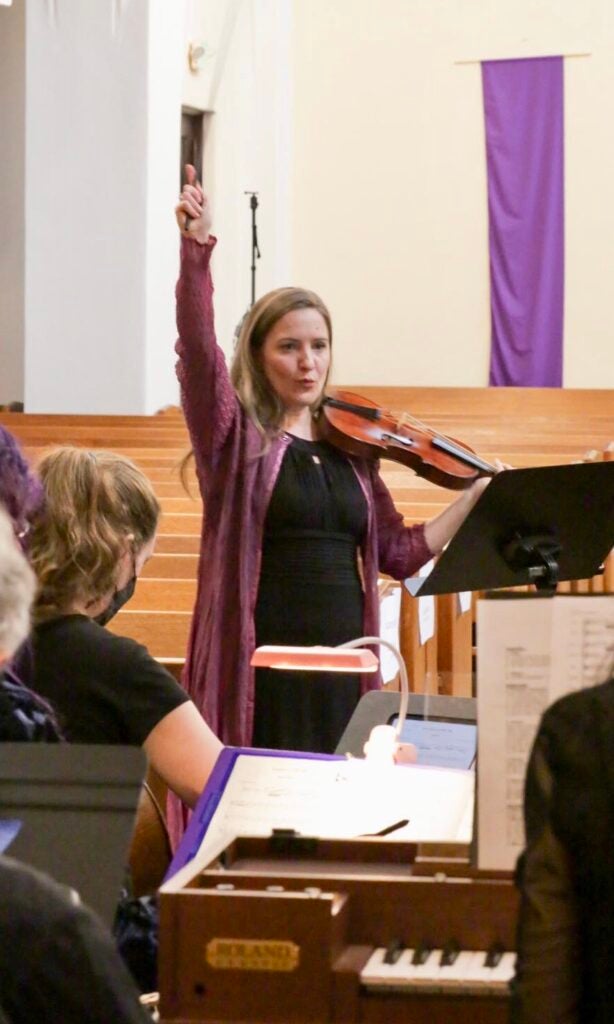
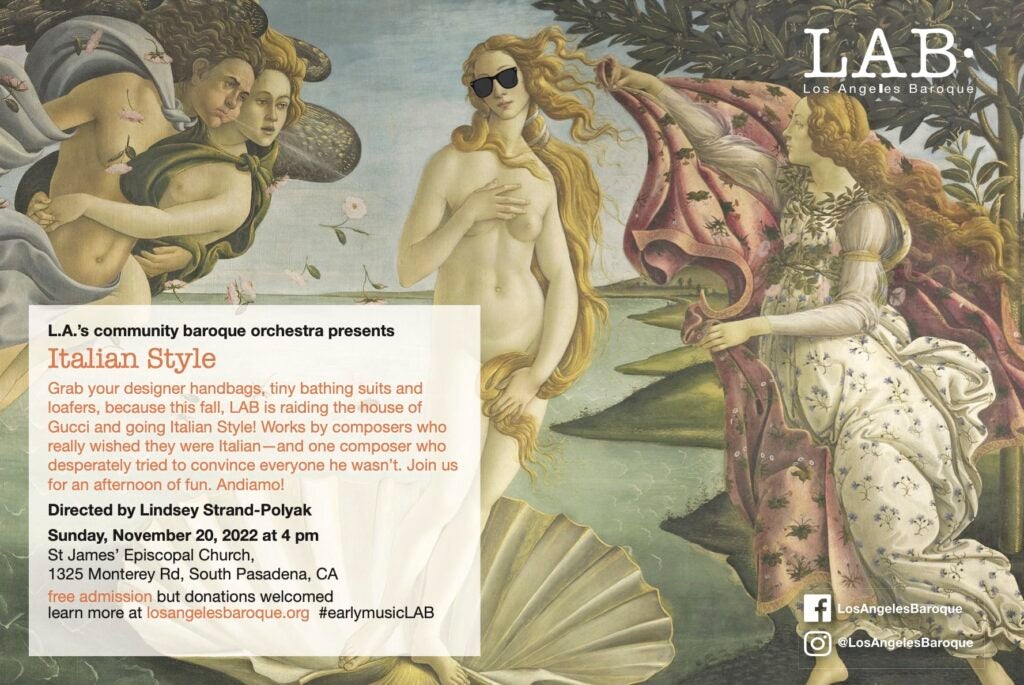
Maybe not the swearing, but our experience is definitely communal. I tell jokes. We have a good time. There’s a party afterwards. The party is just as important as the concert.
So “historically informed” at your concerts extends beyond the period instruments?
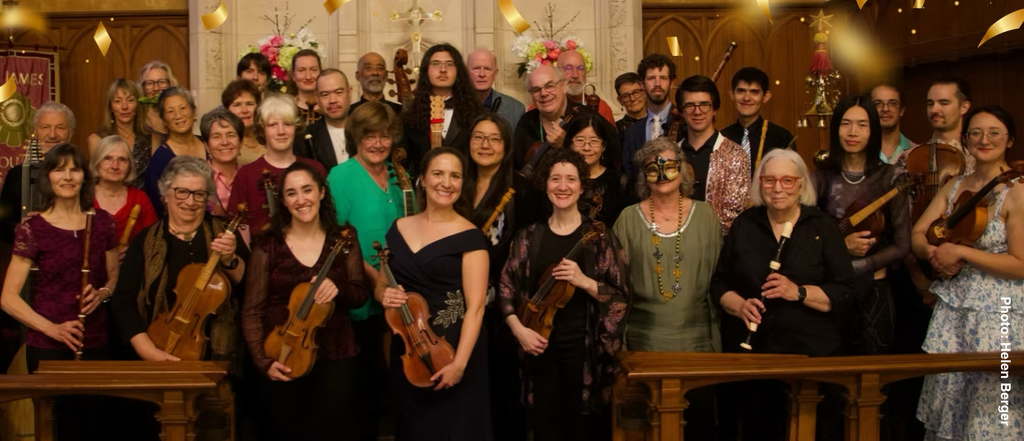
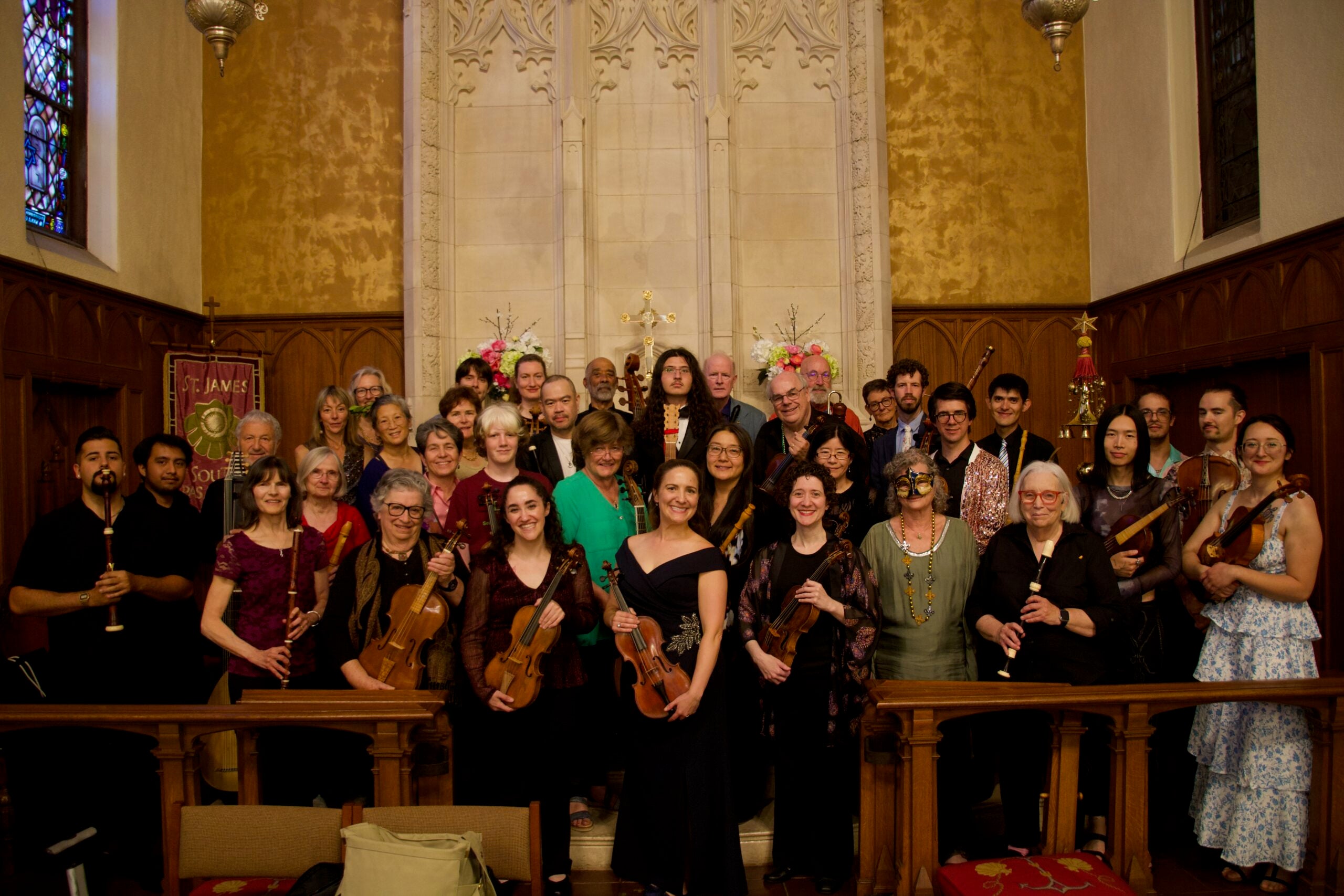
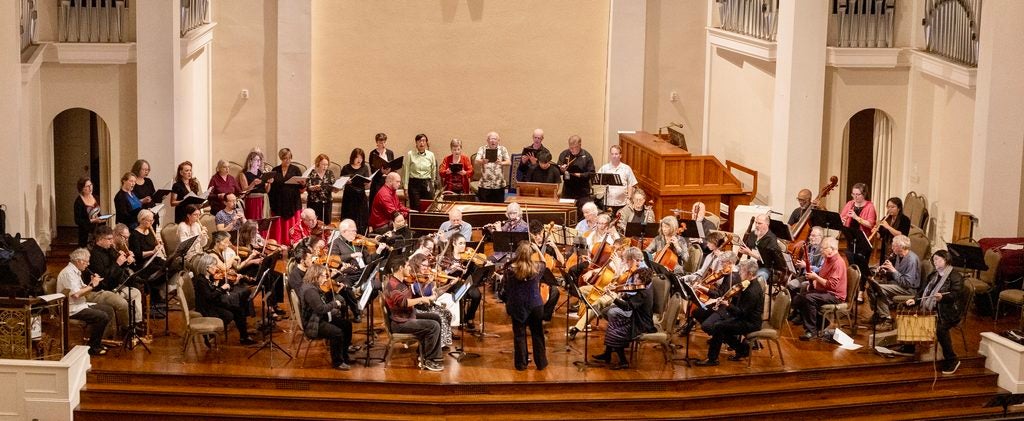
It’s a total concert experience at LA Baroque! In the late 18th century, the groups that were dedicated to performing “old” music – that is, music more than twenty years old – were a mix of amateurs and professionals. So bringing community players together from all different backgrounds and corners of Southern California to play baroque music feels very historically informed. I want to be able to share this musical tradition with everyone because I think that that kind of curiosity about the world is really compelling, and that kind of cultural context matters. Because, well, as I said before… I’m that kind of nerd.
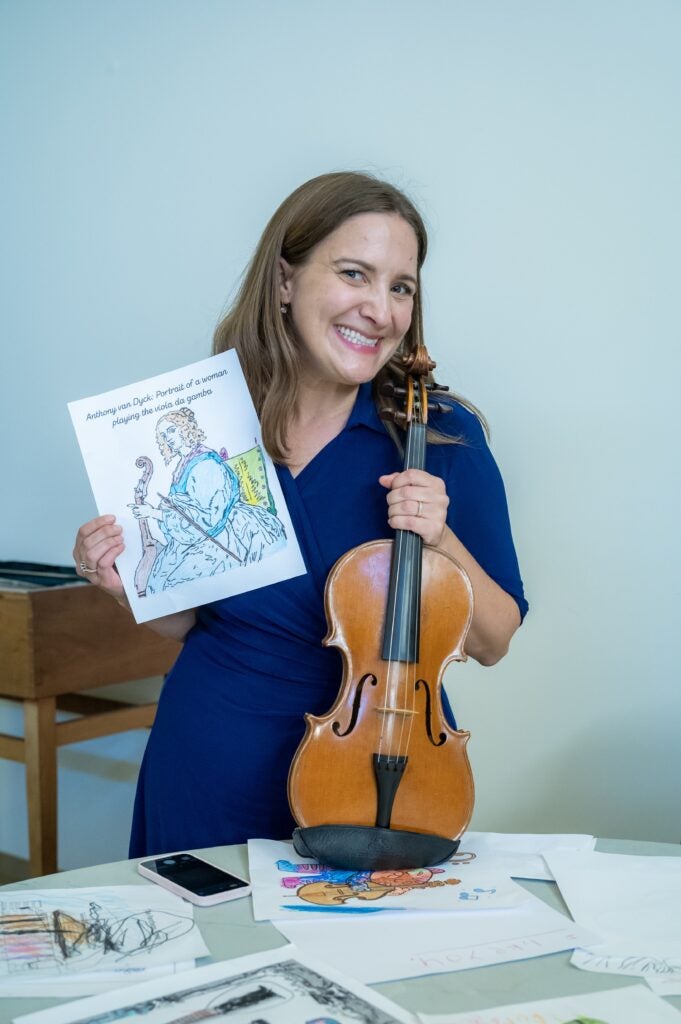
Lindsey Strand-Polyak is Artistic Director of Los Angeles Baroque, Director of the Seattle-based chamber music series Musique du Jour, and Education Program Director at the Baroque Music Festival, Corona del Mar.
Come meet Lindsey at Los Angeles Baroque! We welcome players of all levels, and ages to join the band, and our public concerts are free to attend (and yes, there is a party afterwards). More information at: www.losangelesbaroque.org
Our next concert “The Finalists” is Sunday, November 22nd, 2026 at 4pm. Come learn about everyone who turned down a job before J.S. Bach!
If you’re a Bruin in the Pacific Northwest, attend one of her signature afternoons with Musique du Jour that combines tales and tunes… as seen through the lens of historical performance. Celebrate our milestone 10th season! Concerts include “Mr. Duke’s Fiddle: The Tale of an English Violin,” “Evening in the Palace of Reason: J.S. Bach in a King’s Court,” and “The Smallest Operas in the World!” Details and tickets available on www.musiquedujourpresents.org and socials: Facebook: @musiquedujourpresents and Instagram: @musiquedujourpnw
To learn more about the Burton Karson Education Program and to find out how to bring baroque programming to a school and community in Orange County, learn more at https://bmf-cdm.org/education-fund-program/