

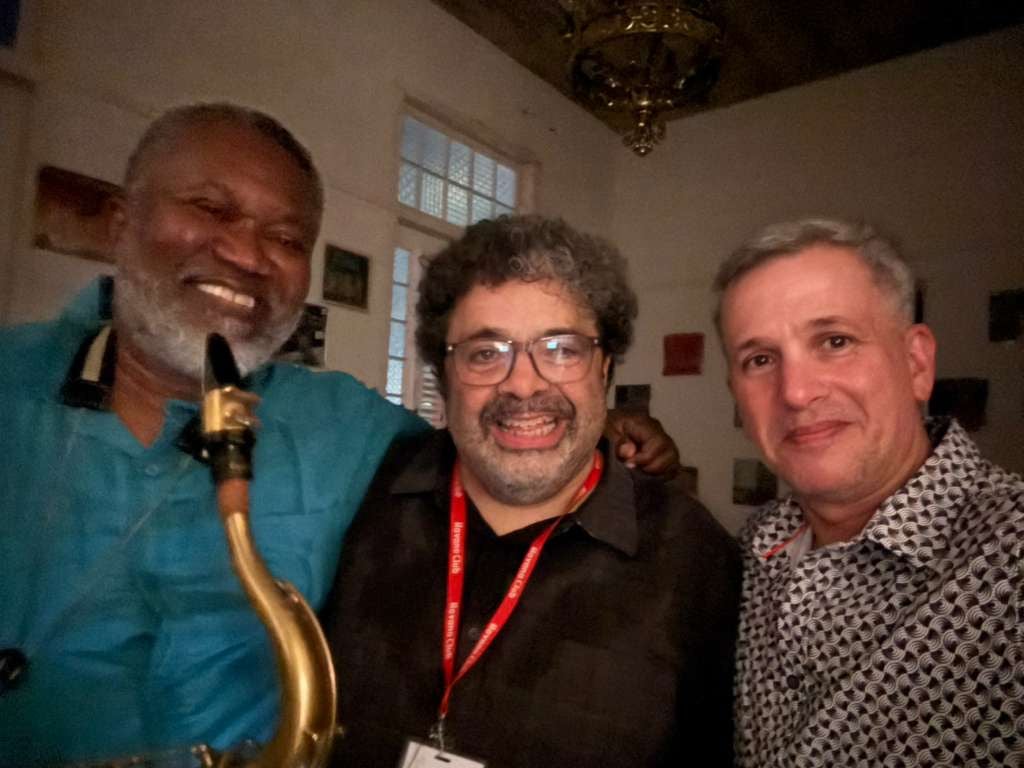
Salim Washington, professor and chair of global jazz studies, is working to expand opportunities for students to experience the truly global nature of jazz. This year he invited South African artist Steve Dyer for a week-long residency and is exploring formal exchanges with leading jazz centers around the world.
In this interview, Washington discusses his recent trip to Cuba and the possibilities it opened for future collaborations and student exchanges. Photos courtesy of Salim Washington.
# # #
What took you to Cuba?
I was talking with Mike [Dean Michael Beckerman], and telling him about my vision for global jazz studies, which is to emphasize the global aspect of jazz. And one of the ways I want to do this is to establish exchange programs between universities in South Africa, Cuba and Brazil. These are the places that I feel have contributed significantly to the jazz diaspora in ways that are so profound that they influence the way that we in America play our own music.
You lived in South Africa, right?
Yes, for over a decade. I have contacts there from that. But not so much for Cuba and Brazil. And the dean has a friend who has a license to bring people to Cuba for cultural events, including the Havana Jazz Festival. So Mike put me in contact with him and I joined the tour.
Were you on the same tour as everyone else?
Yes, but I also got to have meetings with teachers and administrators from the National Conservatory and also the Institute of Music in Cuba. And I also met some of their leading young musicians. It was a ten day trip.
What was it like, landing in Havana?
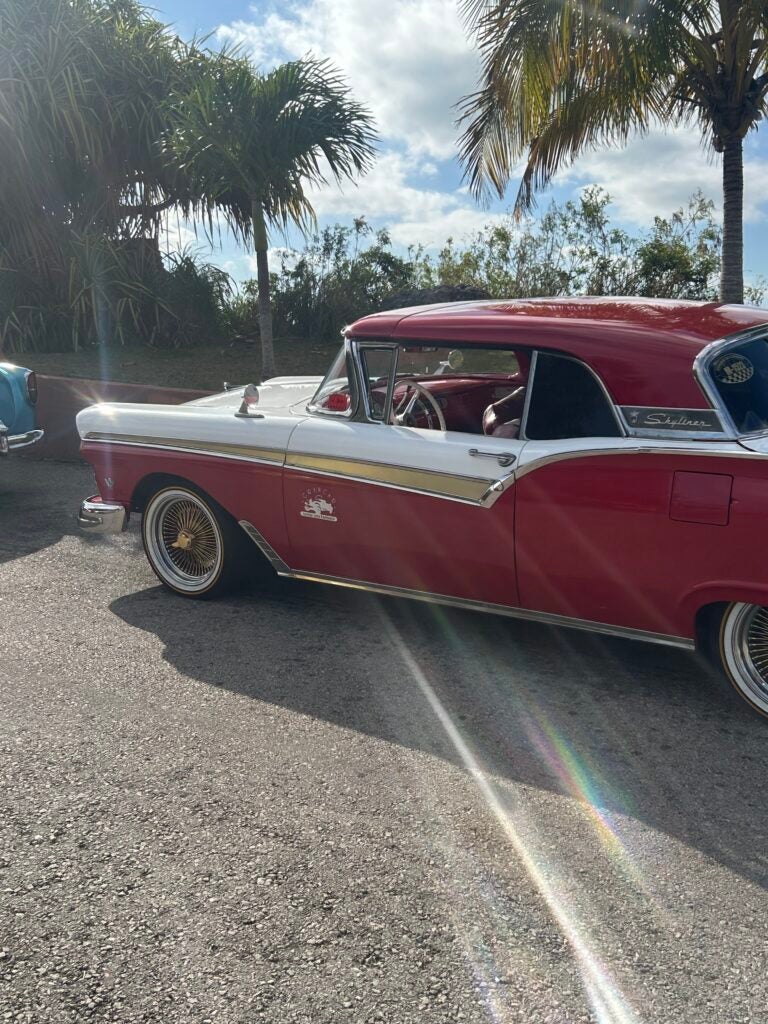
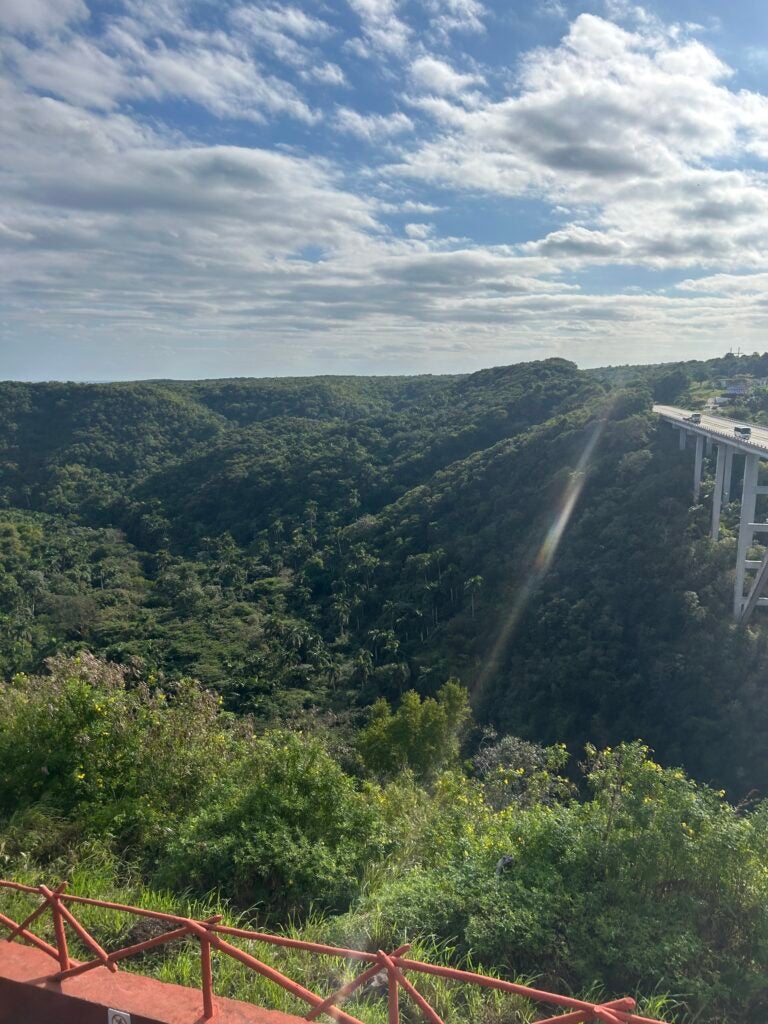
It was a little surreal. The very first day, we were met by Son Cubano players, veteran players. And they performed for us. On the second day, we learned about Havana and its architecture and history. And then we went to a Rumba.
A Rumba Cubana—that is a form of song and dance?
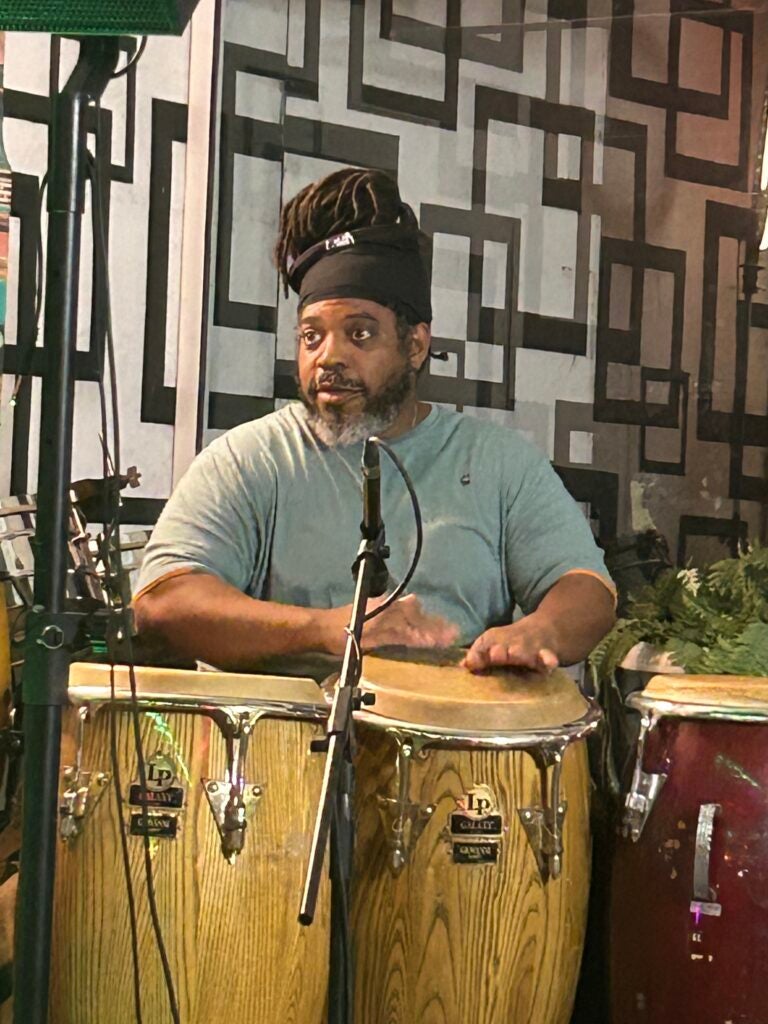
It’s much more than that. It’s a cultural happening that is akin to, but not exactly like, a religious ceremony. There’s a performative aspect to it, but there’s also a spiritual aspect to it, and it’s highly improvisational. So here you have these people who are playing this music that is related to their spiritual tradition of Santeria. And it is intertwined also with the Abakuá, which is a secret society that extends back to the days of slavery. So they have a secret language that they have maintained to this day.
It was an amazing festival. I met some of the greatest percussionists on the island, and therefore in the world.
How did your meetings with music schools in Cuba turn out?
They are excited about the possibility of an exchange. They are ready to do it. And the musicians all met me with warmth and grace. And they play beautiful music, transcendent music.
Did you meet students as well?
Yes. One thing about Cuba, it is just full of virtuosos. They identify musically talented students early, separate them and develop them. They do this across the board, in other areas as well. For music, one of the consequences is that these students who enter college to study music are virtuosic with a capital V. That doesn’t mean that they are great artists, of course, but their talent and their skills are undeniable.
What is education like at the music conservatory?
They teach European classical music primarily. It’s really Eurocentric in that way. All their jazz musicians, they learn how to play European classical music really well, but they don’t teach jazz there.
So, where do Cubans learn jazz?
They learn it on the street. I mean—all these amazing traditions. They learn from each other, they play to each other. And that’s the way it used to be in the United States, too, right? So the people that we consider the giants of our music, they didn’t study jazz in college. Coltrane didn’t study jazz. Bill Barron didn’t study jazz. They were both erudite musicians trained in the conservatory, but they learned jazz on the street, and that had a lasting impact on how they played, why they played the type of legacies that they left.
The Cubans have maintained musical traditions to this day that extend back to their African roots. Their notion of clave as an organizing concept for music. They are a terpsichorean culture. Dance is very important to them. And in Africa, if you go back to the origins of this tradition, there are cultures that don’t have distinct words for song and dance. It’s the same word, right? If you want to be a master drummer, you have to learn how to dance, right? And it’s like that in Cuba, to this day. It’s very much a dance beat-oriented culture. And the way that they conceptualize the music shows this.
The Cubans have maintained both the practices and the attitude—very important, that attitude—of their music.
It sounds as if Cuban jazz, perhaps like North American jazz, freely combined these musical traditions.
Yes, and Cuban jazz musicians have also managed to master many of our jazz concepts such as improvisational swing, harmonic sophistication, and more. What is interesting is that, while the influences of Western functional harmony and the like are not hidden, [the Cubans] have not fallen into the trap of deeming harmony the child solely of Europe and rhythm the sole inheritance from Africa. The two are in conversation with each other, and this is a gift. It is life-giving.
What do you hope to establish with a student exchange?
It’s a great opportunity to have the exchange with pedagogies as well as the exchange involving traditions. In Afro-Cuban culture, dancing is very important. And in Africa, the origins of this tradition, you see that they often have the same words for song and dance. It’s the same word. It’s still like that in Cuba.
As much as Cuban jazz still emphasizes dance, there is quite a bit of experimentation with respect to various genres and traditions around the world that are in dialogue with Cuban music. Our students need to be part of this dialogue. I also think that the Cuban musicians and teachers involved in an exchange with us can benefit from a more profound relationship to the blues and its epistemology.
And we are losing these traditions somewhat in the United States because Black people are not leading the charge in tertiary education and even in black art forms like jazz. They simply are not. An exchange could invigorate discussion about this.
You mentioned before, though, that the Cuban education model was European influenced.
It is, and I think that part of the exchange will be good, too. Schools of music are often based on the European conservatory model. You have to be a virtuoso before you can be a musician. In the Black musical tradition, our conservatory was the church. And in the church, you have to be a musician first. Virtuosity is a separate thing.
This is not only a difference in sound or between genres, it is also a difference in epistemology. We’ve brought a much broader epistemology and pedagogy into our school of music, and I think there are some exciting conversations and collaborations to be had on this subject.