


How does a composer reimagine music written in a concentration camp? Dean Michael Beckerman speaks with composer Michael Schachter about Four for Gideon, inspired by folk songs arr…
Michael Beckerman is Dean of The UCLA Herb Alpert School of Music. He is a leading music historian and public intellectual. His groundbreaking studies of Central European composers have been described as “ingeniously conceived” and “brilliant,” and his work has been praised for its appeal to both academic specialists and the broad public. Beckerman’s expertise extends also to aesthetics and film music as well as a particular focus on musical life in concentration camps during the Second World War.
The author of eight books and more than 150 scholarly articles, Beckerman’s work is wide-ranging. He has written about composers such as Brahms, Beethoven and Mozart, as well as often-overlooked topics from the “edges” of Europe, including exiled composers, the music of the Roma (Gypsies) filtered through the imagination of the German baroque, and the musical recordings that Roald Amundsen took with him to the South Pole. His main preoccupations are exploring the relationship between music and the rest of the world and, during more introspective moments, determining if it is even possible to say anything about music or our shared past that is not ultimately arbitrary. His current book project, The Doctrine of One, deals with how responses to sound can be deeply personal and even unique to the individual listener.
Michael Beckerman is also known for his work on the music and lives of Czech composers Antonín Dvořák, Leos Janáček and Bohuslav Martinů and has earned many honors, among them the Deems Taylor Award from ASCAP, the Janáček Medal of the Czech Ministry of Culture, the Medal of the Dvořák Society, a Special Citation from the Czech Parliament, the Harrison Medal from the Society for Musicology in Ireland, as well as honorary doctorates from Palacký and Masaryk Universities in the Czech Republic.
Long a champion of bringing music scholarship to broader audiences, Dean Beckerman regularly contributes to national publications, lectures internationally, and curates music festivals and conferences. He has produced programs for NPR, PBS, the BBC, German Public Radio, CBC and Irish Radio, among others. He was the Leonard Bernstein Scholar in Residence at the New York Philharmonic from 2016-18, and has been a frequent contributor to The New York Times, writing on subjects that range from the influence of African American music on Dvořák’s “New World” Symphony to the quiet undercurrent of loss and nostalgia in Irving Berlin’s holiday anthem “White Christmas.” He has made programs on PBS’ Live from Lincoln Center with Oliver Saks, Stephen Sondheim and Yo-Yo Ma, and others. In 2025, he served as scholar-in-residence and artistic advisor for the Bard Musical Festival, where he gave lectures and co-edited a book on the music of Czech composer Bohuslav Martinů. The festival was profiled by Alex Ross for The New Yorker and in The New York Times.
Dean Beckerman has enjoyed a robust career in music scholarship, performance and composition that has spanned the globe. He has held research grants from the American Council of Learned Societies, the National Endowment for the Humanities, IREX, and was a Fulbright Scholar. Prior to his appointment at The UCLA Herb Alpert School of Music, he was Carroll and Milton Petrie Professor of Music at New York University and Distinguished Professor of music at Lancaster University. He has also been on faculty at Central European University, Washington University in St. Louis and the University of California, Santa Barbara, where he taught from 1992-2003, making his appointment as dean of The UCLA Herb Alpert School of Music a musical and professional homecoming.
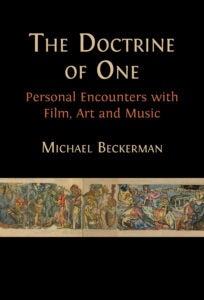
This volume is a bold and original meditation on how we interpret art, music, and culture—and what it means to listen, see, and feel differently from others. Drawing on Czech history and aesthetics, the book moves from filmmaker Hugo Haas’s coded tributes to his murdered brother, to the haunting ex libris designs of Josef Váchal, to the deeply personal resonances of Schubert’s chamber music, Dvořák’s cello concerto, and Gideon Klein’s tragic Terezín Trio. Across these vivid case studies, the author asks whether meaning in art can ever be shared—or whether it always belongs to the individual observer.
Rejecting academic rigidity Michael Beckerman celebrates the ‘splitters’—those who honor specificity, subjectivity, and the singular force of a personal response. Written in an engaging and accessible style, the book offers both a philosophical inquiry and a passionate defense of individuality in an age of conformity. It will captivate readers of musicology, cultural studies, and philosophy alike—anyone who has ever wondered what it truly means to interpret a work of art.
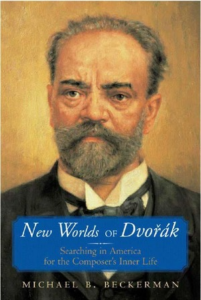
Focusing on Dvorák’s eventful stay in the United States from 1892 to 1895, this book explores the world behind the public legend, offering fresh insights into the composer’s music. We see the traditional image—that of a simple Czech fellow with a flair for composing symphonic and chamber music—give way to one of a complex figure writing works filled with hidden drama and secret programs. In his cogent examination of Dvorák’s state of mind, Michael B. Beckerman, a noted scholar of Czech music, concludes that the composer suffered from a debilitating and previously unexplored anxiety disorder during his American sojourn. Using Dvorák as a model, he argues convincingly that the biographical images we carry of composers condition the way we approach their music.
Michael Beckerman, New Worlds of Dvorák: Searching in America for the Composer’s Inner Life. New York: W. W. Norton, 2003.