
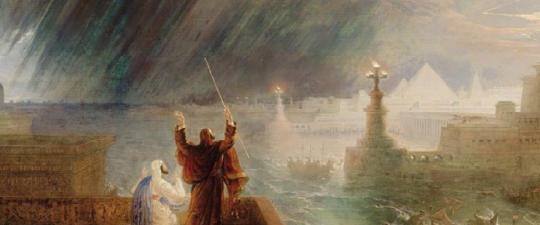
Israel in Egypt
An Oratorio by G.F. Handel
Premiered in London in 1739, Israel in Egypt tells the story of the Israelites’ exodus from Egypt and features monumental choral writing, including vivid musical depictions of the ten plagues.
To keep up with our future events, make sure to subscribe to the Milken Center’s email list here.
Performers
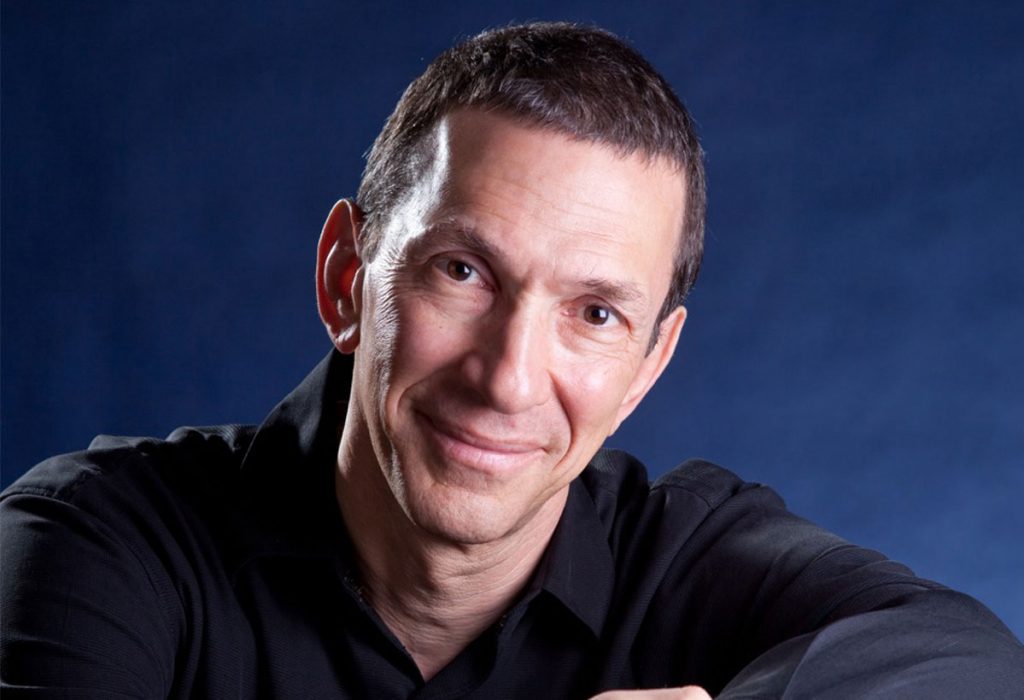
Neal Stulberg
See Bio
Heralded by the Los Angeles Times as “. . .a shining example of podium authority and musical enlightenment,” NEAL STULBERG has garnered consistent international acclaim for performances of clarity, insight and conviction. Since 2005, he has served as Director of Orchestral Studies at the UCLA Herb Alpert School of Music. From 2014 to 2018, he served as chair of the UCLA Department of Music, and currently serves as Distinguished Professor of Music Performance and Artistic Director of UCLA’s Lowell Milken Center for Music of American Jewish Experience.
In North America, Mr. Stulberg has led the Philadelphia Orchestra, Los Angeles Philharmonic, Atlanta, Fort Worth, Houston, Indianapolis, Milwaukee, Mexico City, National, New Jersey, New World, Oregon, Pacific, Phoenix, Saint Louis, San Antonio, San Francisco, Utah and Vancouver symphonies, St. Paul Chamber Orchestra and Los Angeles Chamber Orchestra, and New York City Ballet and San Francisco Ballet. A former assistant conductor of the Los Angeles Philharmonic under Carlo Maria Giulini and music director of the New Mexico Symphony Orchestra, he is a recipient of the Seaver/National Endowment for the Arts Conductors Award.
Mr. Stulberg’s European appearances have included performances in Germany with the WDR Rundfunkorchester Köln and the orchestras of Augsburg, Bochum, Dortmund, Freiburg, Herford, Jena, Münster, Nürnberg, Oldenburg and Rostock. In Holland, he has conducted the Netherlands Radio Symphony Orchestra at the Amsterdam Concertgebouw and led the Netherlands Ballet Orchestra, Netherlands Radio Chamber Orchestra, North Holland Philharmonic, Gelders Orchestra and Nieuw Sinfonietta Amsterdam. He has also appeared as guest conductor with the Stavanger Symphony Orchestra (Norway), Warsaw Chamber Orchestra, Klaipeda Chamber Orchestra (Lithuania), Athens State Orchestra, London Royal Ballet Sinfonia, Barcelona Liceu Orchestra and Norwegian National Opera Orchestra.
International engagements have also included the St. Petersburg Symphony Orchestra, Moscow Chamber Orchestra, Hong Kong Philharmonic, Taipei Symphony Orchestra, Seoul Philharmonic, Korea Philharmonic (KBS), Queensland, Adelaide and West Australian symphonies, Haifa Symphony Orchestra, Israel Sinfonietta and Ra’anana Symphonette.
An acclaimed pianist, Stulberg has appeared as recitalist, chamber musician and with major orchestras and at international festivals as pianist/conductor. His performances of Mozart concertos conducted from the keyboard are uniformly praised for their buoyant virtuosity and interpretive vigor. In 2011-12, he performed the complete Mozart sonatas for violin and piano with violinist Guillaume Sutre at UCLA’s Schoenberg Hall and at the Grandes Heures de Saint Emilion festival in France. In 2018, he performed throughout South Africa on a recital tour with saxophonist Douglas Masek and in 2022, appeared as solo pianist in the world premiere of Inclusion, a new work for pianist and chamber orchestra by Hugh Levick.
Mr. Stulberg has conducted premieres of works by Paul Chihara, Mohammed Fairouz, Jan Friedlin, William Kraft, Alexander Krein, Betty Olivero, Steve Reich, Peter Schat, Lalo Schifrin, Dmitri Smirnov, Earl Stewart, Morton Subotnick, Joan Tower and Peter van Onna, among others, and has also led works by UCLA composers Münir Beken, Bruce Broughton, Kenny Burrell, Mark Carlson, Richard Danielpour, Ian Krouse, David Lefkowitz and James Newton. He conducted the period-instrument orchestra Philharmonia Baroque in a festival of Mozart orchestral and operatic works, and has brought to life several silent movies from the early 1900s, including the Russian classic New Babylon, Shostakovich’s first film score. In August 2022, he conducted the North American premiere of Bas-Sheve, a recently rediscovered and orchestrated 1924 Yiddish-language opera by composer Henekh Kon and librettist Moishe Broderzon, at the Ashkenaz Festival in Toronto. In 2023, Stulberg led acclaimed performances of Dave Brubeck’s cantata, The Gates of Justice (1969) and the West Coast premiere of Lera Auerbach’s Symphony No. 6 (Vessels of Light) (2022) as part of the School of Music’s Music and Justice series, presented in collaboration with the Lowell Milken Center for Music of American Jewish Experience. And in May 2025, he conducted West Coast premiere performances of Tod Machover’s 2018 opera, Schoenberg in Hollywood, as part of the celebration of Arnold Schoenberg’ sesquicentennial.
Collaborators have included John Adams; Leonard Bernstein; Chris, Dan and Darius Brubeck; Dee Dee Bridgewater; John Clayton; Omar Ebrahim; Mercer Ellington; Michael Feinstein; Philip Glass; Morton Gould; David Krakauer; Lar Lubovitch; Tod Machover; Peter Martins; Mark Morris; Angel Romero; Cornel West; and Christopher Wheeldon. He has conducted Philip Glass’ opera Akhnaten at the Rotterdam Festival and Thomas Adès’ Powder Her Face with Long Beach Opera in Los Angeles, and has recorded for Naxos, West German Radio, Donemus, Yarlung Records, Sono Luminus and the Composers Voice label.
Mr. Stulberg has maintained a career-long passion for the training of young musicians. He has conducted and taught at the New World Symphony, Indiana University Summer Institute, Juilliard School, New England Conservatory, New Zealand School of Music, Henry Mancini Institute, Los Angeles Philharmonic Summer Institute, National Repertory Orchestra, Interlochen Arts Academy, American-Russian Youth Orchestra, Turkish Music State Conservatory (Istanbul), National Conservatory of Belarus (Minsk), Central Conservatory of Music (Beijing), Capitol Normal University (Beijing), Shanghai Conservatory of Music and National Taiwan Normal University. In December 2019, he taught and lectured in Israel at the Buchmann-Mehta School of Music, Jerusalem Academy of Music and Dance and Haifa University and returned to conduct its symphony orchestra in June 2024. In March 2026, he conducts the Carlos Chávez Youth Orchestra in Mexico City.
A native of Detroit, Mr. Stulberg is a graduate of Harvard College, the University of Michigan and the Juilliard School. He studied conducting with Franco Ferrara at the Accademia Nazionale di Santa Cecilia in Rome, piano with Leonard Shure, Theodore Lettvin, William Masselos and Mischa Kottler, and viola with Ara Zerounian.
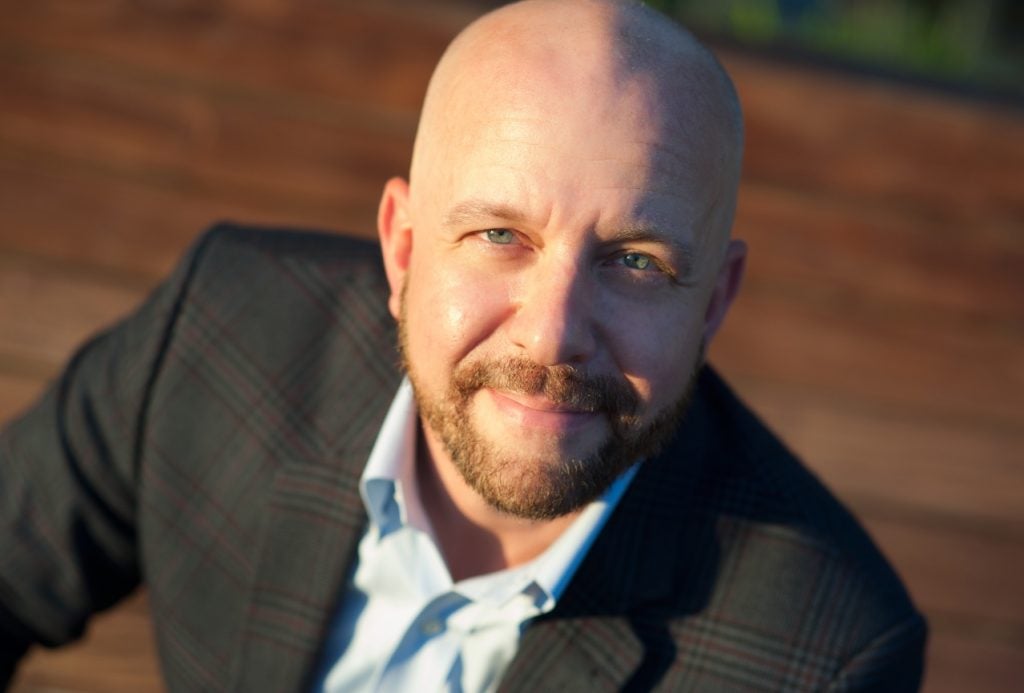
James K. Bass
See Bio
James K. Bass, GRAMMY®-winning singer and conductor, is Professor and Chair of the Department of Music, and Director of Choral Studies at The Herb Alpert School of Music at UCLA. He is the associate conductor for the Miami-based ensemble Seraphic Fire and is the Artistic Director of the Long Beach Camerata Singers.
Bass is an active soloist and ensemble artist. In 2017 he made his Cleveland Orchestra solo debut singing with Franz Welser-Möst and the orchestra in Miami and in Severance Hall, Cleveland. Other engagements as a soloist include the New World Symphony with Michael Tilson-Thomas, The Florida Orchestra, Grand Rapids Symphony, Back Bay Chorale and Orchestra, Firebird Chamber Orchestra, and The Sebastians. He has appeared with numerous professional vocal ensembles including Seraphic Fire, Conspirare, the Santa Fe Desert Chorale, Apollo Master Chorale, Vox Humanae, True Concord, and Spire. He was the featured baritone soloist on the GRAMMY-nominated recording Pablo Neruda: The Poet Sings with fellow singer Lauren Snouffer, conductor Craig Hella-Johnson, and the GRAMMY-winning ensemble Conpirare. He is one of 13 singers on the GRAMMY®-nominated disc A Seraphic Fire Christmas and appears on CD recordings on the Harmonia Mundi, Naxos, Albany, and Seraphic Fire Media labels.
Bass was selected by the master conductor of the Amsterdam Baroque Soloists, Ton Koopman, to be one of only 20 singers for a presentation of Cantatas by J. S. Bach in Carnegie Hall and was an auditioned member of Robert Shaw’s workshop choir at Carnegie. He has appeared as conductor with the Florida Orchestra during their annual education concerts.
During his tenure as Artistic Director for the Master Chorale of Tampa Bay, the official chorus of the Florida Orchestra, he was responsible for five recordings and multiple world premieres. In 2012 he served as chorusmaster and co-editor for the Naxos recording entitled Delius: Sea Drift and Appalachia featuring the Florida Orchestra and conducted by Stefan Sanderling. In 2014 he was the principal preparer for the recording Holiday Pops Live! conducted by the principal pops conductor Jeff Tyzik. During his tenure as a chorusmaster, he has prepared choirs for Sir Colin Davis, Sir David Willcocks, Jahja Ling, Michael Tilson-Thomas, Gerard Schwarz, Giancarlo Guerrero, Michael Francis, Marcelo Lehninger, Stefan Sanderling, Evan Rogister, Danail Rachlev, Joshua Weilerstein, Markus Huber, David Lockington, Xian Zhang, Patrick Quigley, and Neal Stulberg.
His professional career has coincided with the development of Seraphic Fire as one of the premier vocal ensembles in the United States. He has been actively involved as soloist, ensemble artist, editor, producer, and preparer for 14 of the ensemble’s recordings and routinely conducts the ensemble in Miami and on tour. During the summer of 2011, he co-founded the Professional Choral Institute. In its inaugural year of recording, Seraphic Fire and PCI received the GRAMMY® nomination for Best Choral Performance for their recording of Johannes Brahms’ Ein Deuthches Requiem. As the Director of Education for the ensemble, he has been involved with annual events that service more than 2000 students in the Miami-Dade county area each year. In 2017 Seraphic Fire and UCLA launched a new educational initiative entitled the Ensemble Artist Program that aims to identify and train the next generation of high-level ensemble singers.
Bass received his Doctor of Musical Arts degree from the University of Miami, where he was a doctoral fellow, and is a graduate of the Interlochen Arts Academy.

Rob Dietz
See Bio
Rob Dietz is a multi award-winning singer and vocal percussionist who has been arranging, composing, teaching, and performing contemporary a cappella music for over twenty years. Based in Los Angeles, Rob got his start as an arranger and group coach on NBC’s The Sing-Off. His arrangements have been performed by top-tier vocal artists, including Grammy-winning groups Pentatonix and The Swingles, as well as VoicePlay, Kings Return, and many more.
He has been a contributing arranger for performances by world renowned artists such as Smokey Robinson, Flo Rida, Sara Bareilles, Incubus, and Pat Benatar. His work has appeared on a variety of television programs, including America’s Got Talent (NBC), To All The Boys: P.S. I Still Love You (Netflix), and Pitch Slapped (Lifetime).
Originally from Ithaca, NY, Rob began his musical journey in high school as a member of the a cappella quintet Ascending Height, with whom he produced the first-ever all-original high school a cappella album. He earned his bachelor’s degree in music with an outside field in business from Ithaca College in 2010. While at Ithaca, Rob had the honor of directing the all male-identified group, Ithacappella, with whom he twice advanced to the finals of the International Championship of Collegiate A Cappella. He was also a member of both the Ithaca College Chorus and the Ithaca College Choir -the college’s select, touring vocal ensemble.
As a performer, Rob is an internationally recognized vocal percussionist, with credits including Glee (FOX) and The Late Late Show with James Corden. He was the founding vocal percussionist for both The Funx and Level, groups that gave him the opportunity to work with legendary performers including Jay Leno and Demi Lovato.
Rob has a deep passion for a cappella education, and is a founding co-director (along with Ben Bram and Avi Kaplan) of A Cappella Academy. In 2016, he launched Legacy, a youth a cappella group in Los Angeles. Under his direction, Legacy experienced a streak of competitive success, winning the Los Angeles A Cappella Festival’s Scholastic Competition, the Southwest semifinal round of the Varsity Vocals A Cappella Open, and the Finals of the International Championship of High School A Cappella at Lincoln Center. In 2023, he transitioned Legacy into Academy Choir: Los Angeles, a larger ensemble blending contemporary a cappella with modern choral music.
In addition to leading his own ensembles, Rob is a highly sought-after clinician and presenter. He has conducted honor choirs at regional and state festivals including Southwest ACDA, PMEA, WCDA, and NYSSMA. In the fall of 2025, he joined the faculty of the Herb Alpert School of Music at UCLA as a lecturer in Choral Music, where he directs the Chorale and teaches courses in choral pedagogy. He is also the author of A Cappella 101: A Beginner’s Guide to Contemporary A Cappella Singing (Hal Leonard).
Alongside his work in contemporary a cappella, Rob is also an accomplished choral composer, with works published by Hal Leonard, Alfred, GIA Publications, and Heritage. In 2021 his piece “The Gift” received a jury commendation as part of the King’s Singers New Music Prize competition. His pieces continue to be performed by choirs from all over the world. Rob currently serves as the national repertoire and resources co-chair for Contemporary/Commercial music for the American Choral Directors Association (ACDA).
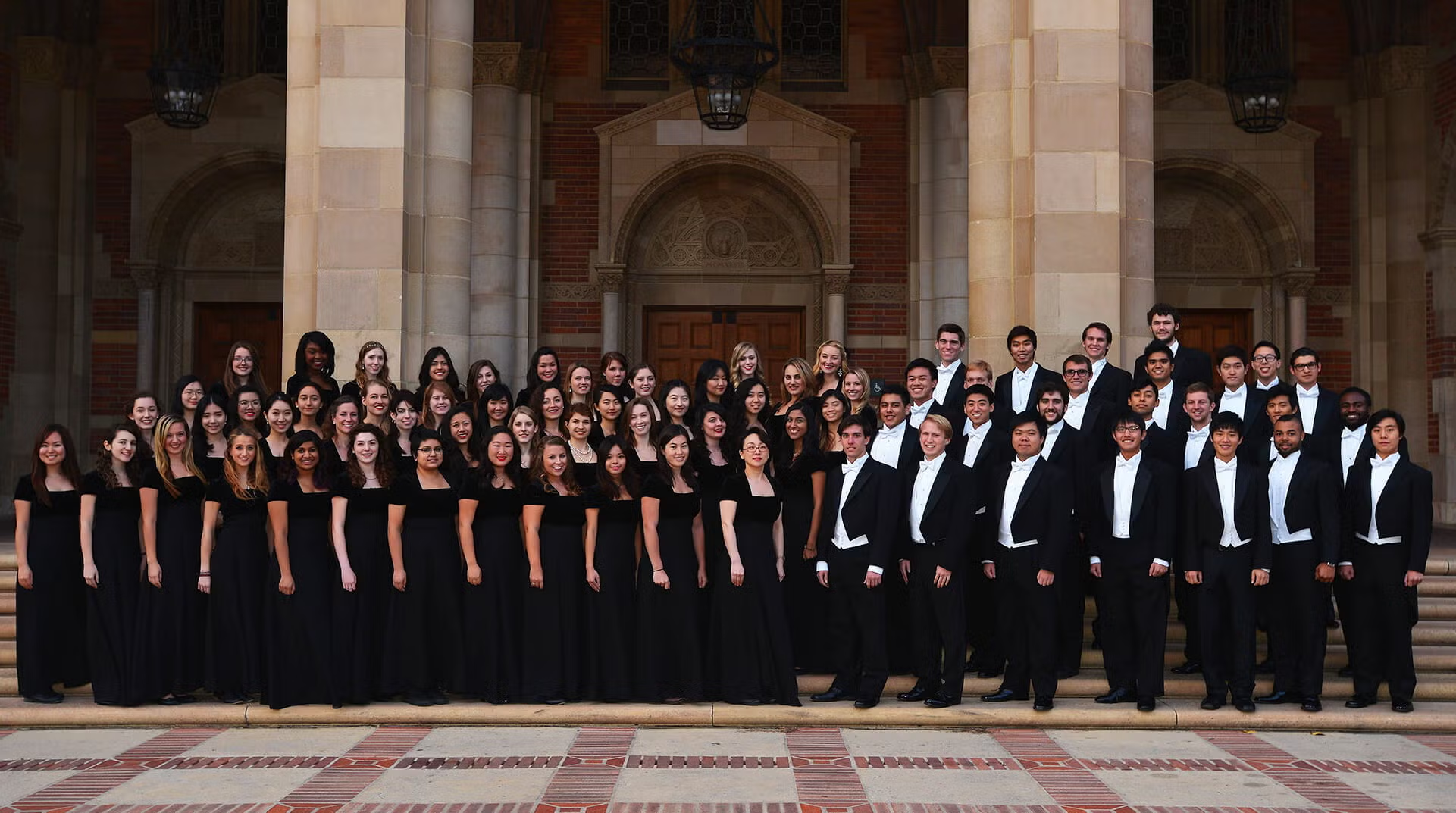
UCLA Chorale
About
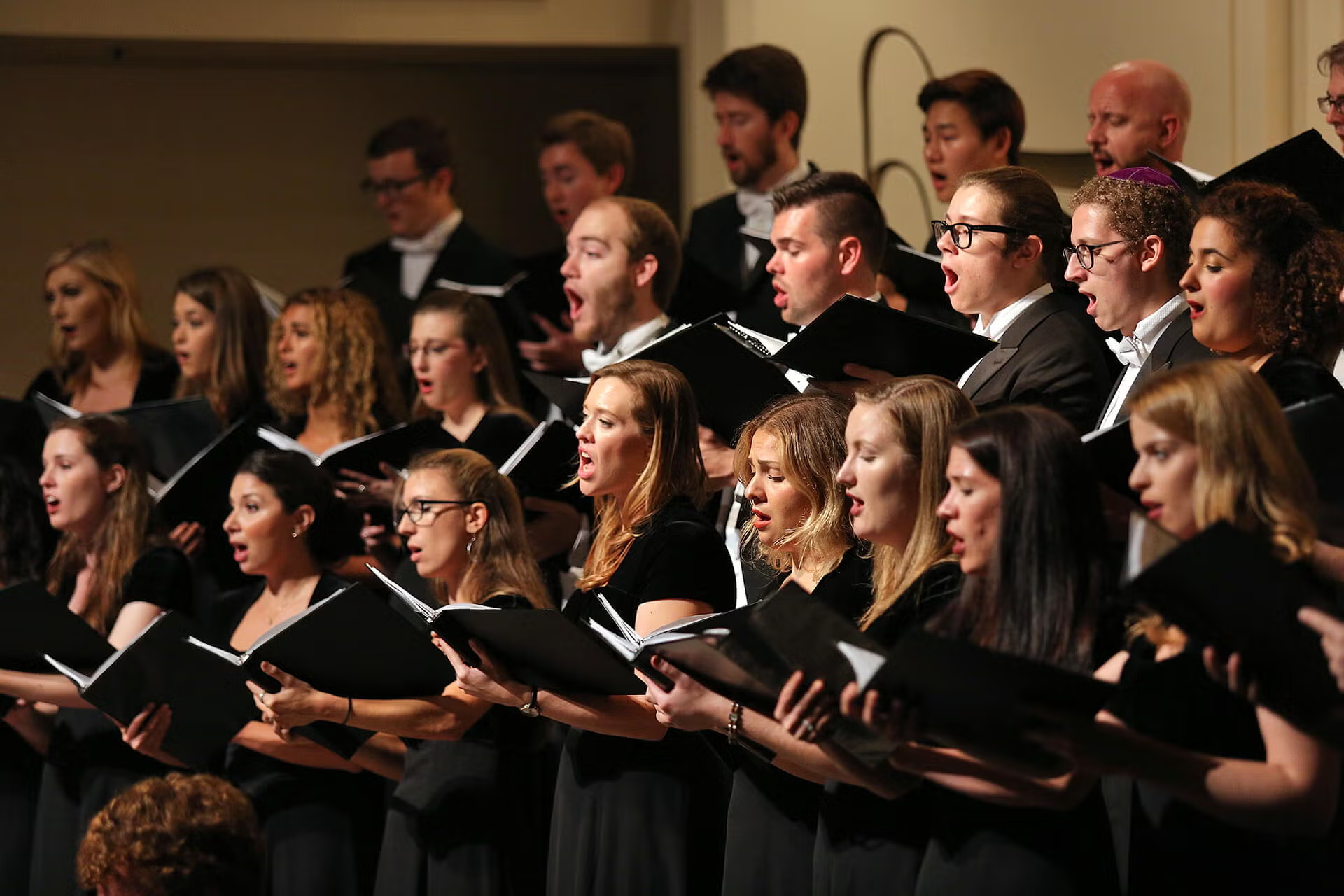
The UCLA Chorale, a 110 voiced mixed-choir, is open to all students at UCLA. Each year the Chorale sings in a variety of languages and in a full range of styles. The rehearsal process for this ensemble develops general musicianship and provides training in choral singing while achieving high standards as a performing group. The group routinely combines with the Chamber Singers to present choral-orchestral works with UCLA Philharmonia in the historic venue, Royce Hall.
Sopranos/Altos
Angela Lin
Aubrienne Silva
Amrita Kumar
Julia Huynh
Samantha Alcala
Jasmin Dionisio
Jocelyn Ha
Nieves D’Souza
Younan Zhao
Ella Gates
Daphne Feng
Natalie Chin
Ruth Sondik
Yuchen Wang
Minyi Zhu
Varsha Rajesh
Vicky Zhang
Julia Rubright
Cassandra Carratior
Tina Su
Tara Radmond
Lanxin Yang
Mona George
Linda Pan
Nadia Jaramillo
Megan Chin
Swati Karuppusami
Ereni Dells
Julissa Carrillo Alvarez
Ayla Knoir
Anneke Talke
Sorren Lu
Simone Jackson
Phaedra Panagiotidis
Yang Sophia Xu
Madie Neer
Amelia Birmingham
Sophia Redcher
Gloria Reyes-Mitchell
Brooklyn Castaneda
Zixian Sun
Nicole Wang
Antonia Brenes Luna
Penny Chai
Alexandra Seiler
Shivani Patel
Sara Alvarado
Sowmya Venkatachalam
Yudi Liu
Vishaka Bhat
Valerie So
Diana Yenokyan
Cecilia Soejoto
Valerie Morris
Tahlia Garcia
Rubi Choi
Deisy Garcia Rojas
Megan Jacob
Marina Wong
Lanxin Carol Yang
Ziyue Zeng
Laila Reshad
Aliza Haque
Lauren Welsh
Yeonhee Kayla Lee
Hilary Ly
Madison Melocton
Aishwarya Vadivel
Brenda Renteria
Fiona Fiebig
Nishtha Gupta
Tenors/Basses
Henry Xu
Yani Araujo
Ted Zhang
Anshul Chennavaram
Arnav Ranade
Darsh Verma
Jules Kyung Lee-Zacheis
Tonatiuh Xochihua Tlecuitl
Vikram Seemvasan
Yan Sun
Mateo Lopez
Shawn Rozbayani
Maciej Gluchowski
Caleb Virkstis
Schuyler Henry
Luke Jones
Kasper Yoder
Dayton Nguyen
Alexander Tsao
Cooper Phillips
Riley Ellyson
Michael Zhou
Simon Oh
Theodore Teddy Tan
Andrew Tran
Pranav Kunnath
Saveliy Sotnikov
Anthony Cheung
Ari Berger
Dawson Lam
Alejandro Alex Franco
Kwanhee Yoon
Evan Davis
James Scott
Terry Cheng
Jonah Yoshida
Jas Singh
Everett Grethel
Eric Zhou
UCLA Chamber Singers
About
The UCLA Chamber Singers, a 32-40 voiced mixed-choir, represents the highest level of ensemble singing. The ensemble has been conducted by choral luminaries including Roger Wagner, Donn Weiss, Donald Neuen and now Dr. James K. Bass. At UCLA, the choir routinely presents performances representing the entire spectrum of choral literature on campus and in the community. The choir annually performs with UCLA Philharmonia in presentations of major choral orchestral works in the historic on-campus venue Royce Hall. The ensemble has collaborated with other nationally recognized arts groups, including the Buffalo Philharmonic Orchestra, Minneapolis Guitar Quartet, Seraphic Fire, and the touring production of Distant Worlds, the music of Final Fantasy. Additionally, Chamber Singers often participate in the performing and recording premieres of new works such as Richard Danielpour’s The Passion of Yeshua, recorded by Naxos Records.
Sopranos
Maddy Chamberlain
Milla Moretti
Natalie Fishman
Chloe Chiang
Georgia Madland
Angela Lin
Natalie Lam
Liana Trosen
Laur Trustee
Altos
Camryn Deisman
Olivia Salazar
Kate Hamori
Sydney Wang
Sadie Habas
Alison Chen
Endora Yuan
Brazier Pierce
Tenors
Yani Araujo
Evan Chau
Matt Smith
Sam Song
Andres Delgado
Basses
Asher Bartfeld
Zion Berry
Luke Pirruccello
Maximilien Farkas
Leonardo Clarke
Dustin Peng
James Scott
Kyle Xu
Evan Davis
Justin Xu
Michael Torres
UCLA Philharmonia
About
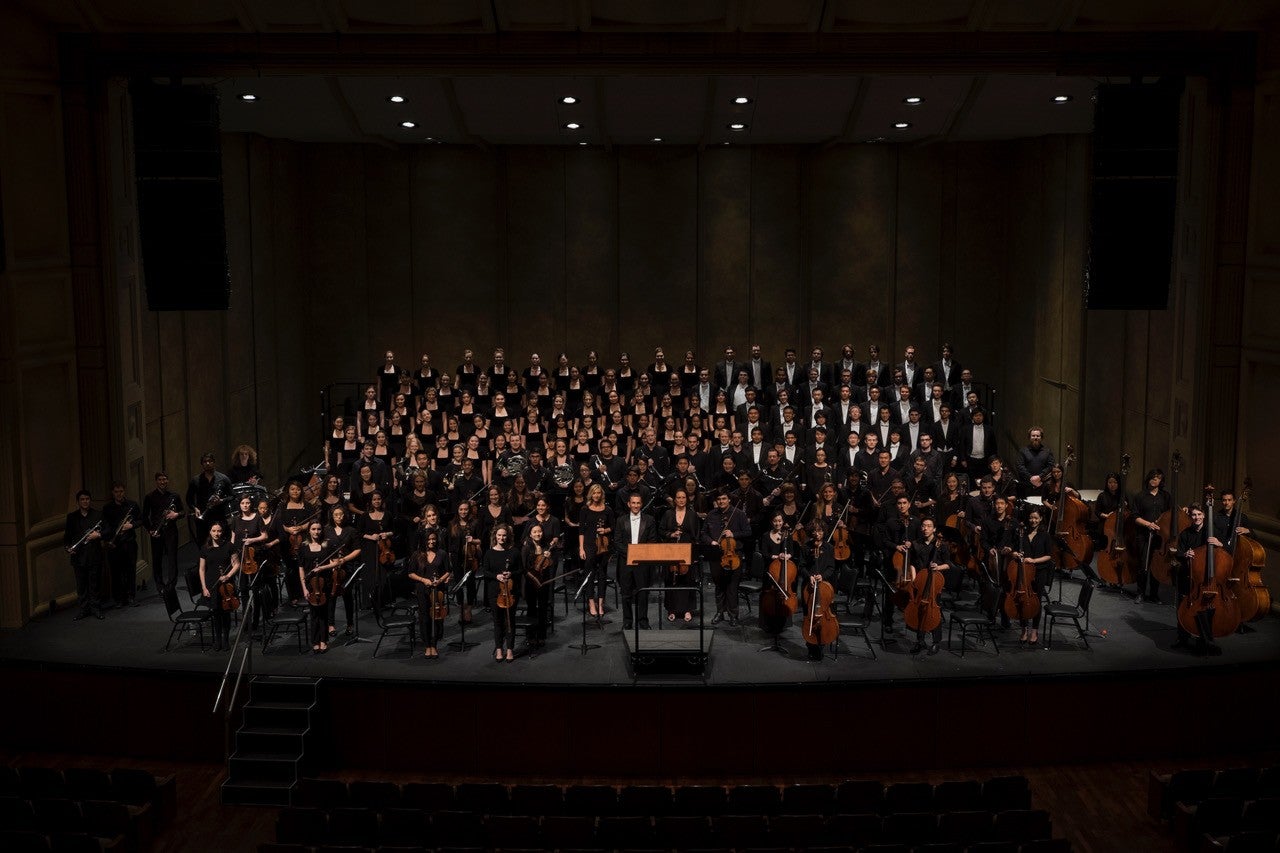
UCLA Philharmonia is the flagship orchestra of the UCLA Herb Alpert School of Music, and one of Southern California’s premiere training orchestras. Focusing on both the core symphonic and operatic repertoire, and the best in contemporary and rarely-performed works, it performs two or three different programs each quarter, Prof. Neal Stulberg has led the ensemble since 2005. UCLA Philharmonia is a for-credit course and is composed almost entirely of music majors; qualified non-majors may also audition for violin and other positions as needed. General auditions for UCLA Philharmonia are held at the beginning of each Fall Quarter. Philharmonia’s first three commercial CDs – a Yarlung Records release of previously unrecorded orchestral works by Viennese émigré composer Eric Zeisl (2012); a world-premiere Sono Luminus recording of works by Mohammed Fairouz (2014); and a Naxos recording of Ian Krouse’s “Armenian Requiem” (2019) – are available on Apple Music, amazon.com, Naxos Music Library and other retail outlets.
VIOLIN I
Ally Cho, concertmaster
Alisa Gukasian
Jonathan Han
Joseph Kim
Joshua Kim
Candice Lee
JJ Liao
Andrew Dela Pena
VIOLIN II
Ellie Loya, principal
Ariana Chin
Charlie Hong
Nina Huang
Jimin Koo
Aerin Lee
Eliana Tang
Helen Wang
VIOLA
Stefan Kosmala-Dahlbeck, principal
Johannes Eberhart
James Renk
CELLO
Dylan Renk, principal
Kayson Chen
Sarah Clark
Isaac Fromme
Aerie Walker
Aidan Woodruff
DOUBLE BASS
Brian Slack, principal
Luca Lesko
Terence Molloy
James Shogren
OBOE
Cayden Bloomer
Megan Nguyen
BASSOON
Davis Lerner
Matthew Rasmussen
TRUMPET
Macrae Eckelberry
Elìas Perry
TROMBONE
Ryan Heisinger
Spencer Mar
Sebastian Martinez
TIMPANI
Madison Bottenberg
HARPSICHORD
Isabelle Ragsac
ORGAN
Nancy Ruczynski
Program
PART I
1. Recitative (tenor) – Andres Delgado
Now there arose a new king over Egypt, which knew not Joseph; and he set over Israel
taskmasters to afflict them with burthens, and they made them serve with rigour.
(Exodus 1: 8, 11, 13)
2. Alto Solo and Chorus – Olivia Salazar
And the children of Israel sighed by reason of the bondage, and their cry came unto God. They oppressed them with burthens, and made them serve with rigour; and their cry came up unto God.
(Exodus 2: 23; Exodus. 1: 13)
3. Recitative (tenor) – Yani Araujo
Then sent He Moses, His servant, and Aaron whom He had chosen; these shewed His signs among them, and wonders in the land of Ham.
He turned their waters into blood.
(Psalm cv: 26, 27, 29)
4. Chorus
They loathed to drink of the river. He turned their waters into blood.
(Exodus 7: 18; Psalm cv: 29)
5. Air (alto) – Sadie Habas
Their land brought forth frogs, yea, even in their king’s chambers.
(Psalm cv: 30)
He gave their cattle over to the pestilence; blotches and blains broke forth on man and beast.
(Exodus 11: 9, 10)
6. Chorus
He spake the word, and there came all manner of flies and lice in all the quarters.
He spake; and the locusts came without number, and devoured the fruits of the ground.
(Psalm cv: 31, 34, 35)
7. Chorus
He gave them hailstones for rain; fire mingled with the hail ran along upon the ground.
(Psalm cv: 32; Exodus 9: 23, 24)
8. Chorus
He sent a thick darkness over the land, even darkness which might be felt.
(Exodus 10: 21)
9. Chorus
He smote all the first-born of Egypt, the chief of all their strength.
(Psalm cv: 36, 37)
10. Chorus
But as for His people, He led them forth like sheep: He brought them out with silver and gold; there was not one feeble person among their tribes.
(Psalm lxxviii: 53; Psalm cv: 37)
11. Chorus
Egypt was glad when they departed, for the fear of them fell upon them.
12. Chorus
He rebuked the Red Sea, and it was dried up. He led them through the deep as through a wilderness.
(Psalm cvi: 9)
But the waters overwhelmed their enemies, there was not one of them left.
(Psalm cvi: 11)
13. Chorus
And Israel saw that great work that the Lord did upon the Egyptians; and the people feared the Lord, and believed the Lord and His servant Moses.
(Exodus xiv: 31)
INTERMISSION
PART II
14. Chorus
Moses and the children of Israel sung this song unto the Lord, and spake, saying: I will sing unto the Lord, for He hath triumphed gloriously; the horse and his rider hath He thrown into the sea.
(Exodus xv: 1)
15. Duet (soprano 1 & 2) – Maddy Chamberlain, Laur Trustee
The Lord is my strength and my song; He is become my salvation.
(Exodus xv: 2)
16. Chorus
He is my god, and I will prepare Him an habitation; my father’s God, and I will exalt Him.
(Exodus xv: 2)
17. Duet (bass 1 & 2) – Dustin Peng, Kyle Xu
The Lord is a man of war: Lord is His name. Pharaoh’s chariots and his host hath He cast into the sea; his chosen captains also are drowned in the Red Sea.
(Exodus xv: 3, 4)
18. Chorus
The depths have covered them: they sank into the bottom as a stone.
(Exodus xv: 5)
19. Chorus
Thy right hand, O Lord, is become glorious in power; Thy right hand, O Lord, hath dashed in pieces the enemy.
(Exodus xv: 6)
And in the greatness of Thine excellency Thou hast overthrown them that rose up against Thee. Thou sentest forth Thy wrath, which consumed them as stubble.
(Exodus xv: 7)
20. Chorus
And with the blast of Thy nostrils the waters were gathered together, the floods stood upright as an heap, and the depths were congealed in the heart of the sea.
(Exodus xv: 8)
21. Air (tenor) – Andres Delgado
The enemy said, I will pursue, I will overtake, I will divide the spoil; my lust shall be satisfied upon them; I will draw my sword, my hand shall destroy them.
(Exodus xv: 9)
22. Air (soprano) – Milla Moretti
Thou didst blow with the wind, the sea covered them; they sank as lead in the mighty waters.
(Exodus xv: 10)
23. Chorus
Who is like unto Thee, O Lord, among the gods. Who is like Thee, glorious in holiness,
fearful in praises, doing wonders? Thou strechedst out Thy right hand, the earth swallowed them.
(Exodus xv: 11, 12)
24. Duet (alto and tenor) – Sadie Habas, Yani Araujo
Thou in Thy mercy hast led forth Thy people which Thou hast redeemed; Thou hast guided them in Thy strength unto Thy holy habitation.
(Exodus xv: 13)
25. Chorus
The people shall hear, and be afraid: sorrow shall take hold on them: all the inhabitants of Canaan shall melt away: by the greatness of Thy arm they shall be as still as a stone; till Thy people pass over, O Lord, which Thou hast purchased.
(Exodus xv: 14, 15, 16)
26. Air (alto) – Camryn Deisman
Thou shalt bring them in, and plant them in the mountain of Thine inheritance, in the place, O Lord, which Thou hast made for Thee to dwell in, in the Sanctuary, O Lord, which Thy hands have established.
(Exodus xv: 17)
27a. Chorus
The Lord shall reign for ever and ever.
(Exodus xv: 18)
28. Recitative (tenor) – Andres Delgado
For the horse of Pharaoh went in with his chariots and with his horsemen into the sea, and the Lord brought again the waters of the sea upon them; but the children of Israel went on dry land in the midst of the sea.
(Exodus xv: 19)
27b. Double Chorus
The Lord shall reign for ever and ever.
(Exodus xv: 18)
29. Recitative (tenor) – Yani Araujo
And Miriam the prophetess, the sister of Aaron, took a timbrel in her hand; and all the women went out after her with timbrels and with dances. And Miriam answered them: —
(Exodus xv: 20, 21)
30. Soprano Solo and Chorus – Milla Moretti
Sing ye to the Lord, for He hath triumphed gloriously; the horse and his rider hath He thrown into the sea.
(Exodus xv: 21)
Program Notes
Israel in Egypt : A unique masterpiece
by Ruth Smith
Tonight’s oratorio, with texts from the Old Testament of the Bible, celebrates God’s release of the Israelites from slavery in Egypt and their miraculous passage through the Red Sea to the Promised Land. ‘Exodus’ recounts the Israelites’ suffering, the plagues which God visits on the enslaving Egyptians, and the Israelites’ departure from Egypt under the leadership of Moses. ‘Moses’ Song’ praises God for saving the Israelites.
Israel in Egypt is unique in Handel’s output. It is an oratorio unlike any of his other works. It is hugely ambitious, a cathedral in music, refulgent with some of his most adventurous harmony, most vivid word-painting, most distinctive orchestration, and most demanding self-challenges. Why and how did this masterpiece come about?
Handel in 1739
Handel first introduced oratorio in English to his London public in 1732, very successfully, and during the following years he mounted seasons of both Italian opera and English oratorio, to attract the enthusiasts for the two (very different) forms of music drama. But in summer 1738 it became apparent that too few subscriptions were being promised to secure the costly Italian stars that fashionable London expected for his operas, so Handel planned a season of English works. He opened with his new oratorio Saul, and then revived the moral odes Alexander’s Feast and Il trionfo del Tempo e della Verità. Normally he presented two new works in each season. The second was to be Israel in Egypt.
But, not for the first time, Handel was contested by the monied patrons of Italian opera. In direct competition to his performances, the young Earl of Middlesex put on an opera showcasing his Italian mistress. By the end of March Handel’s bank account, containing £2300 in 1732, was empty. When he eventually gave the first two performances of Israel in Egypt, on 4 and 11 April – which, being Wednesdays in Lent, should have been unchallenged by opera – the competition hobbled him by changing their latest advertisement description from ‘opera’ to ‘serenata’ and performing it on his second night. With help from supporters, Israel managed one further performance. But Handel was already inserting Italian arias in it. In his lifetime it was one of his major box-office flops. No wonder if Handel’s audience, accustomed to his Italian opera arias, and coming to the theatre for a sociable evening’s entertainment, was mystified and alienated by Israel. All its words are direct quotation from the Old Testament of the Bible; it is narrative not dramatic, but not an orderly sequential narrative; it has no character roles; and more than threequarters of the music is choruses, predominantly in ‘church style’. Nothing like it had been heard in London before, and Handel never wrote anything like it again. What was he doing?
Writing Israel in Egypt
Princess Amelia wrote to her sister Princess Anne about Handel’s Funeral Anthem for their mother, Queen Caroline (1737): ‘it’s the finest cruel touching thing that ever was heard’. Handel thought highly of it too, and wanted to widen its audience. He hoped to include it as the central part of his benefit concert (‘Oratorio’) in 1738, but the King would not allow that. Then he envisaged it forming David’s elegy for Saul and Jonathan in Saul, but he changed his mind. At last, only lightly re-texted, it became Part 1 of Israel in Egypt, ‘The Lamentation of the Israelites for the Death of Joseph’.
Four days after finishing Saul, on 1 October 1738, Handel began to compose a setting of ‘Moses’ Song’, Exodus 15.1-21, which celebrates the salvation of the Israelites from Egyptian pursuit at the Red Sea, of which he amended only one verse, and which became Part 3 of Israel in Egypt. The text of what became Part 2 comprises extracts from Exodus and three psalms about the plagues visited on the Egyptians during their enslavement of the Israelites and the Israelites’ subsequent redemption. It is a more elaborate text-compilation than Handel normally undertook himself, and is probably by Charles Jennens, author of the libretto of Saul and, yet to come, Messiah. By the time Handel began to set it, four days after finishing Moses’ Song, he was sure of the ordering of the work, for he headed it as Part 2, calling it ‘Exodus’.
For over two hundred years after Handel’s death, Israel in Egypt was usually performed without the retexted Funeral Anthem, its original cause. It is in this traditional form as a two-part work that we hear the oratorio tonight, depicting the enslavement of the Israelites, the plagues inflicted on their oppressors, their escape from Egypt, the drowning of their pursuers in the Red Sea, and their hymn of gratitude: in all which the ‘hero’ is God.
A work for its times
Handel may have felt that the extraordinariness of his music for Israel would have been acceptable to his audience, because to them its basic story would have been in several ways immediately relevant.
All four of Handel’s performances of Israel in 1739 and 1740 were in the weeks immediately before Easter. His (overwhelmingly Christian) audience would have recognised the aptness of this timing. The Exodus story is for Christians a ‘type’ or foreshadowing of their redemption by Christ. In the New Testament Book of Revelation (15.3), those who have defeated evil sing the Song of Moses, the final part of Israel. It is also part of the Anglican Easter liturgy. The Book of Common Prayer prescribes for Easter Sunday a reading of Psalm 118, which quotes Exodus 15.2, ‘The Lord is my strength and my song, and is become my salvation’, and, for Easter Monday, Exodus 15 itself, the Song of Moses. In this respect Israel is the forerunner of Messiah: both works make the traditional connections between Old Testament texts and salvation by Christ, both draw on biblical text that is also part of the liturgy, both defy contemporary Enlightenment sceptics by insisting on the truth of miracles, and both are written for Passiontide, which is when Handel always performed them.
Handel aspired to be the nation’s prime composer, and Israel claims the ground of high national art. Handel’s contemporaries considered epic to be the noblest of genres. More than any other of Handel’s oratorios, Israel is an epic. As in epic, the nation – here, the chorus – is the main (human) character, and the subject-matter is a nation forging its destiny, overcoming its losses, settling in its land, and assuming an identity as a distinct community, all under the protection and guidance of its especial deity. And, trumping revered ancient Classical epic, Israel reflected the faith of its audience.
Handel may have not been interested in a more specific relevance of Israel to national salvation, but at least one member of his audience was. On 18 April 1739 the London Daily Post carried a letter about the previous evening’s performance of Israel enlisting it as topical war propaganda, invoking the traditional parallel of ancient Israel and Protestant England (God’s chosen people then and now), and the topical parallel of Israel’s heathen enemies with the contemporary Catholic enemies of Britain. In spring 1739 all England except the government wanted war with Spain. The media were full of images and accounts of English sailors ‘enslaved’ by Spanish costa guardas who had captured them in maritime trading reprisals: compare the oratorio’s account of the Israelites enslaved by the Egyptians. The demand was for a naval war, based on Britain’s supposed control of the sea: the engulfing of the Egyptian land forces in the Red Sea was an encouraging image. A year later, the war being now an unpleasant reality, the letter was reprinted to coincide with the oratorio’s revival. To modern ears, the bass duet ‘The lord is a man of war’ may sound inaptly perky and overlong, but for Handel’s audience it was a precursor of ‘Rule, Britannia’: ‘the chosen captains’ of Pharaoh would have been heard as hostile Spanish mariners and the music’s mood as being entirely appropriate (and the captains receive their solemn elegy immediately after).
Another supportive newspaper article alerts us to this oratorio’s particular concord with the contemporary rediscovery of the marvels of Old Testament verse. ‘I would recommend to every one,’ says the writer to the intending audience, ‘to take the Book of the Drama with them: For tho’ the Harmony be so unspeakably great of itself, it is in an unmeasurable Proportion more so, when seen to what Words it is adapted.’ It was a commonplace that the Old Testament’s vivid and sublime (and divinely inspired) words were perfectly suited to Handel’s vivid and sublime music, especially his anthem style – and Israel offers the listener a series of tremendous anthems. What better text for Handel to set than the Ur-sublime anthem, the Song of Moses.
The Song of Moses was particularly valuable to Anglican clergy and Anglican musicians. It provided the most venerable, most unassailable precedent not just for sung worship, but for choral, antiphonal, instrumentally accompanied cathedral music. Such music was still on the defensive from Puritan censure as being too complex, too ornate, insufficiently Protestant. A month before Handel began setting the Song of Moses, the Rev. Thomas Payne pointed out in his Three Choirs Festival sermon that Moses, having brought God’s people out of bondage, led them ‘in that noble Song of Praise which he composed upon the joyful occasion; and which they sang alternately in two Choirs, assisted with Musical instruments, to the God of their Salvation.’ God, says Payne, clearly approved such worship, the patent forerunner of the Anglican cathedral service. And Israel is a pinnacle of instrumentally enlivened double-choir composition.
The music of miracles
Handel is unlikely to have written Israel in Egypt in support of cathedral music’s defenders, but it would have appeared to his audience as one colossal, continuous, magnificently diverse anthem. Of Handel’s identified musical sources most are devotional, including an Easter chorale; and much of Moses’ Song is based on the music for another canticle hymning God’s grace, a setting of the Magnificat by Diogini Erba. The antiquity that was claimed as ratifying cathedral music is also a defining characteristic of Israel. Handel’s musical sources here are mostly composers of earlier centuries (Giovanni Gabrieli, Johann Kaspar Kerll , Francesco Antonio Urio, Alessandro Stradella, Nicolaus Adam Strungk, Johann Krieger, Johann Pachelbel, his own teacher Friedrich Wilhelm Zachow), and he leaves in place archaic-sounding harmony and rhythms. His self-quotations likewise sound ‘archaic’, for example the angular fugues conveying the Egyptians’ pain in ‘They loathed to drink of the river’ and ‘He smote all the first-born of Egypt’. Trombones, heard in eleven movements, were so antique in England in 1739 as to be obsolete, and Handel is thought to have used visiting German players. He gives the trombones a special identity in keeping with their connotations of antiquity and extraordinariness. They are the voice of the Ancient of Days, the Old Testament God. To believers in Handel’s time, the story of the Exodus was one of the strongest ‘proofs’ of God’s miracles. Israel is a massive statement and restatement of faith. Handel’s music evokes the idea of God and of His astonishing, inscrutable, unfathomable numinousness: by striking awe into the listener through unexpected harmonic transitions, especially to convey divine power (most astonishingly in ‘And in the greatness of thine excellency’), by firm block movement of voices and accompaniment, and by potent silences. As always, Handel is a master of silence, for a variety of sensations: grief, shock, fear, suspense, contemplation, questioning, and awe.
The very fabric of the music repeatedly and varyingly renders ideas in sound. In ‘The people shall hear and be afraid’, fear is inculcated before any words are heard by six bars of a brusque dotted motif, which relentlessly continues through all but four of the next 60 bars as the Canaanites huddle together. Then they melt away, from eight massed voices to individual vocal lines, barely accompanied, marked piano just before the forte chordal acclaim, with hair-raising intervals, of God’s greatness, which reduces Canaan to inanition: lower voices, monotone, unaccompanied. And then, in a complete change of mood to tenderness and serenity, God’s people ‘pass over’ into safety, the bass pedal note giving their footing security, the vocal rising figure expressing their aspiration to be ‘thy people’, the extension of the scalar motif in the bass vocal line from seven notes to twelve enlarging the numbers of the saved, and their repeated passing over suggesting that ‘the number of the children of Israel shall be as the sand of the sea’. Handel drew his friends’ attention to his adventurousness. Katherine, Lady Knatchbull, relayed to her family that ‘He says the storm of thunder is to be bold and fine, & the thick silent darkness is to be express’d in a very particular piece of musick.’ These two movements follow each other (in the Bible their texts do not), giving Handel splendid scope for his genius for contrast, a favourite shaping device which the text of Israel gave him myriad opportunities to deploy. The ‘particular’ harmonies of ‘He sent a thick darkness’ range in a mere 37 bars across keys with (implied) signatures from six flats to five sharps. Handel sets up expectations which are constantly frustrated, so that the listener shares the Egyptians’ sense of not knowing how to find their way and, when they make a (tentative) move, not knowing where they are. And then the final chord proves to be a preparation for the first chord of the following chorus, which tells of the smiting of the first born: the effect is of a blow to the back of the neck, unexpected yet inevitable, and horrifically repeated, again and again, in the staccato string accompaniment.
Israel famously showcases Handel’s ability to bring texts to life. Some of his ‘enactments’ are brilliantly and wittily illustrative, in vocal lines, instrumentation, texure, metre or all four: the hopping frogs (right up onto the royal bed ‘even in the king’s chamber’); the tormenting flies (you swat away their buzzing demi-semi-quavers and back they come again – London had never before heard violin writing like it); the innocently plopping raindrops turning to drumming hailstones; the drying up of the Red Sea (‘He rebuked the Red Sea’) from eight vocal parts to four with a suspenseful awestruck silence between; the confusion of ‘the horse and his rider’ as the eight parts of the antiphonal choirs tumble together in the waves; the engulfing power of the overwhelming waters, timpani unmellowed by brass. This may be the nearest that the eighteenth century came to the experience of cinema. Handel’s mimetic writing has a great range of sophistication: perhaps he was using different kinds of enactment for different types of listener in his audience, in order to impress as many as possible with the veracity of Scripture (and of course with his mastery of composition).
The verbal text of Israel is challenging to set, being very repetitive (the miracle at the Red Sea has six iterations, God is praised seven times in Moses’ Song), and lacking a sequential narrative. But, as is clear from his operas, Handel relished opportunities to set similar utterances in differing ways. In Moses’ Song the chorus ‘And with the blast of thy nostrils’ and the soprano air ‘Thou didst blow with the wind’, separated by only two minutes of music, are conspicuously different accounts of the same divine intervention. The first is a four-part chorus with three lines of counterpoint, the heaping of waters depicted by a rising soprano line and the upright wall of water formed by a repeated note, contrasting with ‘congealed’ depths (lower voices, almost stagnating). The second is a soprano air, relaxed and flowing. Both attest to God’s omnipotence. The first describes its effects, the second suggests its sublime effortlessness. Oratorio is often now described as opera of the mind, and in Israel more than any other Handel engages our attention to meditate on God’s wonders and care, by repeated, renewed, multi-faceted contemplation.
Afterlife
Handel’s leading singers for his performances in 1739 were Elisabeth Duparc (La Francesina), soprano; William Savage, alto; John Beard, tenor; Gustavus Waltz and Henry Reinhold, basses. Already by the second performance he was inserting arias for Duparc (one English, four Italian) and shortening or omitting choruses. The sole performance in 1740 reverted to the original form. When he revived it for two performances in 1756, by which time he was being assisted by J.C. Smith junior, he substituted movements from Solomon, the Occasional Oratorio and the Anthem on the Peace for the Funeral Anthem, and in this version there were two more performances in his lifetime, in the two following years. Mrs Delany wrote to Mrs Dewes on 27 March 1756: ‘Israel in Egypt did not take, it is too solemn for common ears’. But in its two-part version, with enormous forces, it took very well from 1857 at the Crystal Palace Handel Festivals, second in popularity only to Messiah.
This event is made possible by the Lowell Milken Center for Music of American Jewish Experience at the UCLA Herb Alpert School of Music and the UCLA Alan D. Leve Center for Jewish Studies.
Creating new audiences with music as the mirror The Lowell Milken Center is committed to introducing new people beyond UCLA’s campus to the musical journeys of America’s Jews and engaging them with this wonderfully rich musical heritage. The Center fosters new artistic expression, presents performances and offers educational programming in communities, such as the adult education curriculun, called Stories of Music. Much of this engagement happens through partnerships with local, national and international organizations, and features artists from UCLA, Los Angeles and beyond.
Furthering knowledge and understanding of Jewish music Music of American Jewish experience has its first permanent dedicated academic home with the establishment of the Lowell Milken Center for Music of American Jewish Experience. It unites the academic and the artistic, showcasing artists, scholars and educators to share their sounds and stories. The founding gift from philanthropist Lowell Milken advances understanding of and knowledge about the musical heritage of Jews in America. It also accelerates growth and commitment to the field by contributing to research, scholarship and performance programs at the undergraduate, graduate and faculty levels. The Lowell Milken Center builds upon the activities of the Lowell Milken Fund for American Jewish Music, established at UCLA in 2017, to expand the reach of the Milken Archive and its vast holdings of recordings, scores and historical materials to students, scholars and the public.
