
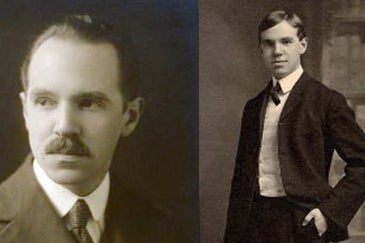
Music of Charles Tomlinson Griffes
UCLA Herb Alpert School of Music
Friday April 3, 2026
Lani Hall
7:00pm
Performers
Repertoire
Charles Griffes (1884-1920)
Poem for Flute and Orchestra, A. 93 (1918)
Jennifer Jo, Flute
SiHyun Uhm, piano
In a Myrtle Shade, Op. 9, No. 1 (1918)
Symphony in Yellow, Op. 3, No. 2 (1912)
Waikiki, Op. 9, No. 2 (1916)
Leela Subramaniam, Soprano
SiHyun Uhm, piano
Roman Sketches, Op. 7 (1915-16)
III. The Fountain of the Acqua Paola
IV. Clouds
Nichagarn Chiracharasporn, piano
— Intermission —
The Lament of Ian the Proud, Op. 11, No. 1 (1918)
Thy Dark Eyes to Mine, Op. 11, No. 2 (1918)
The Rose of the Night, Op. 11, No. 3 (1918)
Margaret Daly, Soprano
SiHyun Uhm, piano
Tears, Op. 10, No. 4 (1916)
“We’ll to the Woods, and gather may” Op. 3, No. 3 (1912)
Nacht liegt auf den fremden Wegen, A5, No. 3 (before 1909)
Leland Alexander, Baritone
SiHyun Uhm, piano
Two Rondels, Op. 4 (1914)
I. This Book of Hours
II. Come, Love, across the sunlit land
Pierrot (1912)
from manuscript; performance edition prepared by SiHyun Uhm
Evening Song (1912)
Leela Subramaniam, Soprano
SiHyun Uhm, piano
Scherzo, Op. 6, No. 3 (1912)
SiHyun Uhm, piano
Program Notes
Charles Tomlinson Griffes (1884–1920) occupies a distinctive place in early twentieth-century American music. Although his life was brief, his music is notable for its remarkable sensitivity to color, atmosphere, and poetic suggestion. Educated in Berlin and influenced by both German late Romanticism and French impressionism, Griffes developed a musical language that is refined, expressive, and deeply responsive to literary imagery. Although Griffes’s music is extraordinarily beautiful and distinctive, it remains less familiar to the general public than it deserves to be. This program is offered in the hope of bringing greater attention to his repertoire and giving his music the recognition it merits.
This program brings together several sides of Griffes’s output through music for voice, flute, and piano. His songs reveal an exceptional gift for compression: within just a few minutes, Griffes creates vivid emotional and visual worlds shaped by nuance, symbolism, and tonal color. Rather than relying on overt drama, many of these works suggest mood through delicate harmonic shading, fluid vocal lines, and piano writing that functions as an equal expressive partner. The soprano selections highlight Griffes’s affinity for imagery, atmosphere, and lyric intimacy. Songs such as Evening Song, Symphony in Yellow, In a Myrtle Shade, and The Rose of the Night reflect his attraction to symbolist and image-rich poetry. Two Rondels further demonstrates his elegant miniature style, while Waikiki and the Fiona MacLeod settings reveal a broader fascination with distant or imagined landscapes, longing, and dreamlike emotional states. The baritone selections offer a darker and more inward counterpart to the soprano works. In songs such as Sorrow of Mydath, Nacht liegt auf den fremden Wegen, and Tears from Five Songs from the Chinese, Griffes’s writing becomes more restrained and shadowed, yet remains highly sensitive to text and atmosphere. Poem for Flute and Piano stands among Griffes’s most celebrated instrumental works and exemplifies his gift for fluid, luminous sonority. The program closes with selections from Roman Sketches, Op. 7, whose richly evocative piano writing transforms visual impressions into sound. The Fountain of the Acqua Paola and Clouds capture Griffes’s mature pianistic voice at its most coloristic and atmospheric. Together, these works present Griffes as a composer of poetic imagination, expressive subtlety, and extraordinary sensitivity to color.
