
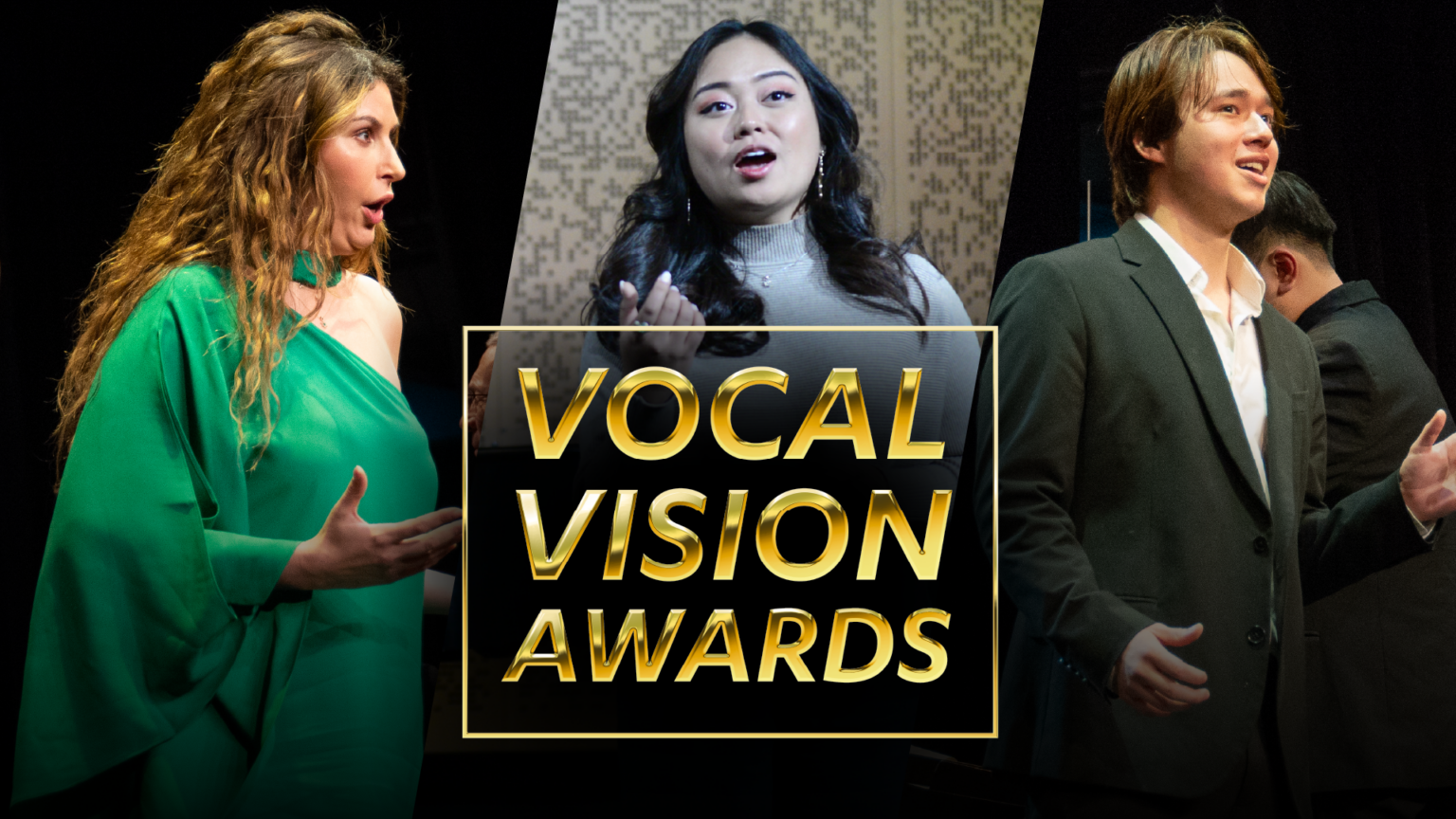
Vocal Vision Awards
UCLA Herb Alpert School of Music
Sunday April 12, 2026
Lani Hall
3:00pm
Performers
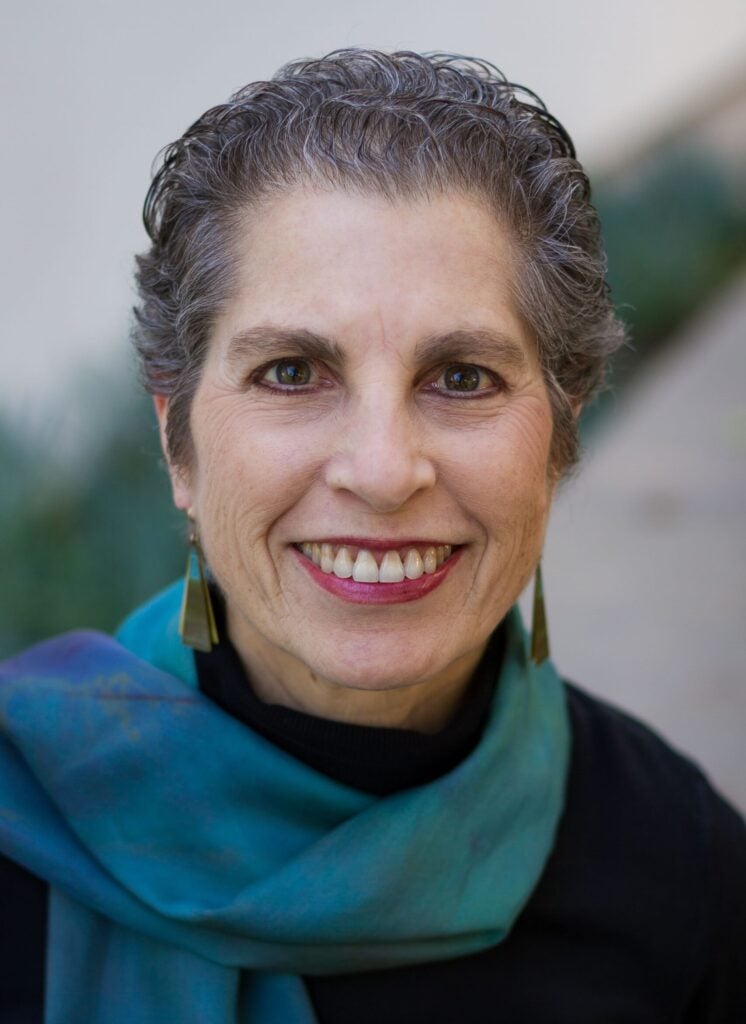
Victoria Kirsch
See Bio
Victoria Kirsch is a Southern California-based collaborative pianist and vocal coach known for creating and performing innovative programs, including staged art song/poetry programs and concerts based on museum exhibitions (USC Fisher Museum of Art for Visions and Voices, Getty Center, Huntington Library and Gardens, RAFFMA at CSU San Bernardino, Long Beach Museum of Art, Heath Gallery of Palm Springs, Michael H. Lord Gallery, Annenberg Beach House, Brand Library).
In 2008 Victoria received a Chairman’s Grant from then-NEA Chair Dana Gioia to support the creation of the musical-theatrical piece, Emily Dickinson: This, and My Heart, which premiered at Grand Performances in downtown Los Angeles in September 2009 and has since been performed numerous times, most recently in October 2023 for the Verdi Chorus in Santa Monica.
From 1999 to 2012 Victoria served as the onstage pianist for a wide variety of theatrical programs with soprano Julia Migenes (Carmen in the award-winning opera film directed by Francesco Rosi), touring the world for many years with the celebrated singing actress. Since Fall 2015 Victoria has been a faculty vocal and opera coach at UCLA’s Herb Alpert School of Music, where she is now a Continuing Lecturer. In addition to serving as the pianist for UCLA HASOM’s Vocal Vision Awards Competition (2016, 2017, 2019, 2024), she has coached and played for over 40 student vocal recitals since 2016. Other UCLA concerts have included View from a Hilltop: Mark Carlson at 65 (Mark Carlson Farewell Concert); Songfest: A Bernstein Celebration; His Life in Cabaret: A Tribute to Hermann Leopoldi; and a Michelle DeYoung-curated student recital evening.
Beginning in Fall 2024, in addition to her UCLA appointment, Victoria returns to the USC Thornton School as a Lecturer in the Keyboard Studies Department, having previously served as a faculty coach in the Vocal Arts and Opera Department (1995-1999). Prior to her academic appointments, Victoria worked with national and regional opera companies, including LA Opera and Long Beach Opera, and she served as an official pianist for the Operalia Competition (2000 and 2004) and the Metropolitan Opera’s National Council Auditions (1999-2003), among numerous other competitions and auditions.
Victoria was the music director of OperaArts, a Coachella Valley-based performance organization (2010-2019); a faculty member of the Los Angeles-based Angels Vocal Art summer program (2016-2018); a teaching artist for LA Opera’s Community Programs Department (1998 ff); and she served on the faculties of USC’s Thornton School of Music (1995-1999) and SongFest (2009-2010, 2013-2014). She was associated with the Music Academy of the West in Santa Barbara from 1984 to 1992, playing in the studio of renowned baritone and master teacher Martial Singher and serving as a member of the vocal faculty.
Victoria received her Masters in Music (Collaborative Piano) from UC Santa Barbara (1987), and her Bachelor of Arts in Music (Piano) from UC Santa Cruz (1975). Victoria is married to Michael Alexander, founding executive and artistic director of Grand Performances in downtown Los Angeles, and currently Caltech’s Campus Arts and Culture Liaison.
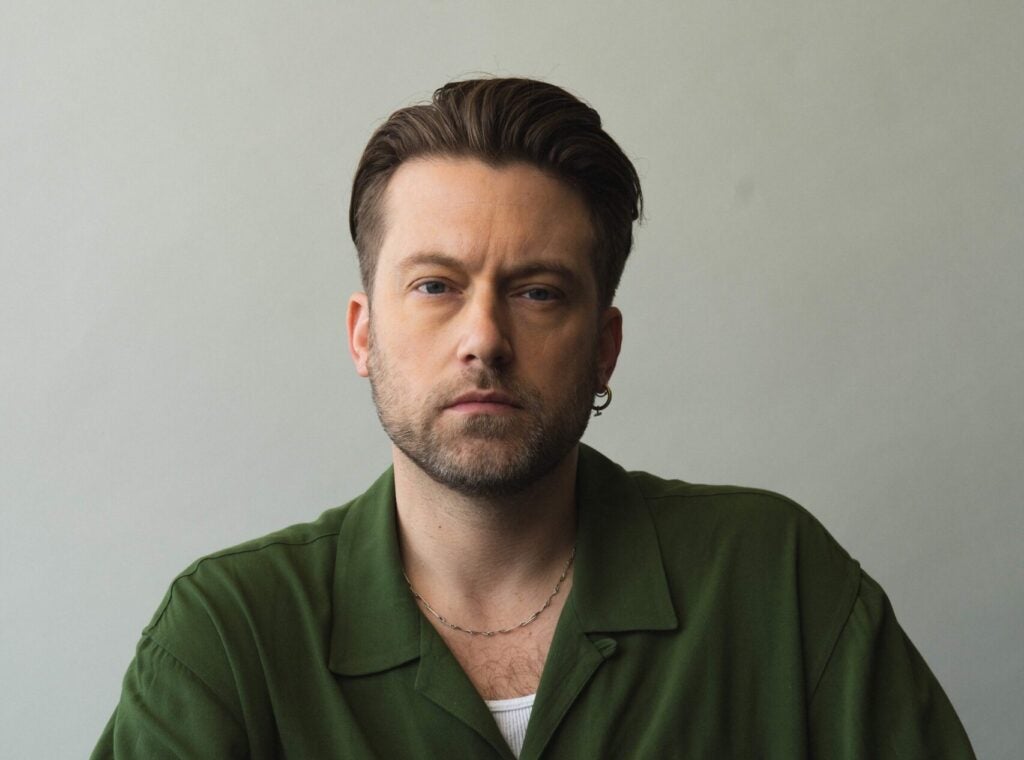
James Darrah Black
See Bio
James Darrah joined The UCLA Herb Alpert School of Music faculty as the director of Opera UCLA in 2024. Darrah is a GRAMMY Award-nominated director and of opera, theater and film who has become known for a singular cinematic elegance that is “experimenting and forging a new art form.” (The Wall Street Journal)
His recent work as a director, screenwriter, producer includes projects that continue to explore the merging of film, television and opera. He is the artistic director and chief creative officer of Long Beach Opera and was the creative director for Los Angeles Chamber Orchestra’s digital content in 2020/21. In 2021/22 he also completed two cinematic opera projects with Boston Lyric Opera: a new stop motion animated feature-length film of Philip Glass’ Edgar Allan Poe adaptation The Fall of the House of Usher and the acclaimed world premiere of Desert In, an original operatic miniseries.
With Opera Philadelphia, he has made numerous new productions including the world premiere of Missy Mazzoli’s Breaking the Waves and was the producer, production designer and screenwriter for the GRAMMY-nominated film adaptation of Soldier Songs by composer David T. Little. He wrote, directed, produced a film adaptation of Poulenc’s La voix humaine starring the soprano Patricia Racette.
His track record developing and directing acclaimed stage world premieres includes Kate Soper’s The Romance of the Rose (Long Beach Opera) in 2023, Reid’s Pulitzer Prize-winning opera p r i s m (LA Opera/Prototype), Missy Mazzoli’s operas Breaking the Waves (Opera Philadelphia) and Proving Up (Opera Omaha/Miller Theater New York), Michael Tilson Thomas’ Four Preludes on Playthings on the Wind (SF Symphony, LA Phil, New World Symphony), The Brightness of Light by Kevin Puts with Reneé Fleming at Tanglewood ( Boston Symphony Orchestra), and Academy Award-winner John Corigliano’s The Lord of Cries (Santa Fe Opera). He also has crafted the U.S. West Coast premieres of Jennifer Higdon’s opera Cold Mountain and Jonathan Dove’s The Other Euridice and Flight. Darrah’s music videos for opera artists including Joyce DiDonato and Jakub Józef Orlinski are known for “enigmatic twists” (NPR) and have been distributed by the Warner Music and Erato record labels. Darrah was previously artistic director of Opera Omaha’s ONE Festival from 2016-2021, where he was praised for “expanding the boundaries of the operatic form” (The Wall Street Journal) by establishing a first-of-its-kind residency for artists in the operatic genre.
James Darrah is a native of San Antonio, Texas and lives in Los Angeles, California.
Repertoire
Gerald Finzi
James Elroy Flecker
To a Poet a Thousand Years Hence
Leland Alexander, baritone
Cole Porter
Bella and Sam Spewack
Kiss Me Kate: So in love
Trinity Dela Cruz, soprano
Marc Blitzstein
Emily (The Airborne Symphony)
Asher Bartfeld, baritone
Kurt Weill
Walt Whitman
Four Whitman Songs: Come up from the fields, father
Andres Delgado, tenor
Kurt Weill
Langston Hughes
Street Scene: What good would the moon be?
Lilliana Mindel, soprano
Samuel Barber
James Joyce
Nuvoletta
Leela Subramaniam, soprano
Robert Owens
Langston Hughes
Mortal Storm: Genius Child
Kazuma Nakamura, bass – baritone
Igor Stravinsky
W.H. Auden
Chester Kallman
The Rake’s Progress: No word from Tom…I go to him
Sofia Dell’Agostino, soprano
INTERMISSION
Margaret Bonds
Langston Hughes
The Negro Speaks of Rivers
Asher Bartfeld, baritone
Frank Bridge
Mary E. Coleridge
Love went a-riding
Trinity Dela Cruz, soprano
H. T. Burleigh
Walt Whitman
Ethiopia Saluting the Colors
Leland Alexander, baritone
Naveed Perkins
The Siren’s Call: The Return
Sofia Dell’Agostino, soprano
H. Leslie Adams
Edna St. Vincent Millay
Five Millay Songs: Wild Swans
Kazuma Nakamura, bass – baritone
John Corigliano
Bob Dylan
Mr. Tambourine Man: Postlude: Forever Young
Lilliana Mindel, soprano
Benjamin Britten
John Donne
Holy Sonnets of John Donne: Death be not proud
Andres Delgado, tenor
Tom Cipullo
Marilyn Kallet
How to Get Heat Without Fire: How to get heat without fire
Leela Subramaniam, soprano
Program Notes
To a Poet a Thousand Years Hence by James Elroy Flecker
I who am dead a thousand years,
And wrote this sweet archaic song,
Send you my words for messengers
The way I shall not pass along.
I care not if you bridge the seas,
Or ride secure the cruel sky,
Or build consummate palaces
Of metal or of masonry.
But have you wine and music still,
And statues and a bright-eyed love,
And foolish thoughts of good and ill,
And prayers to them who sit above?
How shall we conquer? Like a wind
That falls at eve our fancies blow,
And old Mæonides the blind
Said it three thousand years ago.
O friend unseen, unborn, unknown,
Student of our sweet English tongue,
Read out my words at night, alone:
I was a poet, I was young.
Since I can never see your face,
And never shake you by the hand,
I send my soul through time and space
To greet you. You will understand.
Kiss Me Kate: So in love by Sam Spewack
Strange, dear, but true, dear
When I’m close to you, dear
The stars fill the skies
So in love with you am I
Even without you
My arms fold about you
You know, darling, why
So in love with you am I
In love with the night mysterious
The night when you first were there
In love with my joy delirious
When I knew that you could care
So taunt me and hurt me
Deceive me, desert me
I’m yours, still, my love
So in love, so in love
So in love with you, my love
So in love am I
So taunt me and hurt me
Deceive me, desert me
I’m yours, still, my love
So in love, so in love
So in love with you, my love
So in love am I
Emily (The Airborne Symphony) by Marc Blitzstein
At night a white-faced nineteen year old bombardier sits writing
The wonder of his crew tonight, before the fight, sits writing.
Behold the stern precision of time and plan,
Regard one sudden man in a given hour.
The hand, the eye, the deliberate brow,
This veteran now sits writing a letter home.
“I take my pen in hand, Emily,
To make you understand
What you are to me.
I write as far as ‘Dear Emily,’
And cannot make it clear
What you are to me.
You are my heart’s one cry.
Foolish words that I wish to say and try so terribly
The words are like a wall, Emily,
I cannot write at all
What you are to me.
You are my heart’s one cry,
If you were nearby you could tell me why,
So easily
Write me you will be true, Emily
Write me I am to you
What you are to me.”
At night a white-faced nineteen year old bombardier sits writing
The wonder of his crew tonight, before the fight, sits writing.
Four Whitman Songs: Come up from the fields, father by Walt Whitman
Come up from the fields, Father, here’s a letter from our Pete,
And come to the front door Mother, here’s a letter from thy dear son.
Lo, ’tis autumn,
Lo, where the trees, deeper green, yellower and redder,
Cool and sweeten Ohio’s villages with leaves fluttering in the moderate wind,
Where apples ripe in the orchards hang and grapes on the trellis’d vines,
Above all, lo, the sky so calm, so transparent after the rain, and with wondrous clouds,
Below too, all calm, all vital and beautiful, and the farm prospers well.
Down in the fields all prospers well,
But now from the fields come Father, come at the daughter’s call,
And come to the entry Mother, to the front door come right away.
Fast as she can she hurries, something ominous, her steps trembling,
She does not tarry to smooth her hair nor adjust her cap.
Open the envelope quickly,
O this is not our son’s writing, yet his name is sign’d,
O a strange hand writes for our dear son, O stricken mother’s soul!
All swims before her eyes, flashes with black, she catches the main words only;
Sentences broken, gunshot wound in the breast, cavalry skirmish, taken to hospital,
At present low, but will soon be better. Alas poor boy, he will never be better, (nor may-be needs
to be better, that brave and simple soul,)
While they stand at home at the door he is dead already,
The only son is dead.
But the mother needs to be better,
She with thin form presently dressed in black,
By day her meals untouch’d, then at night fitfully sleeping, often waking,
In the midnight waking, weeping, longing with one deep longing,
O that she might withdraw unnoticed, silent from life escape and withdraw,
To follow, to seek, to be with her dear dead son.
Street Scene: What good would the moon be? by Langston Hughes
I’ve looked in the windows at diamonds
They’re beautiful but they’re cold
I’ve seen Broadway stars in fur coats
That cost a fortune so I’m told
I guess I’d look nice in diamonds
And sables might add to my charms
But if someone I don’t care for should buy them
I’d rather have two loving arms!
What good would the moon be
Unless the right one shared its beams?
What good would dreams-come-true be
If love wasn’t in those dreams?
And a primrose path
What would be the fun
Of walking down a path like that
Without the right one?
What good would the night be
Unless thе right lips whisper low
Kiss me, oh darling, kiss me
Whilе evening stars still glow?
No, it won’t be a primrose path for me
No, it won’t be diamonds and gold
But maybe it will be
Someone who’ll love me
Someone who’ll love just me
To have and to hold!
Nuvoletta (extracted from Finnegan’s Wake) by James Joyce
Nuvoletta in her lightdress,
spunn of sisteen shimmers,
was looking down on them,
leaning over the bannistars
and listening all she childishly could. . . .
She was alone.
All her nubied companions
were asleeping with the squirrels. . . .
She tried all the winsome wonsome ways
he four winds had taught her.
She tossed her sfumastelliacinous hair
like la princesse de la Petite Bretagne
and she rounded her mignons arms
like Mrs. Cornwallis-West
and she smiled over herself
like the image of a pose of a daughter
of the Emerour of Irelande
and she sighed after herself
as were she born to bride with Tristus
Tristior Tristissimus.
But, sweet madonine, she might fair as well
have carried her daisy’s worth to Florida. . . .
Oh, how it was duusk!
From Vallee Maraia to Grasyaplainia,
dormimust echo!
A dew! Ah dew! It was so duusk
that the tears of night beagn to fall,
first by ones and twos,
then by threes and fours,
at last by fives and sixes of sevens,
for the tired ones were wecking,
as we weep now with them.
O! O! O! Par la pluie! . . .
Then Nuvoletta reflected for the last time
in her little long life
And she made up all her myriads
of drifting minds in one.
She cancelled all her engauzements.
She climbed over the bannistars;
she gave a childy cloudy cry:
Nuée! Nuée!
A lightdress fluttered
She was gone.
Mortal Storm: Genius Child by Langston Hughes
This is a song for the genius child.
Sing it softly, for the song is wild.
Sing it softly as ever you can —
Lest the song get out of hand.
Nobody loves a genius child.
Can you love an eagle,
Tame or wild?
Wild or tame,
Can you love a monster
Of frightening name?
Nobody loves a genius child.
Kill him — and let his soul run wild!
The Rake’s Progress: No word from Tom. . . by W.H. Auden and Chester Kallman
No word from Tom
Has love no voice, can love not keep
A Maytime vow in cities?
Fades it as the rose
Cut for a rich display?
Forgot! But no, to weep is not enough
He needs my help
Love hears, Love knows
Love answers him across the silent miles, and goes
Quietly, night
O find him and caress
And may thou quiet find
His heart, although it be unkind
Nor may its beat confess
Although I weep, although I weep, although I weep
It knows, it knows of loneliness
Guide me, O moon
Chastely when I depart
And warmly be the same
He watches without grief or shame
It cannot, cannot be thou art
A colder moon, a colder moon upon a colder heart
My father! Can I desert him
And his devotion for a love who has deserted me?
No, my father has strength of purpose
While Tom is weak and needs the comfort of a helping hand
O God, protect dear Tom, support my father, and strengthen my resolve
I go, I go to him
Love cannot falter
Cannot desert
Though it be shunned
Or be forgotten
Though it be hurt
If Love be love
It will not alter
Though it be shunned
Or be forgotten
Though it be hurt
If love be love
It will not alter
If love be love
If love be love
It will not alter
It will not alter
It will not alter
O should I see
My love in need
It shall not matter
It shall not matter
What he may be
I go, I go to him
Love cannot falter
Cannot desert
Cannot falter
Cannot desert
Cannot desert
Time cannot alter
Cannot, cannot, cannot alter
A loving heart
An ever-loving heart
The Negro Speaks of Rivers by Langston Hughes
I’ve known rivers:
I’ve known rivers ancient as the world and older than the
flow of human blood in human veins.
My soul has grown deep like the rivers.
I bathed in the Euphrates when dawns were young.
I built my hut near the Congo and it lulled me to sleep.
I looked upon the Nile and raised the pyramids above it.
I heard the singing of the Mississippi when Abe Lincoln
went down to New Orleans, and I’ve seen its muddy
bosom turn all golden in the sunset.
I’ve known rivers:
Ancient, dusky rivers.
My soul has grown deep like the rivers.
Love went a-riding over the earth,
On Pegasus he rode …
The flowers before him sprang to birth,
And the frozen rivers flowed.
Then all the youths and the maidens cried,
‘Stay here with us.’ ‘King of Kings.’
But Love said, ‘No! for the horse I ride,
For the horse I ride has wings.’
Love went a-riding by Mary E. Coleridge
Who are you dusky woman, so ancient hardly human,
With your woolly-white and turban’d head, and bare bony feet?
Why rising by the roadside here, do you the colors greet?
(‘Tis while our army lines Carolina’s sands and pines,
Forth from thy hovel door thou Ethiopia com’st to me,
As under doughty Sherman I march toward the sea.)
Me master years a hundred since from my parents sunder’d,
A little child, they caught me as the savage beast is caught,
Then hither me across the sea the cruel slaver brought.
No further does she say, but lingering all the day,
Her high-borne turban’d head she wags, and rolls her darkling eye,
And courtesies to the regiments, the guidons moving by.
What is it fateful woman, so blear, hardly human?
Why wag your head with turban bound, yellow, red, and green?
Are the things so strange and marvelous you see or have seen?
The Siren’s Call: The Return by Naveed Perkins
This pain, this love,
My heart, it hurts.
This pain, I yearn, I hurt.
O Sailor, my heart is crying for you.
A desire consumes me now without you here.
These waves, this ocean, all but myself calm.
What is this presence I feel?
No, do my eyes deceive me?
Oh, it is you, my Sailor,
Oh how I have missed you!
Oh how I have longed for your warmth,
For your touch, for your scent,
For your FLESH!
Five Millay Songs: Wild Swans by Edna St. Vincent Millay
I looked in my heart [while]1 the wild swans went over.
And what did I see I had not seen before?
Only a question less or a question more:
Nothing to match the flight of wild birds flying.
Tiresome heart, forever living and dying,
House without air, I leave you and lock your door.
Wild swans, come over the town, come over
The town again, trailing your legs and crying!
Mr. Tambourine Man: Postlude: Forever Young by Bob Dylan
…Though I know that evenin’s empire has returned into sand,
Vanished from my hand,
Left me blindly here to stand but still not sleeping.
My weariness amazes me, I’m branded on my feet,
I have no one to meet
And the ancient empty street’s too dead for dreaming.
Hey! Mr. Tambourine Man, play a song for me,
I’m not sleepy and there is no place I’m going to.
Hey! Mr. Tambourine Man, play a song for me,
In the jingle jangle morning I’ll come followin’ you.
Take me on a trip upon your magic swirlin’ ship,
My senses have been stripped, my hands can’t feel to grip,
My toes too numb to step, wait only for my boot heels
To be wanderin’.
I’m ready to go anywhere, I’m ready…to fade
Into my own parade, cast your dancing spell my way,
I promise to go under it.
Hey! Mr. Tambourine Man, play a song for me,
I’m not sleepy and there is no place I’m going to.
Hey! Mr. Tambourine Man, play a song for me,
In the jingle jangle morning I’ll come followin’ you.
Though you might hear laughin’, spinnin’, swingin’ madly across the sun,
It’s not aimed at anyone, it’s just escapin’ on the run…
And if you hear vague traces of skippin’ reels of rhyme
To your tambourine in time, it’s just a ragged clown behind,
I wouldn’t pay it any mind, it’s just a shadow you’re
Seein’ that he’s chasing.
…Yes, to dance beneath the diamond sky with one hand waving free,
Silhouetted by the sea, circled by the circus sands,
With all memory and fate driven deep beneath the waves,
Let me forget about today until tomorrow.
…I’m not sleepy and there is no place I’m going to…
Holy Sonnets of John Donne: Death be not proud by John Donne
Death be not proud, though some have called thee
Mighty and dreadfull, for thou art not soe,
For those whom thou think’st thou dost overthrow,
Die not, poore death, nor yet canst thou kill mee.
From rest and sleepe, which but thy pictures be,
Much pleasure; then from thee, much more must flow,
And soonest our best men with thee do goe,
Rest of their bones, and souls deliverie.
Thou art slave to Fate, Chance, kings and desperate men,
And dost with poyson, warre, and sickness dwell,
And poppie, or charmes can make us sleepe as well
And better than thy stroake; why swell’st thou then?
One short sleepe past, wee wake eternally,
And death shall be no more; Death, thou shalt die.
How to Get Heat Without Fire: How to get heat without fire by Marilyn Kallet
Beneath the dark floor
there has always been love,
but the trick is
how to get down to it?
Shall I tear my way down
like a tiger clawing
the floorboards, when this
tearing down is what scarred you?
Whose mother is there
in the dark trying hard
to hide you from the memory
of the floorboards in flame?
How to get heat without fire?
To coax light open?
To ease you new into
the world if I am not
a mother, or a beloved?
Pull back? Peel back dead
bark, pull back the boards
we trample, throw each other
down on and through some days?
Turn the floor into a pool
we can dive deep into,
cradle the mothers,
let the animals swim their ways?
Has music ever saved anyone?
Then I will reenter my life
as sound,
as notes strung like pearls
that you have yearned
to enter.
I will be sound,
I will be sound,
and silence,
listening.
