
by Robert Baker
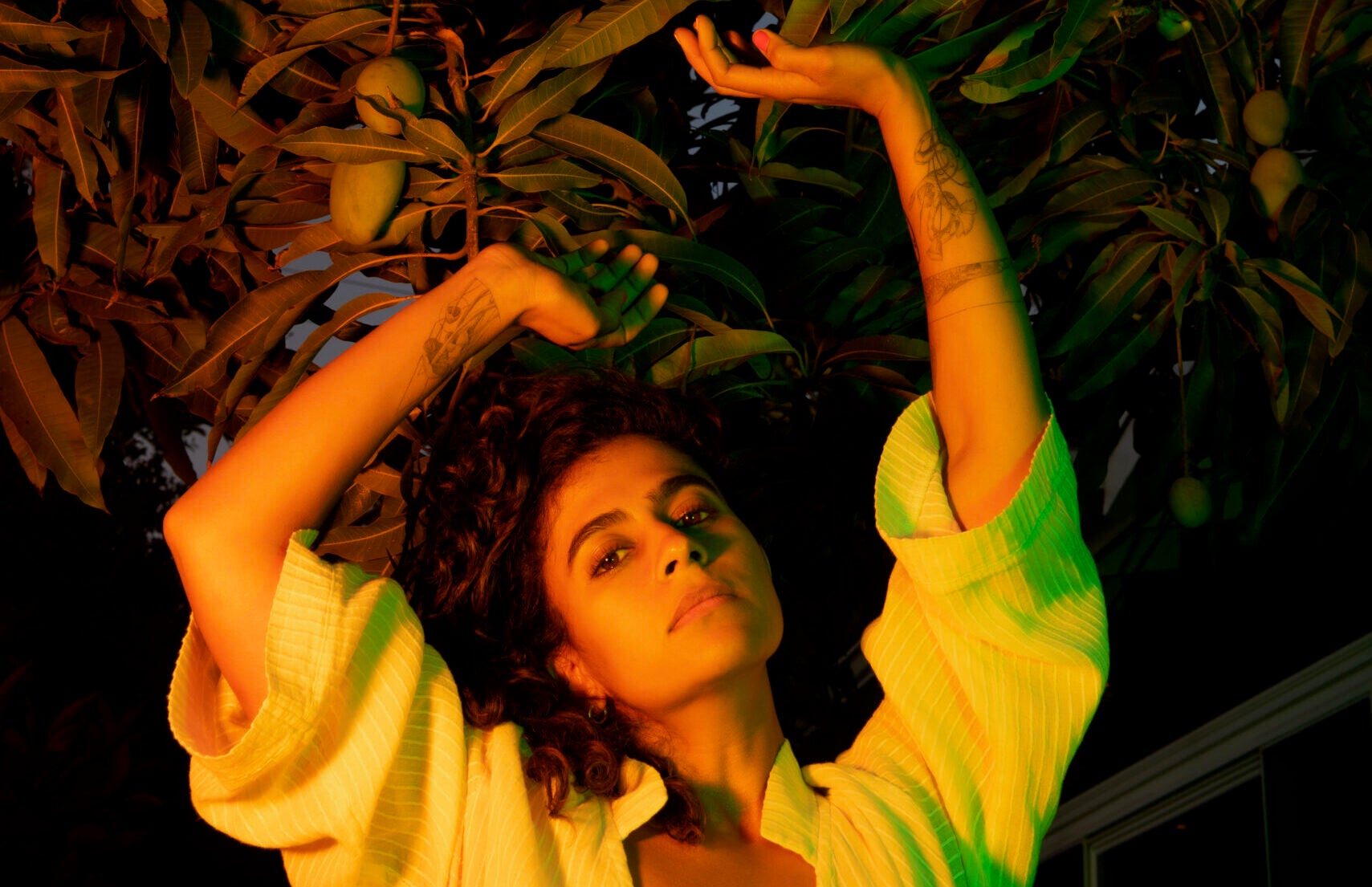
It is somewhat cliché to speak of the unconventional path of an indie artist—their rocky childhood or that serendipitous encounter that led to their big break or the moment they rejected corporate demands to conform. But in the case of Kiran Gandhi, who performs as “Madame Gandhi,” unconventional is the only way to describe her path.
Don’t believe it?
She left a coveted college internship in the D.C. mayor’s office to join a protest and ended up on the drums with Thievery Corporation’s band. She began touring with M.I.A. at the same time she matriculated at Harvard Business School. She co-authors albums with Nature. She meditates. She boxes. (In fact, she won her first boxing match.)

“Few artists working today move through the world with the intellectual curiosity, radical empathy, and creative fearlessness of Madame Gandhi,” said Tiffany Naiman, director of undergraduate programs in music industry at The UCLA School of Music. “She has built a career that refuses easy categories—bridging music, activism, wellness, technology, and cultural critique with remarkable grace and conviction. She is someone who understands music not simply as entertainment, but as a force capable of reshaping culture itself. Madame Gandhi embodies the kind of visionary leadership our students deserve to encounter at this pivotal moment in their lives. At a time when so many young people are searching for models of integrity and imagination, her presence at commencement feels not only meaningful, but necessary.”
Gandhi holds advanced degrees from Harvard and Stanford. Besides touring with the Grammy-nominated M.I.A., she has produced eight albums of her own music since 2016. She has a shelf-full of meaningful accolades, including being named as a TED fellow and listed in Forbes’s 30 under 30 in music. In 2026, she won the Abe Olman Scholarship from the Songwriters Hall of Fame and was a Vanguard Honoree in the second annual “She is the Music” Foundation, co-founded by Alicia Keys.
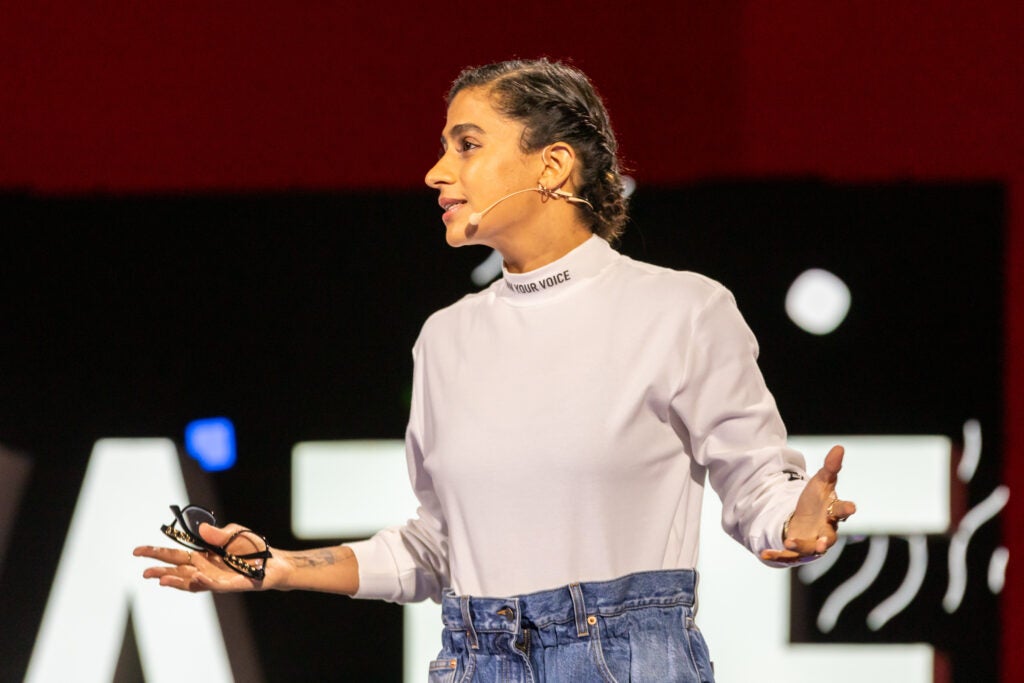
She is equal parts musician and activist. In 2015, she ran the London Marathon while free bleeding. It was less an act of protest than of necessity, as she had found herself approaching the starting line when suddenly confronted with the first day of her period. It was Gandhi’s subsequent writing on the event that helped inspire an international discussion of the stigma that society heaps upon women (and transgender and nonbinary people who menstruate) for their natural bodily functions.
Gandhi’s percussive music has been described as “uplifting” and “empowering.” But even those labels are too narrow to encompass her evolving work. Several years ago, she returned to graduate school, earning a master’s from Stanford University in music, science and technology. As part of her fieldwork, she traveled to Antarctica to record the sounds of glaciers melting.
She blended the field recordings with her signature electronica and beats driven music to create the track “In Purpose.” Intentionally listing “Nature” as a co-author, she directs royalties to conservation efforts as part of the UN Museum’s Sounds Right Initiative.
“I’m excited to have Kiran Gandhi as our commencement speaker,” said Michael Beckerman, dean of The UCLA Herb Alpert School of Music. “She is a powerful artist and thinker. She understands the power of stories to activate people, to heal and transform lives. And her music is continually growing and changing, taking her in fascinating new directions.”
Gandhi’s relentless curiosity perpetually shapes and changes her music. But long before she was a musician, she was a child in New York, where she appears to have had a more-or-less conventional childhood. She did well in school, volunteered, and excelled at public speaking. She only learned how to play the drums by accident. While attending a summer camp, she wandered into the theater cabin and sat down at a drum set and started to play. A maintenance man heard her and offered to show her the basics of making beats.

Her parents encouraged her to continue with music, albeit in the service of curating a strong college application. It paid off. Gandhi matriculated at Georgetown University, where she studied math and political science, and minored in women’s studies. With strong skills in public speaking and a keen sense of justice, she seemed headed for a career in politics and public service. She interned for the New York mayor and the Washington D.C. mayor—two of the most powerful municipalities in the country.
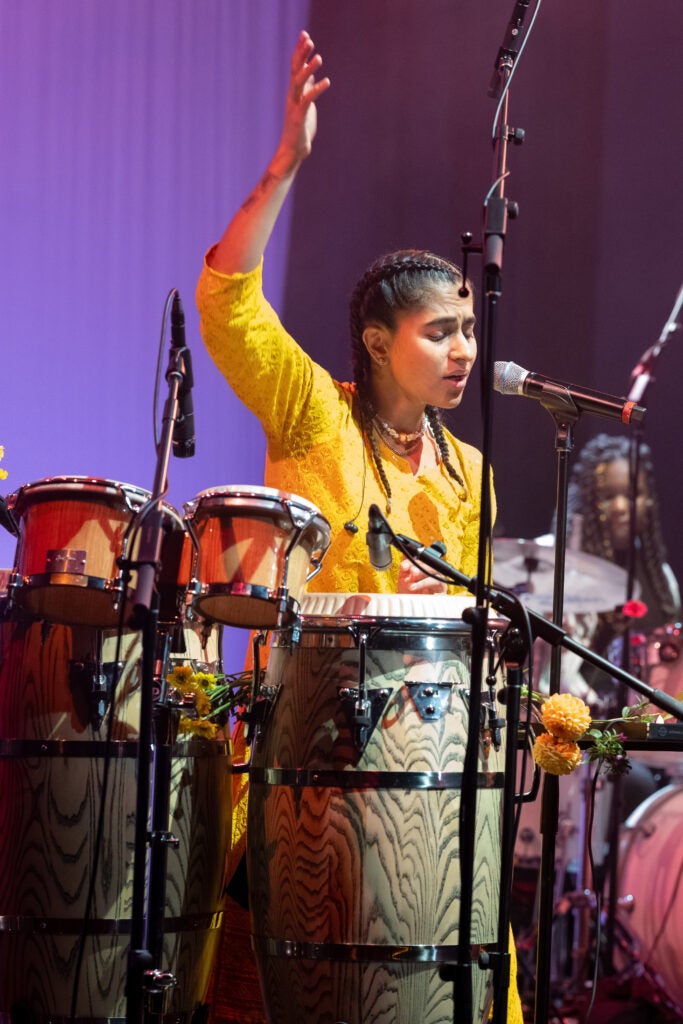
One day in D.C., as she left her internship at the mayor’s office, she encountered a group protesting the administration’s recent decision to tear down a homeless shelter for a condominium development. She threw away her intern badge and joined the drummers in the protest. Afterwards, she went along with them to D.C.’s Eighteenth Street Lounge which—unknown to Gandhi at the time—was owned by DJ-outfit Thievery Corporation. Their touring band played a set every Wednesday.
And every Wednesday, Gandhi was at the Eighteenth Street Lounge for the set. Then, in her senior year at Georgetown (2010), the congo player couldn’t make a gig with Thievery Corporation, and they asked her to fill in. It was her first big gig, and the venue was Bonnaroo.
“I’m out here, barely trying to put two-and-two together in school and I get my first gig,” recalled Gandhi. “And it’s Bonnaroo.”
After graduation, Gandhi went to work for Interscope Records. The work was interesting, but news of her friends’ touring schedules made her restless. After meeting the artist M.I.A. at a meeting, she impulsively pitched to M.I.A. the idea that she could be her touring drummer. M.I.A. said she would consider it.
When the call came to travel, Gandhi had already accepted admission to the Harvard Business School. She knew what she wanted from both experiences. So why turn either down?
“I would perform in Poland one night, then hop on a plane back to Boston and head to class the next day,” said Gandhi. “No one told me I couldn’t do it. So I just did it.”
Ten plus years later, Gandhi still maintains that same energy. She wanted to learn more about music and technology and so attended graduate school at Stanford. She still runs marathons. She picked up boxing and won her first match in 2025. She loves rock climbing and bouldering, so she earned her certification as an instructor.
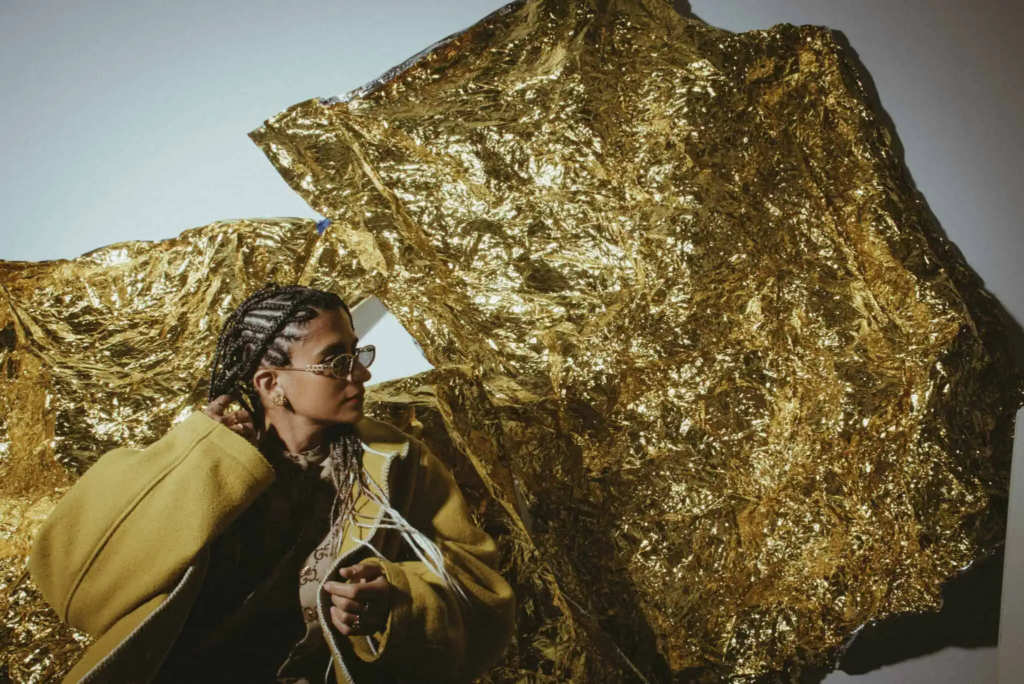
And she continues to produce enigmatic, beautiful music.
“I live this way because this is who I am,” said Gandhi. “I want to experience the world, I want to try different things, I want to be joyful, I want to bring positivity to people with my music. And I want to keep doing it.”