

UCLA Faculty Composers Concert
May 2, 2023, 8:00 p.m.
Schoenberg Hall
Composers
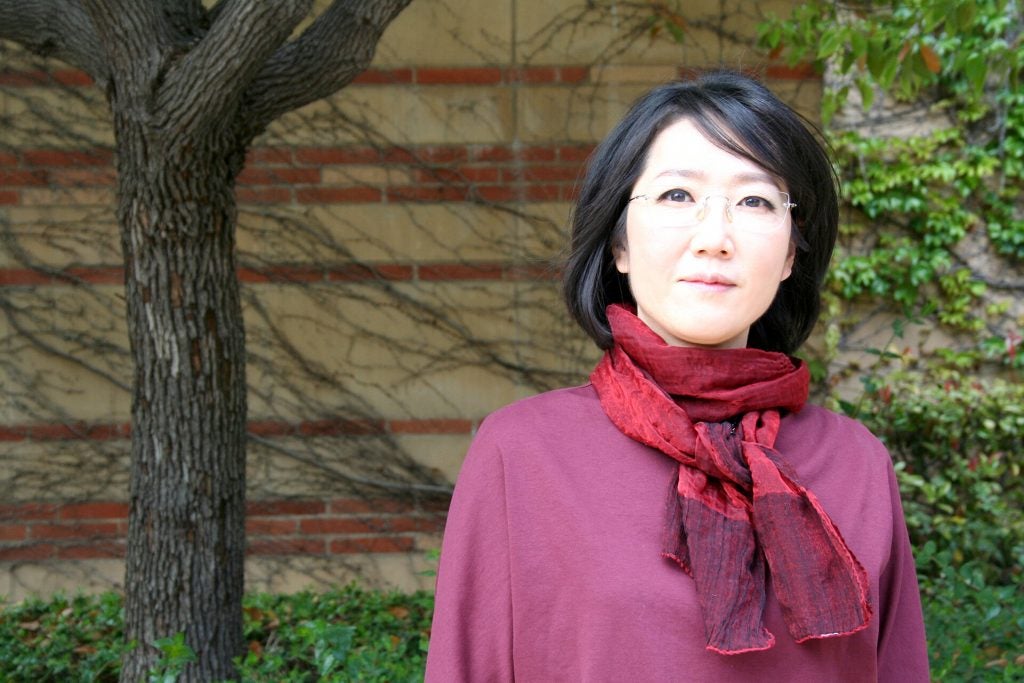
Kay Rhie (이규림)
See Bio
Kay Rhie (이규림) is a composer of contemporary classical music which often explores the issues of belonging and the science of acoustics. Born in South Korea, she grew up in Los Angeles and trained in both the West and the East Coast. Her immigrant experience since her teenage years has given her an artistic base as a hybridizer. She accesses a wide-ranging palette of inspiration from classical, film, European avant-gardes music as well as various literary and artistic traditions. In her choral work Tears for Te Wano, a 19th-century Maori chant and a 16th-century Renaissance motet are fused together while highlighting each distinct chant tradition. Her solo piano work Arirang uses a Korean folk tune as a descant, shrouds it in blues-infused harmony.
Rhie’s music in which “vehemence and reticence, intimacy and plainness co-exist” (American Academy of Arts and Letter) has found an increasing audience. Past highlights include performances by the Tanglewood Music Center Orchestra, the BBC Singers, the Seoul Philharmonic Orchestra, the Moscow Contemporary Chamber Ensemble, TM+, Ensemble X, Winsor Music, In Mulieribus, a commission by pianist Gloria Cheng, violinist Andrew Jennings among others.
Her current projects include a chamber opera Quake, a commission by Opera UCLA. A comedic reimagination of the ending of Odyssey, the opera asks two questions: what homecoming means for modern people and how one might break from fate. Featuring four soloists, four-member Greek Chorus and chamber orchestra, this 60-minute chamber opera is scheduled to open in 2022 by Opera UCLA in Los Angeles.
Another upcoming project is a commission from the Los Angeles Philharmonic Orchestra: Five Petals is about displacement from home and a desire to belong. Using the text from Theresa Hak Kyoung Cha’s ground-breaking Dictee, three Korean poets from the colonial period, and finally a modern Korean poet Hye-Soon Kim, Five Petals depicts a struggle to ground one’s identity in a land that was not their own. This performance has been rescheduled for the 2021-22 season in Walt Disney Concert Hall.
A recipient of the Charles Ives Fellowship from the American Academy of Arts and Letters, Rhie was the Music Fellow at the Radcliffe Institute of Advanced Study at Harvard University. Rhie has enjoyed honors and residencies from the Ojai Music Festival, London Festival of American Music, the Tanglewood Music Center (Otto Eckstein Composition Fellow) where she was the winner of the Geffen-Solomon New Music Commission, Seal Bay Chamber Music Festival, Aspen Music Festival, and School, the Banff Centre for the Arts, and the Chamber Music Conference and Composers’ Forum of the East among others.
She began playing the piano at age seven in South Korea and continued her musical studies in Los Angeles. After she studied piano performance and composition at the University of California at Los Angeles, she received her Doctorate of Musical Arts degree in composition at Cornell University. Her composition teachers include Steven Stucky, Roberto Sierra, Paul Chihara, Ian Krouse, David Lefkowitz, John Harbison, Samuel Adler, Stephen Hartke, and Colin Matthews. She studied piano performance with Xak Bjerken, Malcolm Bilson, and Ick-Choo Moon.
Rhie currently teaches composition and theory at UCLA as Assistant Professor of Music.
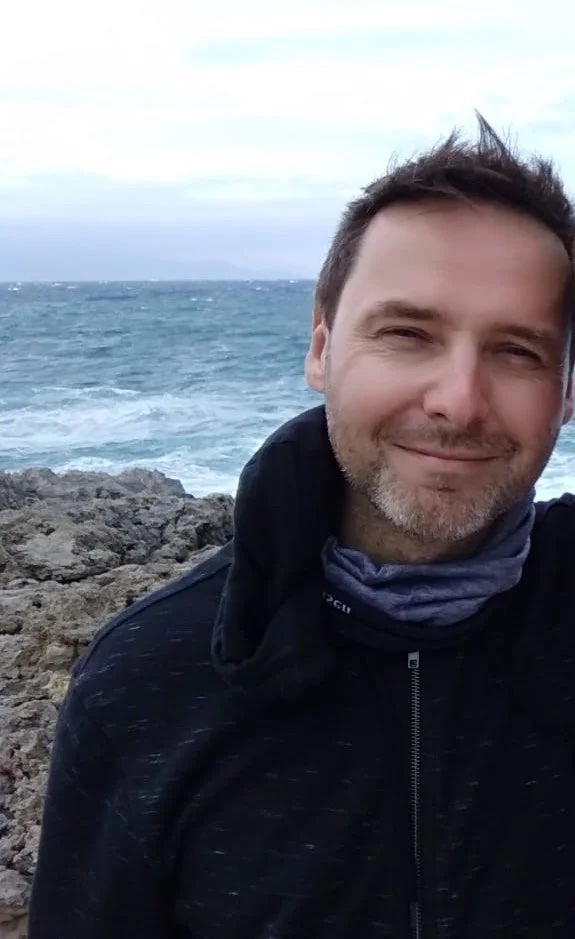
Wojciech Stepien
See Bio
WOJCIECH STĘPIEŃ (b. 1977) is a composer, musicologist and music theorist. He completed his MA in music theory (2003) and composition summa cum laude (2005) at the Karol Szymanowski Academy of Music in Katowice (Poland) and his PhD in musicology at the University of Helsinki (2010). In 2019 he received a habilitation degree (post-doc) at the Karol Szymanowski Academy of Music in Katowice. Since 2008, he has been working as an assistant professor in the Faculty of Composition and Music Theory at the Karol Szymanowski Academy of Music in Katowice. Currently as a Fulbright scholar he is a visiting assistant professor at The UCLA Herb Alpert School of Music, University of California Los Angeles. He is a member of the Polish Composers` Union.
Among his last works are: the chamber opera Black Mirror (2019), cycle of songs in the form of monodrama Five Letters to the Beautiful Knight (2020), cycle of songs Wind Whines to James Joyce’s poems (2021), musical Captain Who (2022). Currently he is working with librettist Amanda Hollander on the opera A Single Man with support from the Christopher Isherwood Foundation.
Repertoire
Intermezzo (from Canti Della Natura), 2019
Richard Danielpour
Antonio Lysy, cello
Inna Faliks, Piano
I Hear the Sound of Trees (preview) for Soprano, Horn, and Piano, 2008, 2022
Kay Rhie
I. After the dazzle of day
II. Reflective
III. Cascadilla Falls
IV. Perfection
V. Love Song
Leela Subramaniam, soprano
Amy Sanchez, horn
Andreas Apostolou, piano
INTERMISSION
Reverie, Blues and Elegy (Etude 2b from Etudes for One and Two Pianos, Op. 67), 2017
Ian Krouse
Emily Webster-Zuber, piano
Kaitlin Webster-Zuber, piano
Wind Whines, 2021
Wojciech Stępień
I. On the Beach at Fontana
II. Watching the Needleboats at San Sabba
III. She Weeps over Rahoon
Carmen Edano, mezzosoprano
Andrzej Ślązak, piano
LUDUS VENTORUM (or Der Suppentopf von Herr Brant), 2023
Peter Golub
Arturo Rodriguez and Theo Schmitt, conductors
Will Adams, Elle Cao, Matthew Origel, Shannyn Sul, flutes
Jacob Freiman, Harrison Garff, Darren Liou, Kai Nakkim, clarinets
Adam Gilberti, contrabass clarinet
Abby Brendza, Zane Marquez, Corey Castillo, Matthew Rasmussen, bassoons
Aric Kline, Kenneth Brown, Emma Breen, McCartney Hutchinson, trumpets
Spencer Mar, Nathan Culcasi, Jason Bernhard, Ethan Holmes, trombones
Sam Adam, tuba
Andreas Apostolou, Phyllis Pan, pianos
Eleanor Muhawi, organ
Robby Good, Alejandro Barajas, percussion
Program Notes
I Hear the Sound of Trees
This song cycle was inspired by a collection of poems about finding one’s true voice when we face nature. The cycle starts out with busyness and slowly moves towards quiet introspection, depicting stillness that we often forget. Written while I was living in Ithaca, NY, the songs were written for originally voice and piano and later revised for various ensembles, and this time, for voice, horn, and piano. Movements 1, 3, and 5 comprise the main songs, calling for the trio, while 2 and 4 are concise interludes for only voice and piano. – Kay Rhie (2022)
I Hear the Sound of Trees was commissioned by SaeRon Trio.
- After the dazzle of day (Walt Whitman)
- Reflective (A.R. Ammons)
- Cascadilla Falls(A.R. Ammons)
- Perfection (Walt Whitman)
- Love Song(A.R. Ammons)
1. After the dazzle of day is gone,
Only the dark, dark night shows to my eyes the stars;
After the clangor of organ majestic, or chorus, or perfect band,
Silent, athwart my soul, moves the symphony true
2. I found a/ weed/ that had a
mirror in it/ and that/ mirror
looked in at/ a mirror/in
me that/ had a/ weed in it
3. I went down by Cascadilla/ Falls this/evening, the/stream below the falls, and picked up a/
handsized stone/ kidney-shaped, testicular and/
thought all its motions into it,/ the 800 mph earth spin,/ the 190-million-mile yearly/
displacement around the sun,/ the overriding/ grand/ haul
of the galaxy with the 30,000/ mph of where/ the sun’s going:/
thought all the interweaving/ motions/ into myself: dropped/
the stone to dead rest:/ the stream from other motions/ broke/rushing over it:/shelterless,
I turned/ to the sky and stood still:/ oh/ I do/ not know where i am going/ that I can live my life/ by the single creek.
4. Only themselves understand themselves, and/ The like of themselves,/As Souls only understand Soul.
5. Rings of birch bark/ stand in the woods/ still circling the nearly/ vanished log: after/ we go to pass/
through log and star/ the white song will/ hug us together in the/ woods of some lover’s head
“After the dazzle of day”, “Perfection” from Walt Whitman’s poetry collection LEAVES OF GRASS in public domain. “Reflective” © 1990 from THE REALLY SHORT POEMS OF A.R. Ammons “Cascadilla Falls”, “Love Song (2)” © 1986 from THE SELECTED POEMS, EXPANDED EDITION. Used by the kind permission of W.W. Norton & Company, Inc.
Wind Whines
Wind Whines (2021) is a cycle of three songs to poems from ‘Pomes penyeach’, written by James Joyce in Trieste just before the First World War. The message of songs is catastrophic – death and the inevitability of what life brings throws our feelings and close relationships with people to fate. Wind Whines is originally composed for baritone and piano.
I. On the Beach at Fontana
Wind whines and whines the shingle,
The crazy pierstakes groan;
A senile sea numbers each single
Slimesilvered stone.
From whining wind and colder
Grey sea I wrap him warm
And touch his trembling fineboned shoulder
And boyish arm.
Around us fear, descending
Darkness of fear above
And in my heart how deep unending
Ache of love!
II. Watching the Needleboats at San Sabba
I heard their young hearts crying
Loveward above the glancing oar
And heard the prairie grasses sighing:
No more, return no more!
O hearts, O sighing grasses,
Vainly your loveblown bannerets mourn!
No more will the wild wind that passes
Return, no more return.
III. She Weeps over Rahoon
Rain on Rahoon falls softly, softly falling,
Where my dark lover lies.
Sad is his voice that calls me, sadly calling,
At grey moonrise.
Love, hear thou
How soft, how sad his voice is ever calling,
Ever unanswered, and the dark rain falling,
Then as now.
Dark too our hearts, O love, shall lie and cold
As his sad heart has lain
Under the moongrey nettles, the black mould
And muttering rain.
LUDUS VENTORUM (or Der Suppentopf von Herr Brant)
Ludus Ventorum means "play of winds" and that is what this piece largely is. I've had a life-long love of wind instruments and I'm also interested in using them in families, where each group produces a homogeneous sound. The piece is also a tribute to American composer Henry Brant, who was my teacher and a strong influence on my music. Brant was an American pioneer in the tradition of Ives, Cowell and Partch and he was a practitioner of spatial music, in which WHERE the sound is coming from plays an important role.
I'd like to offer my thanks and appreciation to the stellar group of performers from UCLA playing tonight, and to Robby Good, for rounding them up.
– Peter Golub
