
Music of Turkey, Music of Korea, and Music and Dance of Ghana
Ensemble Directors
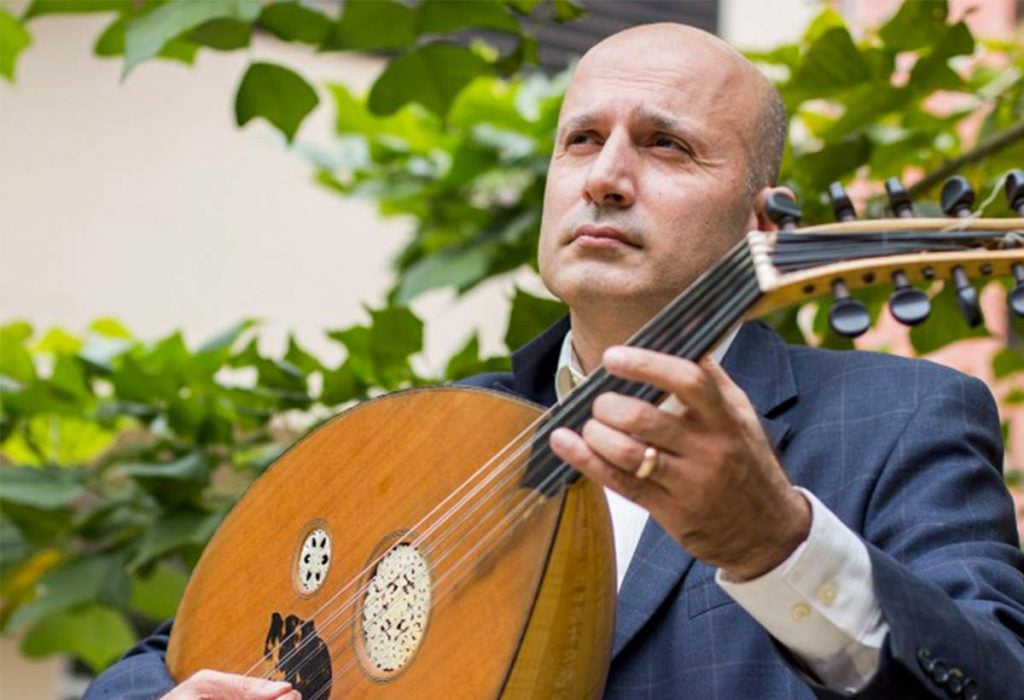
Münir Beken
See Bio
Münir Beken’s career spans theory, composition, ethnomusicology, and performance. As a composer, he has written a state-commissioned ballet suite for orchestra, won awards for film music, and scored television documentaries both domestically and internationally. His scholarly work focuses on modal theory; he is also conducting research on musical globalization and the phenomenology of music. He has published in Ethnomusicology, a premier journal in the field, and contributed to The New Grove Dictionary of Music and Musicians. He was one of the founding members of the State Turkish Music Ensemble.
Beken’s specialties are: world music theory; composition; modal theory; musical globalization; phenomenology of music; melodic modal systems of the Middle East and Central Asia; Turkish music; music of the Ottoman Empire.
Beken earned his Ph.D. in ethnomusicology from the University of Maryland. He completed his M.A. in music theory at the Technical University of Istanbul.
Program
Music of Turkey Ensemble
May 30 2025 Concert Notes, prepared by Münir Beken:
Performers:
Münir Beken (ud-voice)
Choon Hwee Koh (darbuka)
Mikey Aboutboul (ney)
Yadeal Mesfin Asfaw (bendir)
Danyal Beken (cello)
Suzan Beken (voice)
Ariyanna Durrani (Daire)
Alyssa Kurt (voice)
Shitong Li (lavta-voice)
Ian Price (bendir)
Kethan Krishna Raman (kanun)
Simon Salmon (ud & çeng)
Defne Tanyıldız (voice)
Ruby Tekori Lim-Moreno (ud)
Aden Tezolmez (voice)
Isaac Warren (darbuka)
Program:
Ottoman Court Music
Fihrist Taksim (solo improvisation) Münir Beken
Rast Kar-ı Nâtık “Rast getirip fend ile seyretti Hümayı” (by İsmail Dede Efendi 1778-1846)
Rast Şarkı “Yine bir gül nihal” (by İsmail Dede Efendi 1778-1846)
Turkish Instrumental Music
Uşşak Taksim (solo improvisation) Mikey Aboutboul
Uşşak Pesrev by Tanburi Büyük Osman Bey
Urban Songs
Alyssa Kurt sings
Bestenigar Şarkı “Ben seni sevdim seveli kaynayıp costum” (by İsmail Dede Efendi 1778-1846)
Nihavend Şarkı “Sarkılar seni söyler”(by Muzaffer Ilkar 1910-1987)
Aden Tezolmez sings
Nihavend Şarkı “Hatırla sevgili o mesut geceyi” (by Muhlis Sabahattin Ezgi 1889-1947)
Nihavend Şarkı “Yıldızların altında”(Kaptanzade Ali Rıza Bey 1881-1934)
The Music of Turkey Ensemble sings
Nihavend Türkü “Üsküdara gider iken” (Anonymous)
***
Music of Korea Ensemble
- Arirang, Doraji, Kyungbokgung-Taryeong for piri (double-reed bamboo oboe).DEL REAL, JUAN; KIM, MANUEL; KIM, RILEY IN HYUNG; VILLAVICENCIO, NICHOLAS; ANGELO, BROOKLYN (janggo).
- Jindo Arirang & Sae-Taryeong (Birds Song) for gayageum (12 string zither).
- New piece (Movement 2), composed by Rafael Amaral.
KIM, NICHOLAS (clarinet); KANG, GAMIN (piri). - Fusion Gugak
- Sarang-ga (Love Song)
- Arirang Medley: Gin-Arirang, Milyang Arirang, Jindo Arirang
NAM, JANICE (gayageum); LEE, ANGIE (violin); KANG, CHASE (vocal); ASFAW, YADEAL (keyboard).
- Pan-Gut
Kkwaenggari (small metal gong), janggo (hourglass drum), buk (barrel drum), jing (brass gong), sangmo (folk arts hat).
LEE, ANGIE (janggo) KIM, NICHOLAS (janggo) VILLAVICENCIO, BROOKLYN ANGELO (janggo) YOON, JOEL (buk) DEL REAL, JUAN MANUEL (buk) KIM, RILEY IN HYUNG (jing) SHIN, ELAINE (janggo) CHOI, GRACE (janggo) KRULIK, LAUREN (buk) LEE, BEATRICE (sangmo) HWANG, JEONG-MIN (sangmo) HSU, JARD (kkwanggari).
***
Music and Dance of Ghana Program 2025
Performers:
Miriam Adhanom
Ben Bonsall
Ellis Bruxvoort
Kelese Bryant
Aerlind Janna
Payton Kashdan
Roman Leitz
Chatri Rajapaksha
Haru Sakurai
Cylin Wang
Anthony White
Elana Cohen-Khani
Sam Kredich
Sebastian Nasser
Thomas Leeb
Benny Schultz
Kete is royal court music from the Asante Kingdom of Ghana. More a suite of music than an individual piece, traditionally Kete was restricted to palaces of chiefs and kings, but has been “released” and is now heard all over the Ashanti Region and Ghana for all types of occasions. The drums are traditionally wrapped in black and red fabric, reflecting heavy themes of war and conquest.
Agbekɔ, or Atsiagbekɔ, is a piece from the Anlɔ Eʋe people who live along Ghana’s southeastern coastline. One of the older pieces in the Anlɔ repertoire, Agbekɔ emerged out of an dance-drumming music called Atamga, or “the great oath.” Warriors would visit their traditional deities to ask for permission and protection before going to war. Later on, dancing became a way to share their exploits with their countrymen after returning home. Today, Agbekɔ helps remind Eʋes of their history and serves as a reminder of the benefits of peace.
Kpanlogo is social music from the Ga people of Ghana’s capital city, Accra. Kpanlogo emerged in the late 1950s and early 1960s as subversive music for the youth. Once it caught on, Kpanlogo groups formed and would compete on weekends with rapidly evolving new dance moves and drumming variations. Today, Kpanlogo is used at all sorts of occasions, usually celebratory, and songs usually reflect themes that have to do with the trials and tribulations of interpersonal relationships we all encounter in every day life. If you ever tune in to an soccer/football match featuring Ghana’s national team, you’ll be treated to some Kpanlogo hype music as the team gets ready to step out onto the pitch.
