
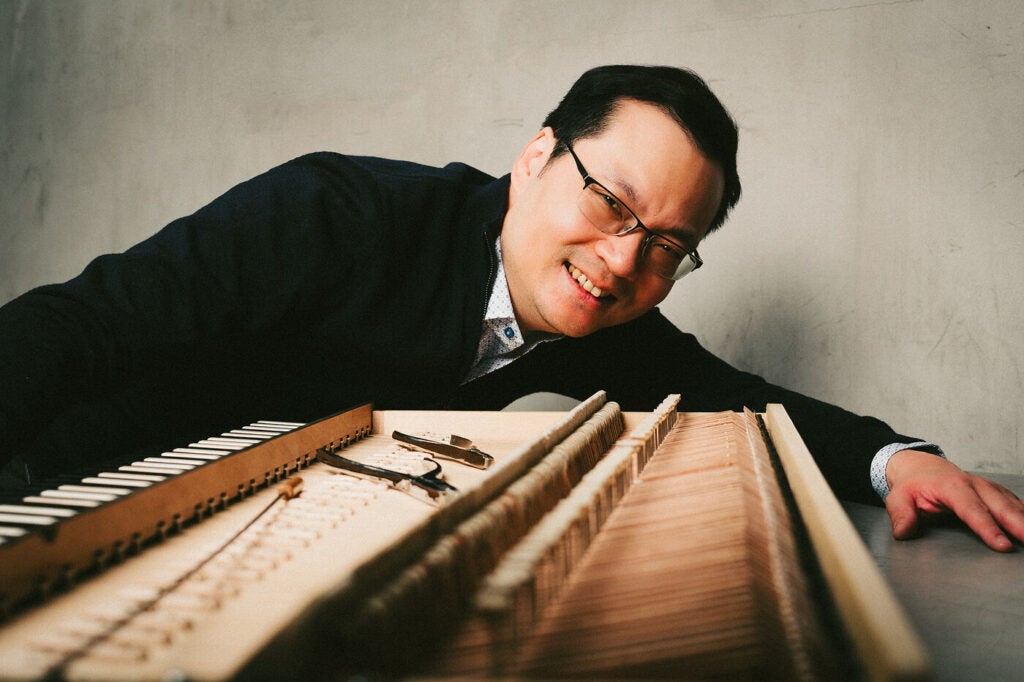
Mike Lee, an accomplished fortepianist with an international performance career, has joined The UCLA Herb Alpert School of Music. He holds advanced degrees from Yale and Cornell and was most recently visiting assistant professor at the Eastman School of Music.
Lee’s performances on pianos spanning the history of the instrument have taken him to four continents and into contact with leading arts organizations, such as the Fryderyk Chopin Institute, New World Symphony, and the Smithsonian. His collaborators have included Michael Tilson Thomas, members of the Juilliard and Formosa quartets, and winners of the Avery Fisher Career Grant, among others. He is currently scheduled for a 2027 solo tour with Chamber Music New Zealand where he will perform all-Beethoven programs on his own instrument, a Paul McNulty copy of a ca. 1805 Walter & Sohn piano that was favored by classical-era composers.
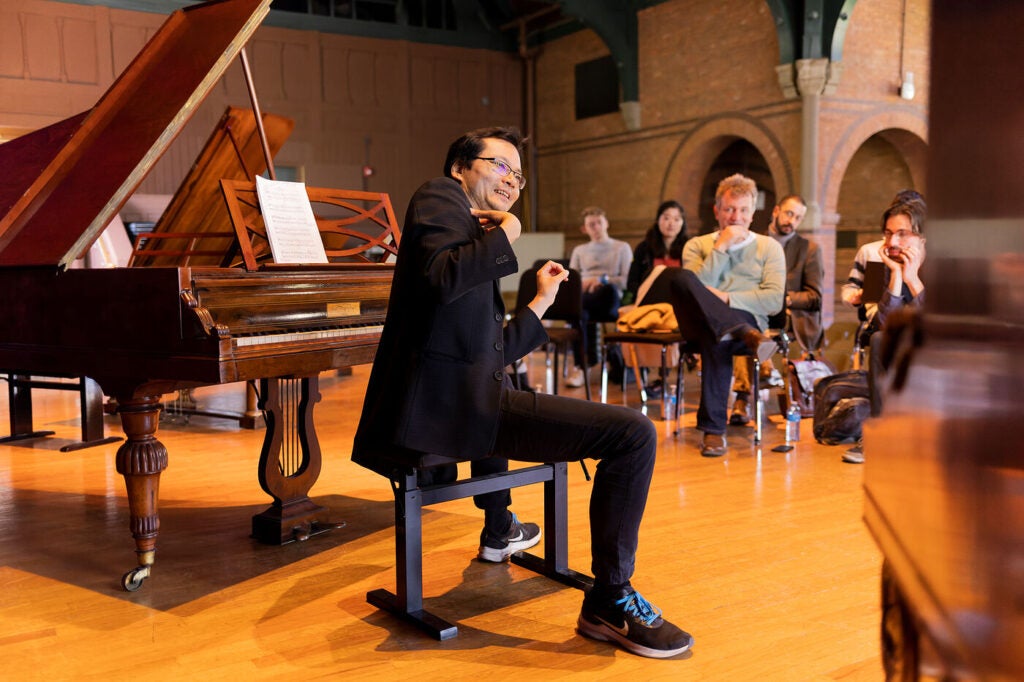
“We are thrilled to have Mike joining our faculty,” said Mike Beckerman, dean of The UCLA Herb Alpert School of Music. “His interpretations of Mozart have been praised by critics for their originality and lyricism. And he brings creative perspectives about the relationship between historical pianos and compositions that will excite our students and faculty.”
Lee did not begin his career as a fortepianist. Like most students, he began his studies on the modern piano. His first meaningful exposure to historical pianos came at Yale, where he studied with Boris Berman as a master’s and artist diploma student. The appeal was immediate.
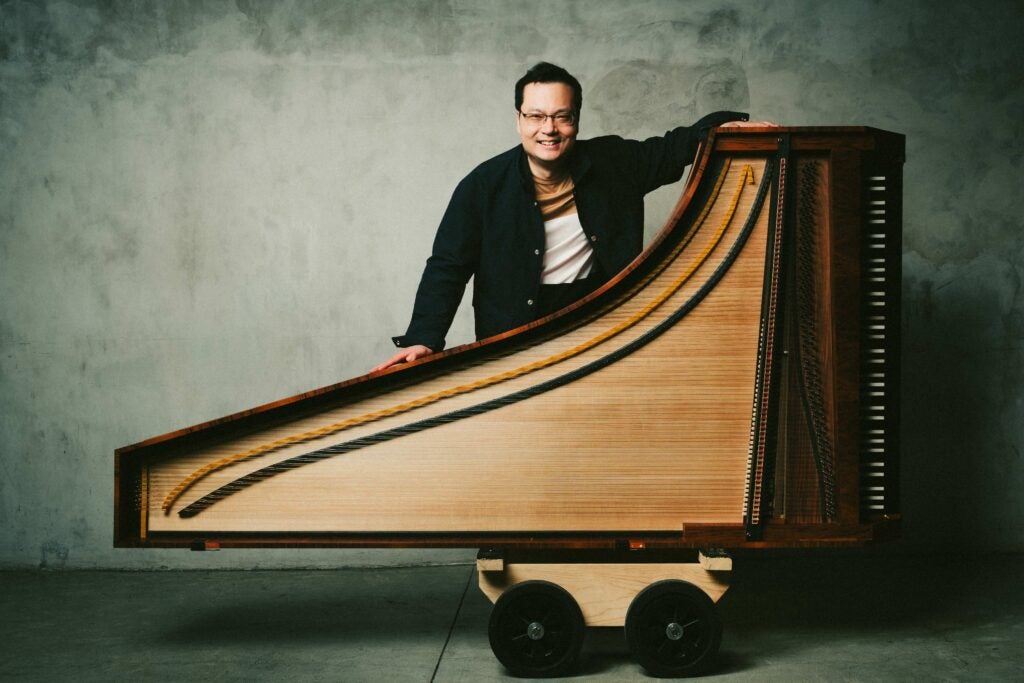
“I found it endlessly fascinating,” said Lee, who went on to work with Malcolm Bilson, the pioneering scholar and practitioner of the period-instrument movement, at Cornell. “While my interest remains first-and-foremost with the music, instruments have a way of delineating a field of possibilities for expression, and working with historical pianos opened up whole new expressive vistas for my work.”
His interest in historical pianos owed partly to his own curiosity and self-confessed contrarian nature, but also because of the interpretive problems posed by works composed before the modern piano’s invention. Joseph Haydn composed piano sonatas for a variety of pre-modern instruments intended for intimate settings, yet today they are often transplanted onto the 9-foot grand in enormous concert halls.
“The interpretive problem is not so much how to recreate the music as Haydn would have heard it,” explained Lee. “It’s to find creative ways to make use of historical information as a foil to imagine an authentically modern interpretation, one that reveals some latent potential about the music which can resonate with our sensibilities today.”
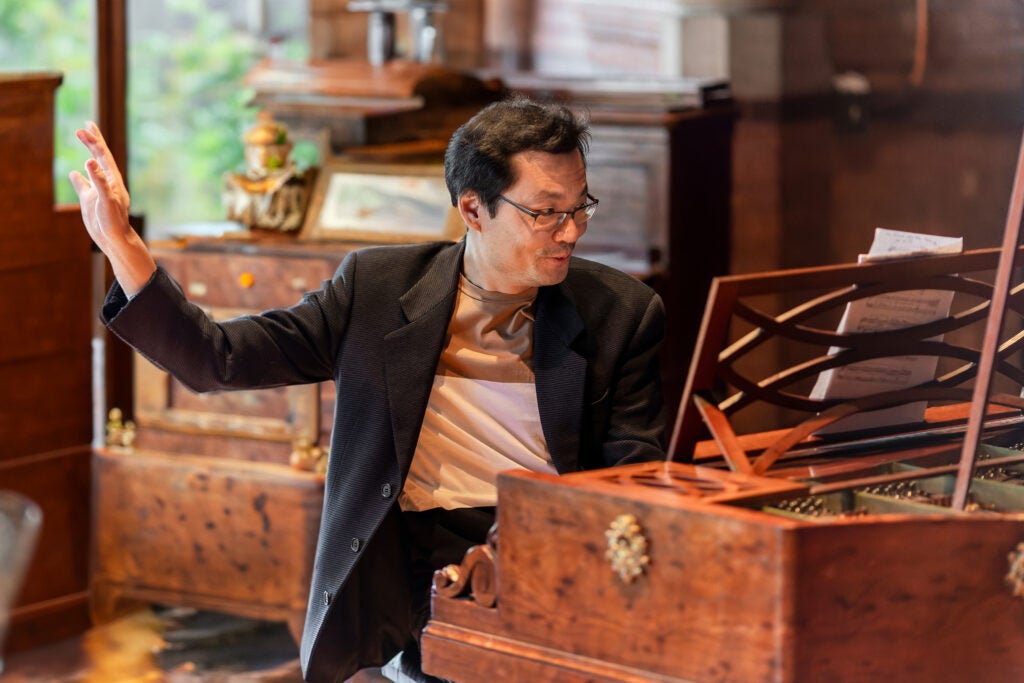
Lee’s own interpretations of canonical works have been noted for their originality. The Herald Times of Bloomington, Indiana called Lee’s interpretation of Mozart “radiant” and “a lesson in refinement mixed with deep devotion,” made all the better by “the crispness which only a fortepiano will allow.” A reviewer for the Australian Limelight Magazine noted: “I heard things in Mozart’s music I had never thought possible and certainly had never encountered before.” This speaks to a hallmark of Lee’s artistry: an approach that integrates close historical attention with modern analytic perspectives to uncover new expressive potentials.
That same approach informs his current work on Schubert, who composed several of his most celebrated piano sonatas in the 1820s. Though these works are increasingly performed and recorded on historical pianos, most performers opt for nineteenth-century pianos assuming that Schubert wrote for the latest available instrument with their ever more rounded and resonant tones. Lee, however, has a different perspective.
“Schubert never owned a brand new piano of his own,” said Lee. “He was always hopping from friend’s apartment to apartment. There’s a revealing drawing by Moritz von Schwind of Schubert’s work space featuring a Viennese piano with a slanted edge which gives it away as a Mozart and Haydn era instrument. So here is Schubert composing in the 1820s on an ‘outmoded’ classical-era piano, and transfiguring the courtly sound world of the 18th-century into this almost post-modern expressionistic realm which inspired all subsequent 19th-century composers and which we still find irresistibly contemporary.”
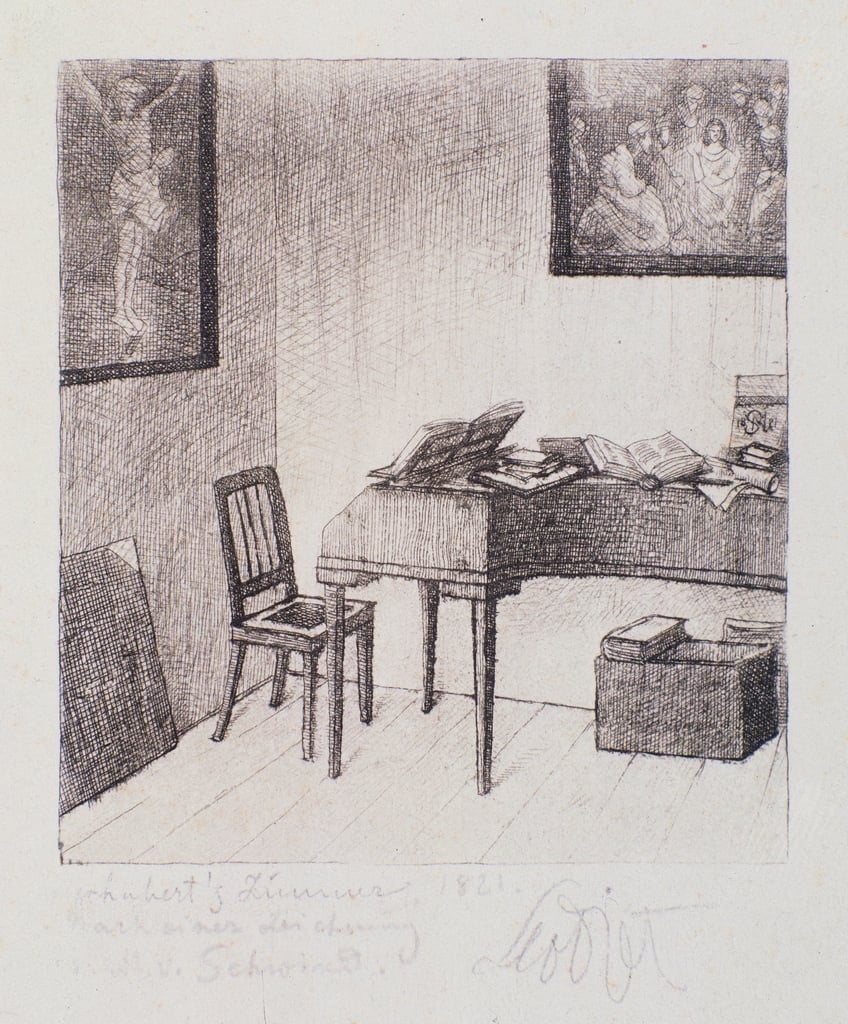
Lee’s work in performance and analysis has led him to publish several essays and articles. His scholarship has appeared in 19th-Century Music, published by the University of California Press (with a new article on Chopin set to come out later this summer in the journal’s 50th anniversary issue), Eighteenth-Century Music, published by Cambridge University Press, and Music Theory Online, a flagship journal of the Society for Music Theory. Lee considers the relationship between performance and analysis vital to artistic innovation in today’s classical music world. Starting this year Lee will also embark on a multi-year collaboration with the UK record label, Orchid Classics, to produce a series of recordings beginning with a disc of works by Schubert and Beethoven to coincide with upcoming 200th anniversaries for both composers.
Lee brings to his teaching at UCLA an expansive philosophy of musical interpretation. From the platform of performance studies, he works with all of UCLA’s graduate performance students, helping them broaden their approach to interpretation across eras and instruments. While styles and tools may change, the underlying challenge remains constant.
“What we do as musicians is often delimited by our years-long relationship, usually since childhood, to a particular sound world and its enabling technologies,” Lee said. “If you’ve only ever lived inside one ecosystem, it can be hard to imagine a world outside of it. But try on a different set of lenses, be it historical, technological, or analytical, and one’s perspectives can start to shift in wondrous ways. My goal is to share those transformative moments that I’ve personally experienced, and am constantly searching for, with students in hopes to leave them with a broader range of awareness and creative confidence to venture successfully beyond their musical comfort zones.”