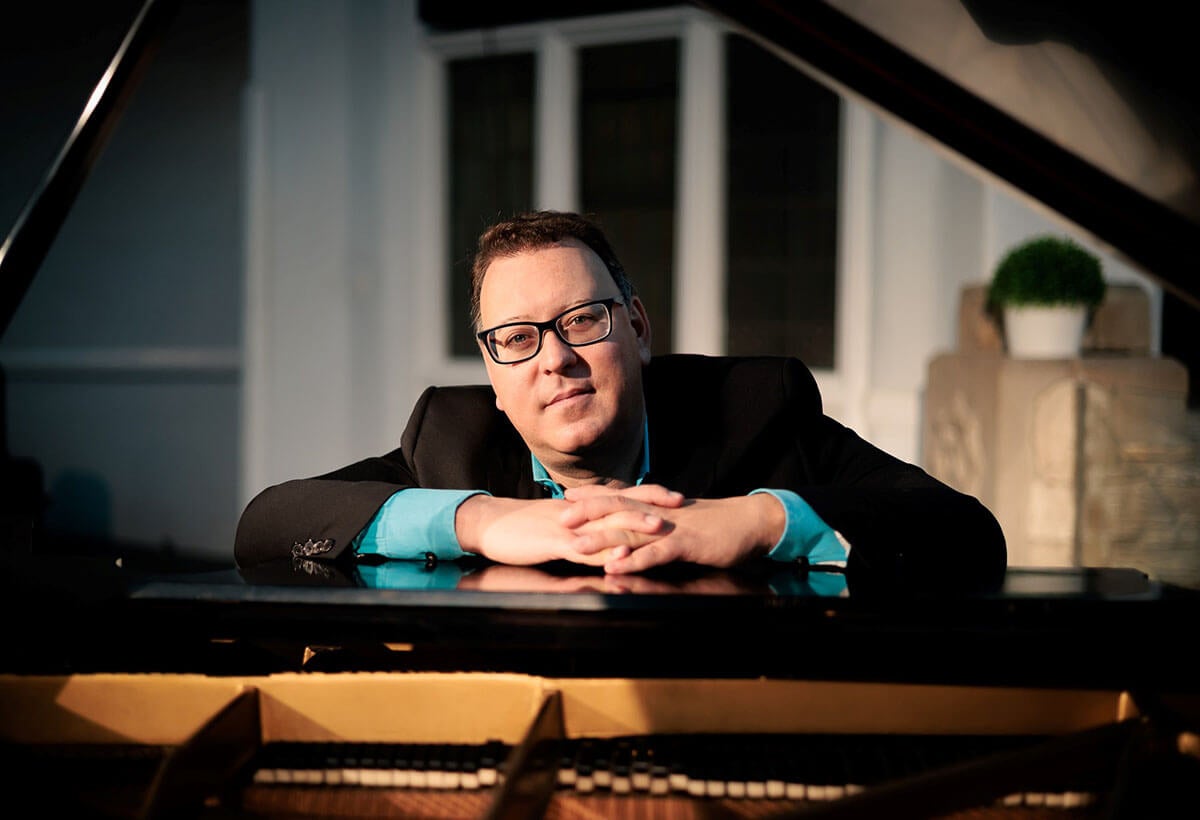
Tucked away in the basement of The UCLA Herb Alpert School of Music is Adam Gilberti’s workshop. As the school’s musical instrument curator, Gilberti performs the essential task of maintaining the instruments that are necessary to keep the school’s ensembles running. Students routinely stop by to check out the usual fare—horns, strings and reeds.
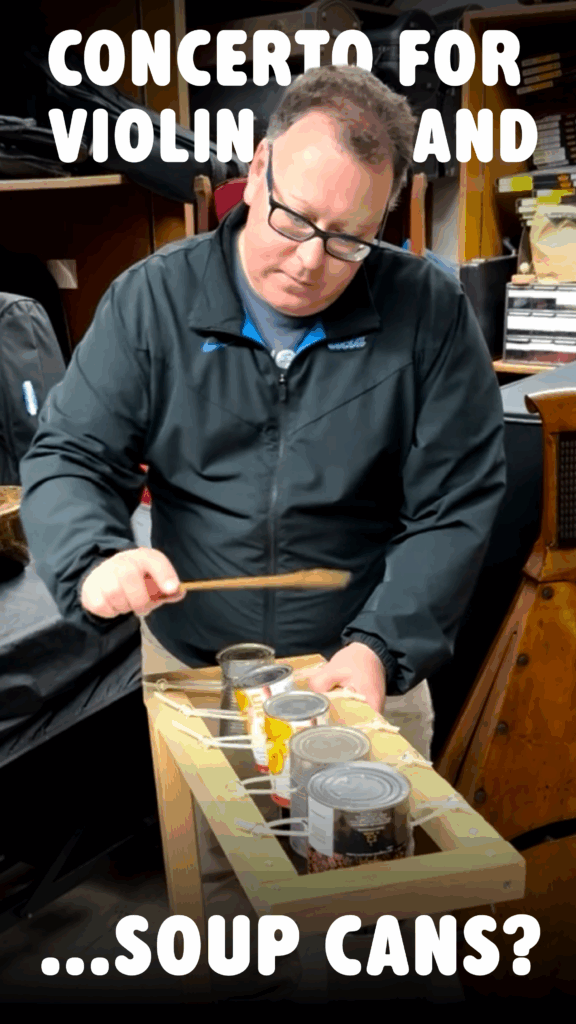
Adam also curates rare instruments, including some that you won’t find at any other school of music in the country. During the interview, he demonstrated an instrument he had just built for Lou Harrison’s concerto for violin and percussion—a row of soup cans set to different pitches.
Gilberti is also a composer, an orchestral arranger, and a chef who works with, shall we say, interesting ingredients.
# # #
When did you first come to UCLA?
As a doctoral student in 2007. I did my undergrad at UC Santa Barbara and a master’s degree at UC Riverside. And then I came here to do a doctorate in music composition.
What was your dissertation on?
The psychoacoustics of low frequency instruments.
What took you to that subject?
I have an affinity for low bass instruments, and I just feel like there really is something gripping about bass instruments and bass sounds for people today. I also hobby in astrophysics—for a while I thought I was going to go to grad school to study science, but I decided to go for music instead. A lot of my music has scientific themes. My dissertation composition is the first piece ever written for an ensemble of subcontrabass instruments and nothing else. It’s called “Event Horizon,” and it’s about the black hole in the center of our galaxy, Sagittarius. [Professor of composition at the school of music ] Ian Krauss says it is for the seven lowest instruments in the universe.
What do you do at The UCLA Herb Alpert School of Music?
My academic title is Museum Scientist, but I’m really the curator of the musical instruments, and we have a number of special instruments. I mean, we do have two Stradavarius violins, and those are rare, we have a lot of special and even unique instruments that we need for various concerts, and I help ensembles get them set up.
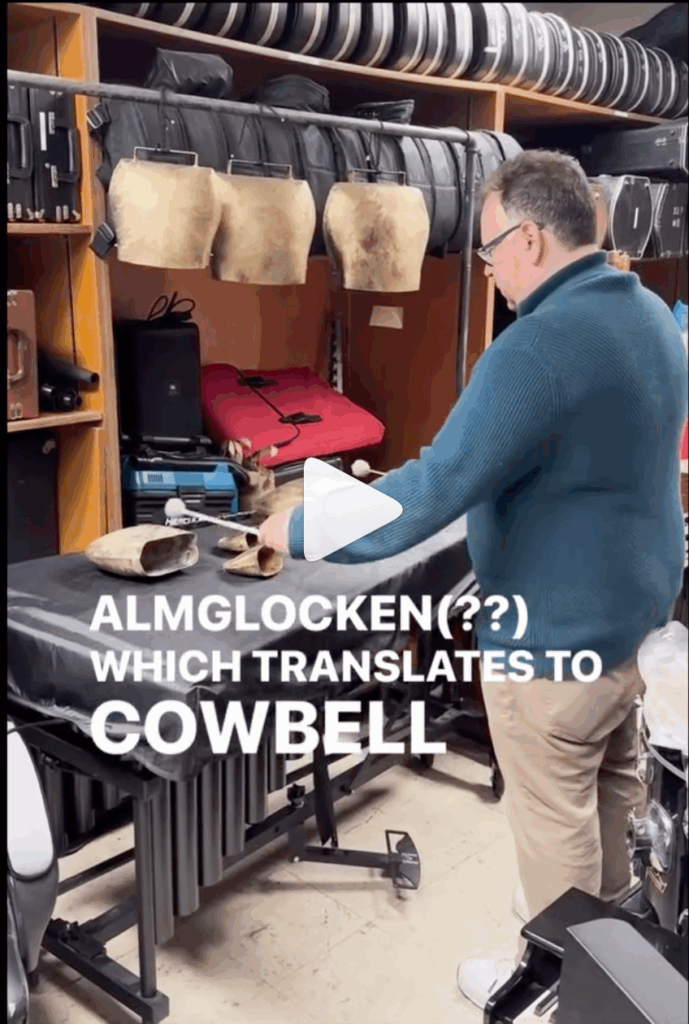
Last year when UCLA Philharmonia played Mahler’s Symphony No. 6, “Tragic” you had to bring out cowbells and an enormous hammer—are those the kind of rare instruments you are talking about?
Yes, absolutely. Let me show you one of our rarest instruments. This is called a harp lute. It was an experimental instrument made in the early 19th century by Edward Light. And you see that it has some different frets where you can play some things like a guitar. But then it also has areas where you can strum or change the pitch, like a harp.

Is this a replica?
No, this is the real thing, it was made in 1819.
And this, over here—is this a cello?
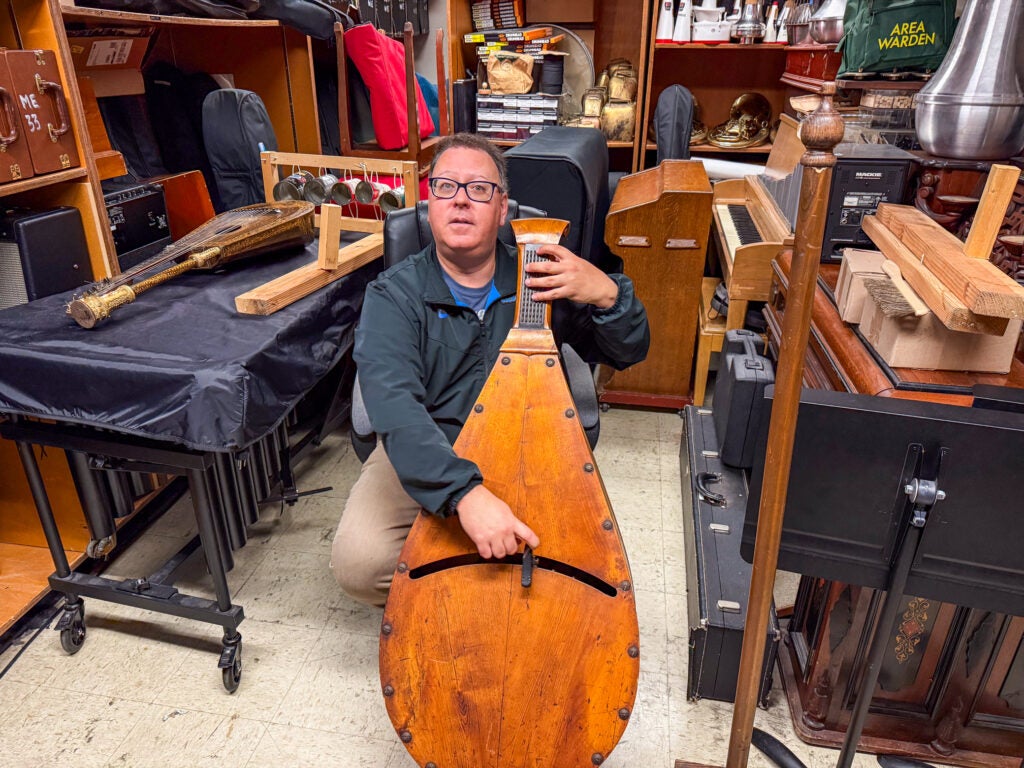
This is a cecilium, it’s probably one of the strangest instruments we have. It looks like a cello, and you sit with it like a cello, but instead of bowing, it’s got a bellows system. So, it’s using air and you use different fingerings to create different notes.
I know you have to come in to the school of music sometimes on weekends to set up instruments for concerts, but where else would I find you on weekends?
I play the organ at the First Baptist Church of Glendale, so you might find me there. Actually, I have a concert there on Sunday, November 16 that will feature some of my arrangements. It’s actually a sequel concert.
A sequel?
Well, there’s a concert series that myself and a few others have organized at the church. Christoph Bull, our organ professor, he performed on the first one in 2023. It was called “Elements of the Physical World,” and it featured pieces about fire, water, earth, and metal. That concert featured some of my compositions. This year we are doing the sequel, called “Elements of the Spiritual World,” which is about the intersection of humans and spirit beings. Our featured organist will be Philip Hoch, who is now professor of organ at the University of Redlands. He was one of Christoph’s students, so he’s an alum.
Is the program all your music?
It’s a mix. We’re doing classical music, video game music, show music, and premieres. Every concert has at least one piece featuring historical Western classical instruments and at least one piece featuring non-Western instruments. And we’ve got another two of these planned for 2026 and 2027.
That sounds like an eclectic concert. But…video game music?
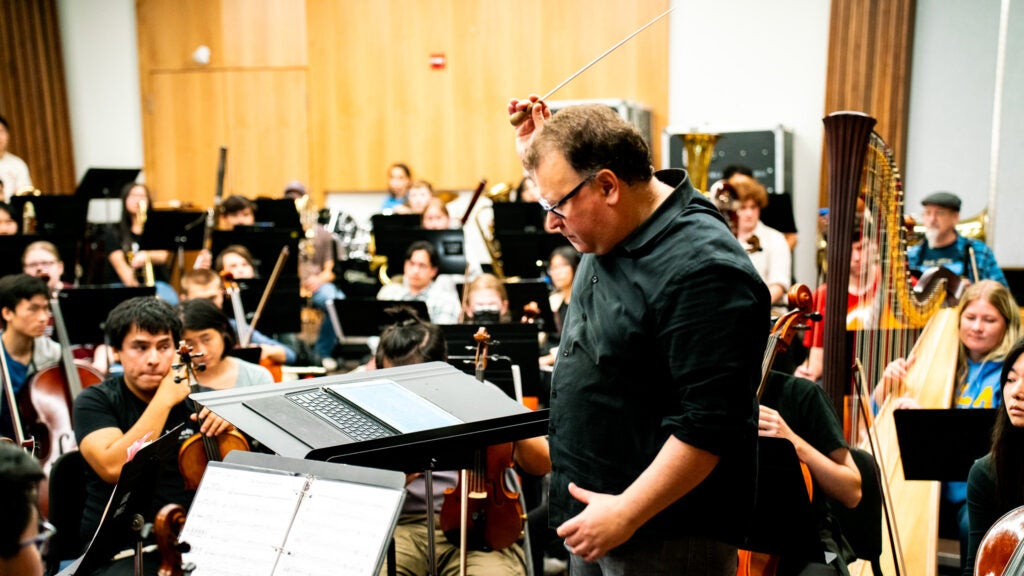
Yes. I’m the advisor for the Game Music Ensemble at UCLA and I conduct some of their concerts. I actually do arrangements for the group, since a lot of the music isn’t scored. They take electronic sounds, samples of orchestral instruments and put them together—it’s called “painting.” I turn that into a score and parts so we can rehearse and perform, which we do here at The UCLA Herb Alpert School of Music.
What do you do when you aren’t doing music?
I run a catering company. It’s called Epic Dining Experience, LLC, and what we do is put together narrative dinners with rare ingredients.
Really? What kind of rare ingredients?
We just did a Halloween formal dinner and the idea was to cook things that were dangerous or scary. So, we cooked things like rattlesnake, jellyfish and alligator. We had a red leaf salad with ghost pepper vinaigrette. We had a chocolate habanero, ghost cake with cactus pear sauce, things like that.
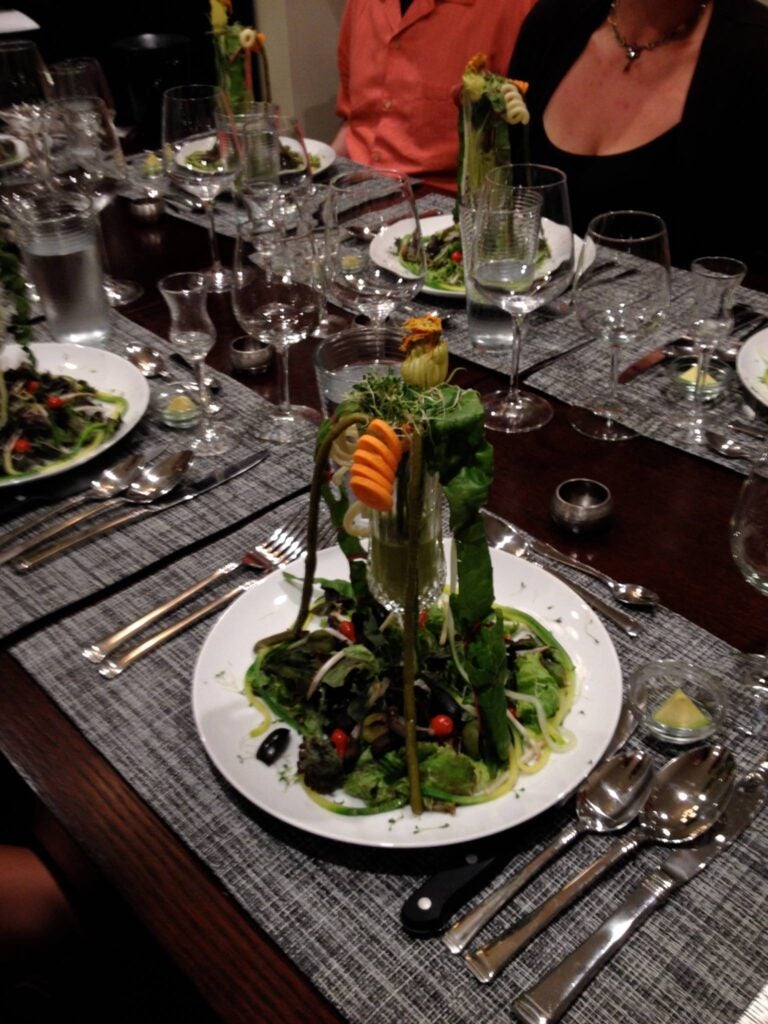
One of our big dinners we did was an all-vegan dinner, which was based on the seven wonders of the ancient world. But it was an eight-course dinner.
Eight courses for seven wonders?
We added Stonehenge.